
Overview
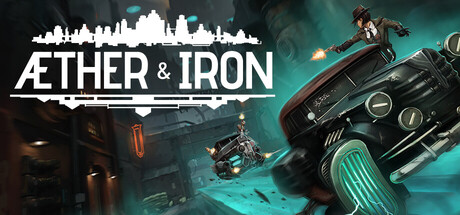
Aether & Iron drops you into a meticulously researched, alternate-timeline New York City inspired by the real 1930s—except here, anti-gravitational aether technology has rewritten the rules of architecture, power, and crime. The result is a city of soaring Art Deco silhouettes and widening class divides, where backroom deals and street-level desperation collide under the glow of impossible tech.
For Mac players who love story-first RPGs, the hook is clear: a branching narrative where choices don’t just alter a quest outcome—they shape the direction of the city itself. The twist that makes Aether & Iron stand out, though, is how it merges that narrative structure with strategic, turn-based vehicular combat driven by build customization and positioning rather than pure twitch reflex.
Setting: An Aether-Powered 1930s New York
This isn’t a generic noir reskin. Aether & Iron leans into the period’s mood and material culture—architecture, fashion silhouettes, the push-pull between entrenched elites and everyone trying to survive below them—then introduces aether tech as the accelerant that makes the city even more unequal and volatile.
You’ll move through layers of New York society: glittering high-rise power centers and the city’s underbelly of smugglers, fixers, and people who have learned to live in the cracks. The game positions you at a crossroads where you can become a stabilizing force, a renegade, or something more complicated: a symbol that others rally behind (or fear), depending on the path you carve.
Story & Choice: Decisions With City-Scale Consequences
Aether & Iron is built around choice and consequence. Decisions affect relationships, opportunities, and the way the city’s future unfolds. That doesn’t just mean a binary “good vs. bad” meter; it’s more about how you respond to systems of control—authoritarian barons, corruption, and the pressure that comes from trying to outmaneuver forces larger than you.
Backing the narrative is an experienced writing team with credits spanning major RPG and narrative-driven franchises. The goal is a world that feels lived in: funny when it can be, philosophical when it wants to be, and often tragic when it needs to be.
Combat With a Twist: Turn-Based Vehicular Tactics
The game’s standout mechanical identity is its turn-based vehicular battles. Instead of controlling a party in conventional cover-based firefights, you’re often thinking like a getaway driver and a tactician at the same time: movement lanes, threat angles, escape routes, and when to commit to aggression versus evasion.
Vehicle choice and loadout shape your options. Prefer speed and clean exits? Build for mobility and disruption. Want to bully the battlefield? Plate up and bring heavier tools. It’s a “smuggler fantasy” reframed as tactical problem-solving, where your ride is both weapon and lifeline.
Builds & Progression: Hustle, Smarts, Brass (and a Dice Roll)
Character growth is framed through three core attributes: Hustle, Smarts, and Brass. These influence not only combat effectiveness, but also social encounters and the kinds of solutions you can credibly pursue.
Importantly, Aether & Iron keeps uncertainty in play—no matter how optimized you are, you’re still “a dice roll away” from success or failure. That design choice reinforces the setting’s tone: even the competent can get unlucky in a city that doesn’t care how prepared you felt five minutes ago.
Companions & The Cast
New York is unforgiving, and the game emphasizes that you shouldn’t face it alone. You can recruit companions with distinct abilities and personal stories, offering both practical backup and narrative texture as you navigate power structures and street-level survival.
The wider cast is ambitious in scale, with 200+ voiced characters, helping the city feel crowded, opinionated, and reactive. For players who enjoy dialogue-heavy RPGs, that kind of voice coverage can be the difference between a setting that reads like lore and one that feels like a place.
Visual Identity: Hand-Drawn Art Deco Noir
Aether & Iron’s presentation draws from 1930s detective comics and Art Deco design cues, giving it a distinctive hand-drawn look that complements the era and the alt-history tech. If you’re drawn to stylized worlds over photorealism, the aesthetic here is doing real work—reinforcing mood, character archetypes, and the city’s layered glamour and grime.
What You’ll Actually Be Doing
- Smuggle and survive: Use secret routes, evade enemies, hide contraband, and stay one step ahead of bosses with long memories.
- Make hard choices: Your decisions affect people’s lives and shape whether the city trends toward hope, collapse, or something in between.
- Develop your approach: Invest in Hustle/Smarts/Brass to open new combat and conversation outcomes—then manage the risk of dice-based resolution.
- Upgrade your ride: Tailor vehicles with smuggler-friendly tools like hidden compartments and tactical gadgets (yes, including the flashier options).
- Meet a huge voice-acted cast: Navigate a city full of characters with agendas, humor, tragedy, and the occasional lifeline.
Mac Performance Notes: What to Expect
The listed requirements are refreshingly clear: Aether & Iron supports Apple Silicon and also accounts for older Intel Macs with discrete Metal-capable GPUs. Storage needs are modest for a modern RPG at 15 GB, but keep an eye on the OS targets (especially the recommended tier) when planning a setup.
Mac System Requirements
Minimum
- Requires an Apple processor
- OS: MacOS 15.0
- Processor: Apple Silicon: M1 (8-core CPU) or 10th generation Intel Core i5 (1038NG7)
- Memory: 8 GB RAM
- Graphics: Apple Silicon: GPU with ≥ 8 cores (e.g., entry-level M1) or Intel Mac: Discrete Metal-capable GPU with ≥ 2 GB VRAM (e.g., AMD RX 560 or better)
- Storage: 15 GB available space
Recommended
- Requires an Apple processor
- OS: Mac OS 26.0
- Processor: Apple Silicon: M2 or better or 9th generation Intel Core i7 (9750H)
- Memory: 16 GB RAM
- Graphics: Apple Silicon: GPU with ≥ 16 cores (e.g., M2 GPU or better) or Intel Mac: Discrete Metal-capable GPU with ≥ 4 GB VRAM (e.g., AMD RX 5700 / RX 6600 or better)
- Storage: 15 GB available space
Why Aether & Iron Belongs on MacGamers’ Radar
If you’re looking for a Mac RPG that prioritizes narrative reactivity and strong worldbuilding, Aether & Iron’s alt-history New York is a compelling pitch. If you’re tired of the same tactical templates, the game’s turn-based vehicular combat and heavy emphasis on car customization give it a clear identity. Add a large voice-acted cast and a hand-drawn Art Deco look, and it has the ingredients for a distinctive, story-rich strategy RPG that should feel right at home on modern Apple hardware.
About the Developer
Seismic Squirrel is a mix of industry veterans and newer talent, united by a focus on story-forward design backed by engaging mechanics—an approach that aligns neatly with what Aether & Iron is aiming for: a character-driven crime story where your choices and your ride both matter.



Comments
Sign in to join the conversation.
Log in to commentNo comments yet. Be the first to join the conversation.