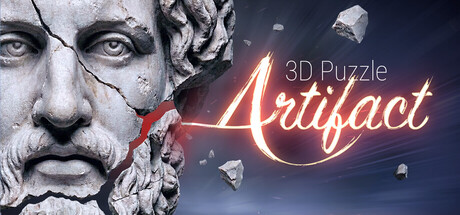

From shards to ancient masterpieces
Artifact is a serene 3D puzzle and restoration simulator that puts you in the role of a digital archaeologist. Instead of timers, combat, or fail states, the game focuses on the satisfying, hands-on process of reconstructing broken historical objects—piece by piece—until they’re ready for display. The vibe is deliberately pressure-free, pairing simple controls with an atmosphere built for focus and calm.
Its core appeal is tactile and methodical: rotate fragments, inspect surfaces and edges, and slowly bring a shattered relic back to life. The game draws inspiration from kintsugi—the Japanese art of repairing ceramics—capturing that restorative “zen” flow where patience and observation matter more than speed.
What you actually do in Artifact
Each puzzle begins with an artifact in fragments. You’ll manipulate pieces in 3D space, turning them to match curvature, texture, and connection points. The best moments come when a tricky shard finally clicks into place and the overall form suddenly makes sense—especially on more complex statues and busts where the silhouette is harder to read than a simple vase.
Once you complete an object, Artifact doesn’t force you to move on forever. A built-in Shatter mechanic lets you break a completed artifact again (via a double-click) so you can replay a favorite reconstruction whenever you want—great for relaxing repetition or revisiting a puzzle at a higher difficulty.
64 artifacts, eight cultures, one virtual museum
Artifact’s collection is the star of the show: 64 meticulously modeled objects representing eight distinct cultures. You’ll restore pieces spanning:
- Ancient Greece
- Ancient Egypt
- Chinese dynasties
- Japan
- Trypillian culture (Ukraine)
- Ancient Rome
- West African cultures
- Pre-Columbian Americas
Expect a range of forms—from amphorae and ornate ceramic vessels to iconic busts and sacred statuary. The lineup includes recognizable figures like Nefertiti, Zeus, and Apollo, plus rarer finds such as Trypillian and Aztec figurines. It’s a curated tour through world heritage, framed as interactive puzzles rather than textbook reading.
Difficulty that matches your mood
Artifact is built for flexible play sessions. If you want a gentle wind-down game, you can lean into easier settings and treat it like a relaxing desktop activity. If you’re in the mood to challenge your spatial reasoning, higher difficulty settings make each reconstruction more demanding—less about casual placement and more about careful inspection and mental rotation.
This makes it a solid fit for Mac gamers who enjoy puzzle games but don’t want the usual pressure of rankings, countdowns, or high-stakes progression.
Soundtrack and atmosphere
The presentation is intentionally calming. Artifact includes an original soundtrack with regionally inspired compositions tailored to each collection, helping each set of restorations feel distinct without becoming distracting. The overall result is a quiet, museum-like atmosphere that complements the slow satisfaction of reconstruction.
Mac performance and system requirements
Artifact is lightweight by modern standards and should run comfortably on a wide range of Macs as long as you have Metal-compatible graphics.
Minimum (Mac)
- OS: macOS 11.0 (Big Sur) or later
- Processor: Apple Silicon or Intel Core i5
- Memory: 8 GB RAM
- Graphics: Metal compatible graphics
- Storage: 1 GB available space
- Sound Card: Any
Recommended (Mac)
- OS: macOS 11.0 (Big Sur) or later
- Processor: Apple Silicon or Intel Core i5
- Memory: 8 MB RAM
- Graphics: Metal compatible graphics
- Storage: 1 GB available space
- Sound Card: Any
Note: The listed recommended memory value appears to be a typo (8 MB). In practice, you should expect the recommended target to be similar to (or higher than) the minimum 8 GB RAM requirement.
Who Artifact is for
If you’re looking for a Mac-friendly puzzle game that prioritizes calm, focus, and tactile 3D problem solving, Artifact fits beautifully. It’s ideal for players who love the quiet satisfaction of assembling, organizing, and restoring—without time pressure—while enjoying a curated tour of ancient art in a personal virtual museum.
Relax. Restore. Rediscover.




Comments
Sign in to join the conversation.
Log in to commentNo comments yet. Be the first to join the conversation.