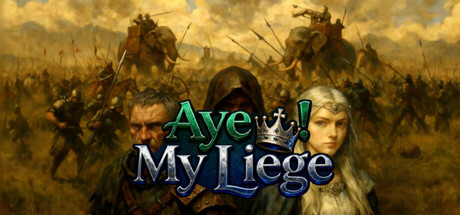

Aye! My Liege drops you into a chaotic alternate-history continent as the last survivor of a fallen noble house. Your start is small—isolated, vulnerable, and politically insignificant—but the game is built around the satisfaction of climbing from obscurity to dominance through long-term planning and a steady grip on the levers of power. Conquest is an option, but it’s never the only one: industrial strength, population welfare, and carefully chosen alliances can be just as decisive as battlefield victories.
From Remote Province to Continental Power
The core fantasy is rebuilding a family legacy under pressure. You’ll expand influence by juggling three pillars:
- Military conquest when diplomacy fails (or when you decide it should).
- Economic mastery through production chains and regional specialization.
- Diplomacy with enemies, opportunists, and factions that may be turned—or provoked.
It’s a game that wants you to think like a ruler: every gain can create new obligations, every reform can spark new friction, and every war has a cost beyond the casualty numbers.
Granular Military Command (Down to the Individual Soldier)
Where many strategy games abstract armies into anonymous stacks, Aye! My Liege pushes toward a more personal scale. Your forces are organized through a four-tier chain of command:
- Battalions
- Companies
- Platoons
- Individual soldiers
Soldiers aren’t just numbers. They’re named units with distinct attributes and skills, and you can watch them develop from inexperienced recruits into capable leaders. This gives campaigns a long-term texture: losses sting more, veteran cores matter more, and maintaining a functional command structure becomes part of winning wars rather than a purely cosmetic layer.
At the same time, the game aims to reduce click-heavy micromanagement during combat. You’re encouraged to focus on deployment and higher-level control, while units use independent AI to choose tactical actions based on the situation. In practice, that means your preparation and organization can be as important as your moment-to-moment reactions.
A Deep Economic Ecosystem (Not Just a Side Menu)
If you prefer to dominate with supply lines instead of sword lines, the economy is designed to be a full strategy layer rather than an afterthought. Provinces feature distinct resources and processing facilities, forming production chains that link together into a broader industrial web.
- Production chains: Develop and connect provinces with specialized resources and processing to scale your output.
- Livelihood management: Balance taxes against welfare—food security and market supply affect happiness, growth, and efficiency.
- Economic warfare: Apply tariffs and blockades to pressure rivals and control strategic resources without direct combat.
It’s the kind of system where a war can be won before it starts if your logistics are reliable, your people are stable, and your rival’s access to key materials quietly collapses.
Diplomacy That Can Be Dialed Up—or Dialed Into War
Diplomacy in Aye! My Liege is presented as a living network of relationships, not a static list of modifiers. You’ll navigate shifting ties with enemies, potential allies, and factions sitting on the fence waiting to see who benefits most.
A particularly Mac-friendly design philosophy here is customizable aggression: you can aim for a more peaceful development path by default, or intentionally provoke AI factions through diplomatic choices to create a more hostile world state and trigger broader wars. That flexibility helps the game suit different player moods—whether you want a careful economic climb or a continent-spanning conflict.
Decision Events That Can Make (or End) Your Reign
Between campaigns and economic planning, the game punctuates your rule with a mix of scripted story events and random daily encounters. These choices aren’t merely flavor: decisions can branch toward different outcomes, including multiple endings—and, if you misjudge a crisis, an early demise that cuts a reign short.
For players who enjoy strategy with consequences, this is where your house stops being a spreadsheet and starts being a story.
Who It’s For on Mac
- Grand strategy players who want an economy and diplomacy layer with real teeth.
- Wargamers who like the idea of meaningful unit identity and command hierarchy without constant tactical micromanagement.
- Roleplay-minded rulers who enjoy event-driven governance and hard choices that reshape the narrative.
Mac System Requirements
Minimum
- OS: macOS 11 Big Sur
- Processor: Apple / Intel
- Memory: 4 GB RAM
- Storage: 300 MB available space
Recommended
- OS: macOS 26 Tahoe
- Processor: Apple
- Memory: 8 GB RAM
- Storage: 500 MB available space
Bottom Line
Aye! My Liege aims for the sweet spot where grand strategy feels personal: armies are structured, soldiers are individuals, provinces matter, and political choices can reroute your entire run. If you want a Mac strategy game that rewards planning across warfare, industry, and diplomacy—and backs it up with consequential events—this is one to keep on your radar.





Comments
Sign in to join the conversation.
Log in to commentNo comments yet. Be the first to join the conversation.