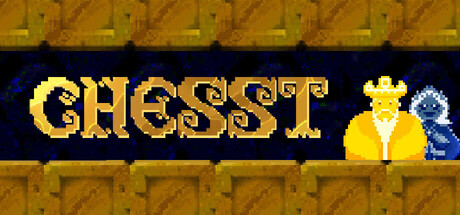

CHESST is a handcrafted fantasy chess variant for macOS that keeps the recognizable rhythm of chess—turn-based positioning, trades, long-term planning—while boldly rewriting the rules that veteran players tend to take for granted. There’s no check and no checkmate. Kings can be captured. Pawns can conceal magical items. Rooks can be boarded like a tiny train. And each match can begin from one of millions of possible starting configurations, keeping even familiar openings from becoming rote.
Designed for local play (two humans sharing one device) or solo sessions against a custom AI, CHESST aims for strategic depth without the intimidation factor—welcoming chess enthusiasts, lapsed players, and first-timers alike.
What Makes CHESST Different?
CHESST isn’t “chess with a skin.” It’s a purposeful remix that changes how you evaluate threats, manage tempo, and read your opponent. A few headline changes define the flow of play:
No Check, No Checkmate
The biggest philosophical shift: your king is not sacred. There’s no requirement to respond to check because check doesn’t exist—and the king can be captured like any other piece. That single change reshapes tactics immediately: sacrificial lines, baited captures, and daring attacks can be viable in positions that would be illegal in standard chess.
Before the Match: The Magic Item Mart
Before pieces even move, each player can equip up to three pawns with powerful arcane artifacts. Importantly, these items are hidden information: you know which pawns are carrying something and which are empty, but your opponent doesn’t. That turns ordinary pawn advances into a bluffing game—every pawn becomes a question your opponent must answer with imperfect information.
CHESST includes seven magical items with distinct effects, and pawn promotions are item-specific, adding another layer to long-term planning: it’s not just “can I promote?” but “what will this pawn become, and is my opponent prepared for it?”
New Pieces (and Not Just for Flavor)
CHESST replaces and reinterprets parts of the traditional set with bespoke fantasy roles. You’ll encounter new piece types such as Sages, Sorcerers, Wizards, Dragons, and Unicorns. The goal isn’t complexity for its own sake—these pieces are designed to create new tactical motifs and fresh midgame problems.
Chess vs. CHESST: Four Quick Rule Shifts
- Queen’s reach is capped: in CHESST, the queen’s range is limited to 5 squares rather than unlimited distance.
- No more twin bishops: instead of two identical bishops, CHESST uses two unique pieces: Sage (light squares) and Sorcerer (dark squares).
- Sage movement: the Sage moves like a traditional bishop.
- Sorcerer movement: the Sorcerer has two modes—(1) a diagonal teleport-capture to an enemy piece at least two squares away (with a restriction that it cannot repeat on the very next turn), and (2) a one-square diagonal move.
- Pawns, rewritten: no en passant, and promotions depend on the pawn’s item.
- Pawns, reimagined: pawns may carry and use magic items, and they may also board friendly rooks via the Rook Express.
The Rook Express: Pawns That Ride
CHESST’s Rook Express introduces a delightfully readable twist: pawns can board friendly rooks to reposition across the board. It’s a mobility tool, a surprise tactic, and sometimes a defensive resource—especially potent in a game where hidden pawn items already make “simple” pawn structures anything but simple.
Victory Conditions (Without Checkmate)
CHESST features two distinct victory conditions, reflecting its broader design goal: to create satisfying endgames even when checkmate is removed. Instead of funneling every late-game plan toward a single familiar finish, CHESST encourages players to recognize multiple routes to victory—depending on material, positioning, and what they suspect is hiding inside enemy pawns.
Play Modes: Couch-Friendly by Design
Local Two-Player (Pass-and-Play)
CHESST is built first and foremost as a local two-player game. There are no accounts, servers, or matchmaking queues—just pass the Mac between turns and play wherever you like. It’s an ideal fit for a kitchen-table rivalry, a relaxed café session, or an evening with family members who might bounce off traditional chess’s rigidity.
Solo Play vs. AI
Prefer to experiment at your own pace? CHESST includes a custom AI with three difficulty tiers. It’s a good way to learn the new pieces, test item mind games, and get comfortable with the “no checkmate” endgame logic before taking on a human opponent.
Presentation: Pixel Art with Warmth (and Cosmic Coziness)
CHESST leans into a charming, handcrafted look with lovingly made pixel art and custom sound design. The overall tone is whimsical and inviting—fantasy without grimdark edges—making it easy to recommend to mixed-skill groups and younger players. There’s also score tracking across matches and 20 achievements spread across Normal, Advanced, and Expert tiers for players who enjoy structured goals.
Mac System Requirements
Minimum
- OS: macOS 10.15
- Processor: Any dual-core 1.5 GHz+
- Memory: 2 GB RAM
- Graphics: Any GPU with DirectX 10 or OpenGL 3.0 support
- Storage: ~300 MB available space
- Sound Card: Any (audio optional; fully playable without sound)
- Additional Notes: Network not required (fully offline; local game)
Recommended
No recommended specifications were provided.
Who Is CHESST For?
- Chess fans who want a fresh ruleset that still rewards planning and calculation.
- Couples, families, and friends looking for a local strategy game that doesn’t require online play.
- Newcomers who find traditional chess daunting—CHESST’s fantasy framing and varied setups can make learning feel more exploratory.
- Mind-game enjoyers who love hidden information, bluffing, and reading an opponent’s intentions.
Developer
CHESST is the debut release from Ancient Moai Cooperative, a small studio focused on thoughtful, “worth lingering in” experiences—cozy in tone, with hidden strategic depth.
If you want the complete CHESST guide as a PDF, the developers invite players to reach out at [email protected].
Bottom line for Mac gamers: if you like turn-based strategy and want something that feels like chess’s imaginative cousin—where every pawn might be a trick and every endgame has new shapes—CHESST is an easy wishlist for anyone craving a local-first, fantasy-flavored board duel.


Comments
Sign in to join the conversation.
Log in to commentNo comments yet. Be the first to join the conversation.