
Moonhunter DLC at a glance
Control the moon phases. Mark your prey. Unleash the Eclipse.
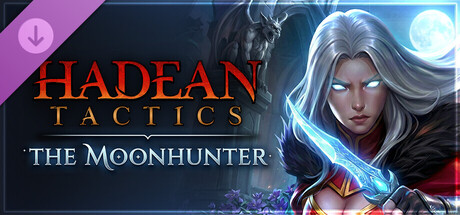
Hadean Tactics: Moonhunter DLC expands the game’s hero roster with Selene, the Moonhunter, a fourth playable hero designed around moon-phase manipulation, enemy marking, and a satisfying “set up now, detonate later” rhythm. Where other heroes can often feel like they’re optimizing within a steady ruleset, Selene’s kit encourages you to actively change the ruleset—shifting between New Moon, Half Moon, and Full Moon as you move through the underworld.
For Mac players who enjoy deckbuilders that reward sequencing and timing, Moonhunter’s core loop is immediately legible: apply Moonmarks, wait for the phase that best converts those marks into value, then shatter them for phase-based effects. Over the course of a run, those decisions ladder up to a marquee mechanic: the Lunar Eclipse, a power spike you build toward and then cash in when the board state is ripe.
What’s new: Selene’s moon-phase playstyle
The headline feature is Selene’s relationship with the moon itself. The DLC introduces three distinct phases—New Moon, Half Moon, and Full Moon—and emphasizes manipulating the current phase to shape combat flow. In practice, this creates a tempo puzzle:
- Planning turns ahead: You’re incentivized to think about the next couple of actions rather than only the immediate exchange.
- Phase-dependent power: Your best payoff lines often depend on being in (or moving into) the “correct” phase for the moment.
- Controlled burst windows: Instead of constant, even pressure, Selene tends to build toward explosive turns.
This design dovetails nicely with Hadean Tactics’ hybrid of autobattler-style positioning and deck-driven tactical decisions: Selene’s tools reward you for reading the fight, shaping the next beat, and then committing to a swing turn that flips the encounter.
Moonmarks: mark, manipulate, shatter
Moonhunter’s other defining mechanic is Moonmarks. You mark enemies, then look for the right timing to shatter those marks—triggering powerful effects that vary based on the current moon phase. This gives the DLC a distinct identity from “more cards, more numbers” expansions: your decisions are less about raw efficiency and more about alignment (board state + phase + mark count + payoff).
That alignment-driven gameplay also creates satisfying micro-goals inside each fight:
- Identify which targets are worth marking (priority threats vs. high-health anchors).
- Decide whether to cash out marks immediately for safety or hold them for a stronger phase-based trigger.
- Route your phase changes so the shatter turn arrives when the enemy formation is most punishable.
Lunar Eclipse: the run-defining payoff
If Moonmarks are the day-to-day decision engine, the Lunar Eclipse is the long arc. The DLC positions Eclipse as a unique power you build toward—something that encourages deliberate pacing across encounters. The best deck and relic choices tend to be the ones that help you reach Eclipse more consistently, reach it faster, or make the Eclipse turn so overwhelming that it effectively ends the fight on the spot.
For players who love deckbuilders with “engine moments,” Eclipse is the kind of capstone mechanic that makes a build feel like it’s telling a story: early utility and stabilization, mid-run synergies, and then a late-run identity built around a signature finisher.
Crit scaling: a hero made for critical strike synergies
Moonhunter also leans hard into critical strikes, explicitly designed to “push crit further than ever before.” That means Selene doesn’t just slot into generic damage plans—she nudges you toward assembling a cohesive crit package where each incremental upgrade meaningfully changes your ceiling.
In deckbuilding terms, crit synergy can be especially satisfying because it rewards both:
- Consistency: getting your crit plan online reliably, not just occasionally.
- Conversion: having clear ways to turn crit frequency into fight-ending damage (often via Moonmarks/Eclipse burst turns).
Content included in the Moonhunter DLC
Beyond Selene’s core kit, Moonhunter is a substantial content drop intended to support multiple run paths and build archetypes:
- Selene, the Moonhunter (new playable hero)
- 2 additional Selene variants
- 60+ cards (a full deck for the hero)
- 5 units to recruit and summon
- 1 new boss
- 10+ relics
- 4 events
- 14 skills
- 10 alliances
- 3 endings
This matters for replayability: the more the DLC adds in terms of events, relics, alliances, and endings, the more your “Selene run” can branch into meaningfully different trajectories rather than repeating a single solved pattern.
Who is this DLC for?
- Players who enjoy setup-and-payoff gameplay: If you like arranging pieces, then detonating a plan, Moonhunter is built for you.
- Deckbuilder fans who love turn sequencing: Phase shifting and mark shatters reward deliberate ordering.
- Crit-build enthusiasts: Selene is explicitly tuned to scale critical strike synergies into large burst turns.
- Completionists: New boss, events, alliances, and endings provide fresh targets beyond “just another hero.”
Mac notes: system requirements
Mac requirements were not provided with the DLC details supplied. If you’re playing on macOS, the practical recommendation is to verify the base game’s Mac support and then confirm the DLC is available for the same platform/storefront you use. (Most DLC inherits the base game’s platform availability, but it’s still worth checking before purchase.)
Bottom line
Hadean Tactics: Moonhunter DLC is a strong expansion for Mac deckbuilder fans who want a hero that feels mechanically distinct. Selene’s phase control, Moonmark detonations, and Eclipse capstone create a clear identity: plan your turns, manipulate the battlefield’s “season,” then cash in for explosive results. If your favorite runs are the ones where your deck starts behaving like a machine—clicking into place and ending fights with a single overwhelming sequence—Moonhunter is aimed directly at that fantasy.





Comments
Sign in to join the conversation.
Log in to commentNo comments yet. Be the first to join the conversation.