
Overview
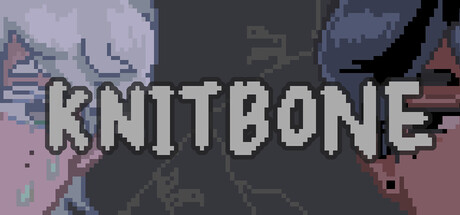
KnitBone is a story-driven psychological horror visual novel built around an unsettling premise: the therapist is more traumatized than the patient. Designed as a compact but intense narrative experience, it leans into dread, manipulation, and creeping uncertainty rather than lengthy RPG systems or combat.
You play as Eden Cross, a person worn down by chronic insomnia and a growing sense of disconnection from daily life. Relief arrives in an unexpected form: Ryohei, an old college acquaintance, reappears with a supposed miracle cure—an “experimental therapy.” The problem is that the pitch doesn’t feel like medicine. It feels like ceremony. The closer you get to answers, the more the sessions resemble a guided ritual with stakes far beyond sleep.
Story & Tone
KnitBone blends the intimacy of a therapy room with the paranoia of psychological horror. Conversations are tense, personal, and often loaded with subtext—exactly the kind of setup where a visual novel can weaponize small details: a phrase that doesn’t sit right, a question that cuts too close, a “helpful” suggestion that sounds like a command.
The game’s horror comes from multiple directions: the vulnerability of the protagonist, the ambiguity of Ryohei’s intentions, and the sense that the process is shaping you rather than healing you. It’s not simply about what happens; it’s about what you’re persuaded to accept.
Gameplay: Interactive Sessions, Choices, and Tests
While KnitBone is narrative-first, it isn’t purely linear reading. The experience is structured around interactive therapy sessions where your input matters.
- Dialogue choices that steer how Eden responds and how the “therapy” progresses.
- Minigames woven into the sessions to break up the reading and reinforce the ritualistic feel.
- A personality test element that adds a layer of introspection—and unease—depending on how you answer.
Expect a brisk pace: the estimated length is 30–50 minutes (about 7k+ words), making it a strong fit for an evening horror hit or a single-sitting stream segment—especially if you enjoy replaying to compare outcomes.
Endings & Replay Value
KnitBone includes 2 main endings plus 1 mini ending. With a short runtime and decision points throughout, it’s built for replay: make different dialogue choices, approach the sessions with a different attitude, and see what changes when you resist (or lean into) the “therapy.”
Content Warnings (Read Before You Play)
This is a psychological horror game with explicit distressing material. The developers note the following warnings:
- Jumpscares
- Cult themes
- Emotional manipulation, trauma, body horror, blood
- Depictions of death and murder
- Language
If these themes are difficult for you, consider skipping or watching a content-filtered playthrough instead.
Mac Performance & System Requirements
As a lightweight visual novel experience, KnitBone has modest storage needs and should run comfortably on a wide range of Macs, including Apple Silicon. Here are the listed requirements:
Minimum (macOS)
Minimum:
- OS: macOS 10.10+
- Processor: 2.0 GHz Intel or Apple Silicon (M1+)
- Memory: 2 GB RAM
- Graphics: OpenGL 3.0 compatible
- Storage: 121 MB available space
Recommended (macOS)
Recommended:
- OS: macOS 12+
- Processor: 2.0 GHz Intel or Apple Silicon (M1+)
- Memory: 4 GB RAM
- Graphics: OpenGL 3.0 compatible
- Storage: 121 MB available space
Who It’s For
- Fans of psychological horror that focuses on manipulation, implication, and dread.
- Players who like short visual novels with meaningful choices and multiple endings.
- Anyone looking for a Mac-friendly narrative experience that doesn’t demand high-end hardware.
Credits
- aespipu – Project Lead / Artist
- remarkablemark – Developer / Programmer
- Myka Valerio – Co-Writer / Proofreader
- A. Villarroel – Co-Writer / Proofreader
- seamus – Composer
- Additional music – OST Jazz Lounge Scene by Chad1702
- WAGDIRE / sternellita – Russian Translator
Final Take
KnitBone is a compact psychological horror visual novel that uses the language of therapy—trust, vulnerability, guidance—as a foundation for something far more sinister. If you enjoy narrative horror that can be finished in one sitting but replayed for different outcomes, it’s an easy recommendation for Mac players who don’t mind their comfort zone being methodically dismantled.
![Jessica's Choices – Forced [Episode 1] on Mac: A Darker, Bigger Branching VN Where Every Decision Bites Back](https://www.macgaming.com/public/articles/featured-image/3570930.jpg)



Comments
Sign in to join the conversation.
Log in to commentNo comments yet. Be the first to join the conversation.