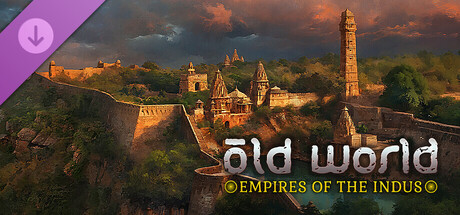

Old World - Empires of the Indus comes to the subcontinent
Old World - Empires of the Indus is a substantial expansion for Mohawk Games’ character-driven 4X, shifting the spotlight to South Asia and its surrounding crossroads across a long, volatile stretch of history. The result is a DLC that feels less like a simple faction pack and more like a themed campaign layer: new playable nations with bespoke mechanics, new religions and wonders, a more dangerous tribal opponent, and a flood of events and ambitions that push your dynasty stories in distinctly regional directions.
Three new playable nations, three very different power fantasies
The headline feature is the arrival of three playable nations, each designed around a different style of state-building and warfare. Even if you already know Old World’s core loop—orders, families, ambitions, and character politics—these nations push you into new rhythms.
The Mauryas: empire-building backed by elephants and enlightenment
The Mauryan Empire is positioned as the heavyweight: an Iron Age superpower with the political pressure (and opportunity) that comes from scale. On the battlefield they lean into intimidating elephant warfare, including Assault Elephants and Armored Elephants, giving them a signature way to break lines and dominate key fronts.
But the Mauryas aren’t just about force. Their standout alternative path is spiritual statecraft—most notably the ability to establish Buddhism as a new World Religion via a unique project, complete with the Mahabodhi Temple as its Holy Site. That creates a compelling strategic fork: expand with tusks and steel, or build legitimacy and influence through faith and cultural gravity (ideally doing both, if your succession politics cooperate).
The Yuezhi (Kushan): steppe momentum and enforced alliances
The Yuezhi represent the nomad-to-empire arc, forming the Kushan Empire under leaders like Kujula and later expanding under Kanishka. Their kit screams mobility and coercion. A defining tool is their Vassalize Tribe Mission, letting them force alliances on weaker tribal nations—an elegant way to convert early military advantage into a stable perimeter (or a springboard for the next war).
If the diplomatic strong-arm doesn’t land, they also bring elite mounted power: Kushan Cavalry and Kushan Warlord units with a Shock Cavalry ability designed to win fights through decisive charges and tempo. In practice, Yuezhi play best when you’re constantly asking, “How do I turn this turn’s advantage into next turn’s surrender?”
Tamilakam: family politics as a national identity
Tamilakam is the DLC’s most character-and-court-forward nation, representing the heights of Sangam culture by bringing the three early Tamil kingdoms under one banner. Instead of merely choosing a leader line, Tamilakam’s identity is bound to its internal power blocs: the Cholas, Cheras, and Pandyas appear as families competing for dominance.
The key twist is that you can maneuver characters into positions that shift influence dramatically—potentially changing the nation’s leader and capital, and gaining the unique benefits of whichever family sits on the throne. Militarily, they’re no pushovers: Javelin Elephant and Elephant Archers provide a sturdy defensive profile, punishing outsiders who assume southern realms are easy pickings.
More than factions: tribes, terrain, wonders, and an event surge
Even if you treat the three nations as the “main course,” Empires of the Indus adds a lot of side dishes that meaningfully change the table.
The Huns arrive as a higher-threat tribe
Before “steppe invasion” became a medieval cliche, the DLC highlights the Huns as a new tribe type—explicitly more formidable than comparable tribal groups. They’re built to be a genuine strategic obstacle, with unique events that can cover the emergence of Attila the Hun. If your early game sometimes feels too solvable once you know optimal openings, the Huns are designed to reintroduce uncertainty (and consequences).
Religions: Hinduism as baseline, Buddhism as a world-shaping project
Religion becomes a central pillar of the subcontinent theme:
- Hinduism is present from the start for all three new nations. You spread it via Shrines and can employ a unique Brahmin disciple unit to build religious structures and found Theologies.
- Buddhism can be established by the Mauryans through a unique project, while other nations may found it once the world reaches four global Theologies and enacts the Philosophy law.
In Old World terms, this means the DLC isn’t just adding flavor text—it’s adding another axis for legitimacy, diplomacy, and long-term cultural power, tightly tied to laws and global progress.
Four new wonders, one per cultural level
Empires of the Indus includes four new Wonders that match different cultural levels, each with a distinct strategic payoff:
- The Great Stupa at Sanchi: enables a new improvement, Pillar Edicts, constructed in each city to boost legitimacy and civics.
- Mahavihara: a learning-focused wonder that boosts science and civics.
- The Monumental Buddhas: rewards religious plurality with boosts to opinion and culture for each religion within a nation, while also spreading Buddhism.
- Chittorgarh Hill Fort: a military-utility wonder that grants its host city extra health and heals units within all city territory.
Jungle terrain and new resources
A new Jungle vegetation type acts like woods, but with increased ranged defense and sharper movement penalties. That’s a subtle but important change for tactical planning: jungles can become defensive anchors, but they also slow campaigns and complicate reinforcements.
On the economy side, four rare resources join the pool: Jade, Silk, Spices, and Ebony. In a game where margins matter and trade-offs are constant, new resources are more than collectibles—they’re new reasons to contest specific city sites.
A huge narrative injection: events, ambitions, cognomens
If you play Old World for its emergent historical drama, the content drop here is massive: 200+ new events, 60 new ambitions, and 11 new cognomens. Expect more character-driven turns—moments where a marriage, a slight, a religious dispute, or a succession complication becomes the real battle you’re fighting.
New maps and scripts for the region
The DLC includes three new mapscripts and five premade maps, ranging from the entire subcontinent down to smaller duel-scale settings like the Indus Valley or land-locked Bactria. For Mac players who like tighter match lengths, those smaller maps are an easy way to sample the new nations without committing to a marathon.
How it plays on Mac: what to expect
MacGaming.com readers tend to care about practical reality as much as design intent. From a gameplay perspective, Empires of the Indus is “more Old World” in the best sense: the DLC layers new choices onto orders economy, family politics, and unit composition without rewriting the foundation.
Where you’ll feel the difference most is in midgame identity. The Mauryas can pivot into global religious influence, the Yuezhi can snowball with tribe management and cavalry tempo, and Tamilakam turns internal family maneuvering into a national weapon. Meanwhile, the Huns and jungle terrain create more friction for players who rely on predictable expansion lanes.
Who should buy Empires of the Indus?
- Yes, if you love Old World’s character politics and want more events, ambitions, and region-specific stories.
- Yes, if you want new nations that aren’t just reskins—each comes with distinct tools and incentives.
- Yes, if you enjoy religious and cultural victory pressure alongside conquest.
- Maybe, if you only play a single favorite nation and rarely explore new maps; the DLC’s value rises the more you experiment.
Mac system requirements
Minimum:
Recommended:
Bottom line
Old World - Empires of the Indus is a rich, historically themed expansion that adds meaningful strategic variety: three well-differentiated nations, impactful religious systems, excellent wonders, a tougher tribal threat, and a deep new pool of narrative content. If Old World already has a permanent spot in your Mac strategy rotation, this is the kind of DLC that doesn’t just add hours—it adds new ways for your dynasty to rise, fracture, and endure.





Comments
Sign in to join the conversation.
Log in to commentNo comments yet. Be the first to join the conversation.