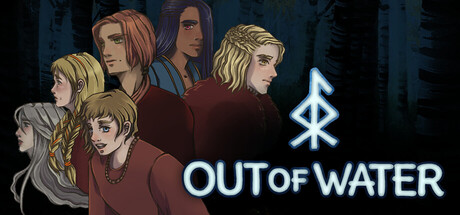

Out Of Water drops you into Watarholt, a northern Germanic village at the tail end of harvest season, where the routines of work, weather, and community feel steady—until they don’t. The lake is calm, the woods are close, and the village is preparing for winter. But something is changing beneath the surface, and you sense it before anyone else. From that first uneasy shift, the game becomes less about observing village life and more about navigating its slow unraveling through the choices you make.
What kind of game is Out Of Water?
At its core, Out Of Water is a story-first experience built around conversation, character dynamics, and consequences. You explore Watarholt largely through dialogue and relationships: choosing how you speak, when to push, when to comfort, and when to hold back. Those decisions don’t just flavor scenes—they shape how people see you, what they confide in you, and how the village reacts as fear and suspicion creep in.
The tone evolves deliberately. The opening leans into grounded, day-to-day village rhythms, then gradually shifts toward mystery, grief, and danger. As the woods grow hostile and the waters become deadly, the game asks you to decide what you believe, who you trust, and what you’re willing to risk when tradition and the unknown start colliding.
Choices, trust, and reputation
Choices in Out Of Water are not presented as simple “good” or “bad” morality toggles. Instead, you’re constantly managing the social reality of a small community where words stick and impressions matter. Your demeanor and responses influence:
- Trust: who opens up to you, who believes you, and who turns away
- Relationships: friendships, alliances, and potential romance
- Outcomes: how tense situations escalate—or de-escalate
The game is upfront about consequence: not every outcome will turn out well. That unpredictability fits the setting—a place where fear spreads quickly and certainty is rare.
Character-driven roleplay (without a rigid protagonist)
You’re encouraged to project yourself into the role rather than select from a fixed set of predefined archetypes. You can choose your name, demeanor, and worldview, and the protagonist is shaped by how you respond to the village’s shifting mood. The result is a more personal flavor of roleplay: you’re not just choosing branches, you’re defining who you are in Watarholt—and what kind of person others think you are.
Optional romance, meaningful bonds
Romance exists, but it’s never mandatory. If you want that layer, you can build a deeper connection—friendly, allied, or romantic—with one of three men: Harik, Ansgar, or Basi. These paths are shaped by trust, belief, and shared experience rather than a checklist of “correct” dialogue picks, and they can meaningfully change how the story feels. If you’d rather keep the focus on the village mystery and your broader relationships, you can do that too.
Hand-drawn presentation and quiet unease
Out Of Water leans on hand-drawn characters and environments with subtle animation, using stillness as a tool rather than a limitation. Expressions, pauses, and silence carry weight—especially as the atmosphere turns from late-summer calm into something colder. If you enjoy narrative games where mood is built through small details and pacing, this one is clearly designed with that in mind.
Scope and replayability
The structure is built for multiple playthroughs, with branching routes and endings that reflect your relationships and decisions. According to the game’s feature list, it includes:
- 30+ backgrounds
- 23 characters
- 47 CGs
- 10 endings
- 5 relationship endings
- 4 relationship routes
- 3 main routes
- 80k+ words
If you like seeing how different approaches change a story—supportive vs. suspicious, trusting vs. guarded—Out Of Water is built to reward that kind of experimentation.
Free artbook included (with spoilers)
A notable extra for completionists: Out Of Water includes a free 45-page artbook bundled with the game. It contains development material, additional artwork, lore, and commentary, including five exclusive illustrations not found in-game. Be warned: it includes major spoilers and is best opened after finishing the story. You can find it in the installation folder:
...\steamapps\common\Out Of Water
Mac system requirements
Minimum (Mac):
- OS: 10.10
- Processor: 2.0 Ghz 64-bit Intel-compatible (Apple silicon supported through Rosetta 2)
- Memory: 2000 MB RAM
- Graphics: OpenGL 3.0
- Storage: 1500 MB available space
Who should play it on Mac?
Out Of Water is a strong fit if you’re looking for a Mac-friendly narrative game with:
- Choice-driven storytelling with tangible social consequences
- A slow-burn shift from grounded drama into mystery and dread
- Optional romance that doesn’t hijack the main plot
- Hand-drawn art and atmosphere-forward pacing
If your favorite sessions are the ones where you’re weighing what to say, who to believe, and what a community becomes under pressure, Watarholt is ready for you—just don’t expect the water to stay still.




Comments
Sign in to join the conversation.
Log in to commentNo comments yet. Be the first to join the conversation.