
Quantum Brain on Mac: Tactics, Territory, and Trivia-Fueled Momentum Swings
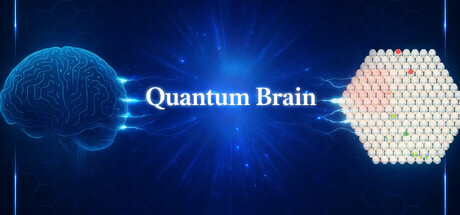
Quantum Brain is a turn-based strategy game built around tight, board-game-like decision making on a hexagonal battlefield—then it adds a genuinely distinctive hook: knowledge challenges that directly influence your tactical options. The result is a focused 1v1 experience where positioning, tempo, and resource denial matter, but so does your ability to answer curated questions when the board demands it.
If you enjoy hex-grid combat and the “one more turn” feel of compact tactical puzzles, Quantum Brain’s design aims for clean reads, fast turns, and high-stakes pivots—especially once special hexes and the more aggressive AI levels start forcing uncomfortable choices.
Core Gameplay: Turn-Based Hex Strategy with Clear, Tactical Goals
At its foundation, Quantum Brain plays like a streamlined tactics/board strategy hybrid. You command units across a dynamic hex-grid battlefield, working to:
- Capture territory and improve board control
- Engage in tactical combat shaped by positioning and turn order
- Trigger special hexes that can swing momentum at key moments
- Outplan the AI as it ramps into increasingly punishing pressure
The board layout is intentionally compact and readable, pushing meaningful interaction early. Instead of sprawling maps, the game emphasizes the constant contest over high-impact tiles and the consequences of every move.
The Signature Twist: Educational Hexagons That Affect the Battle
Quantum Brain’s defining feature is its set of educational hexagons. Land on (or otherwise trigger) these tiles and the game presents questions drawn from a large library of hand-crafted prompts spanning 17 categories, including:
- Science
- History
- Technology
- Arts
- Pop culture
Answer correctly and you gain a strategic advantage; answer incorrectly and you’ll take a penalty that can be brutal if it hits during a critical tempo fight. Importantly, the game’s AI opponents do not participate in the learning layer—they play purely strategically—so the quiz pressure is a unique cognitive load placed on the human player.
In practice, this means Quantum Brain can turn a “safe” tactical line into a calculated risk: do you step onto that educational hex for a potential advantage, or avoid it to keep the turn predictable? Over time, the game becomes as much about risk management and composure as it is about flanking and territory math.
Special Hexes, Momentum Swings, and Decision Making Under Pressure
Beyond educational tiles, Quantum Brain includes powerful special hexes designed to create turning points. These encourage proactive play—seizing key spaces before the opponent can—and punish passive positioning. The most satisfying moments come when you combine:
- Board control (locking down lanes and denying entry points)
- Timing (triggering effects when they matter most)
- Knowledge outcomes (earning buffs or surviving penalties)
Because the AI plays “straight” strategy without answering questions, it can feel relentlessly consistent—especially when it starts forecasting your options several turns out. The game’s educational layer becomes the variable you must master to keep pace.
Presentation: Polished 3D Hexes with Responsive Feedback
On Mac, Quantum Brain leans into a polished, modern board-game aesthetic. Expect:
- 3D animated hexagonal prisms that give the grid real depth
- Wave-based board motion that adds subtle dynamism without obscuring readability
- Responsive sound design that reinforces actions and turn flow
- Tightly packed hex layouts for a clean, tactical look
It’s a style that supports the design goals: clarity, pace, and satisfying feedback when a plan comes together—or when it collapses because you missed a question you thought you had.
AI Difficulty: From “Challenging” to Near-Perfect
Quantum Brain’s AI scaling is built to keep the game relevant as you improve. Higher difficulties increasingly demand:
- Efficient turns (wasted movement gets punished)
- Longer planning horizons (setups that pay off later)
- Territory denial (preventing the AI from accessing key hexes)
The top difficulty, Quantum AI, is presented as a near-perfect opponent—ideal for players who want a consistent strategic benchmark and don’t mind losing a few matches while learning optimal lines.
Pacing and Flow: Acknowledgment System for Turn Control
A standout quality-of-life feature is the game’s acknowledgment system, which gives you control over pacing and helps keep turns digestible—especially when multiple effects resolve in sequence. In a game where a single decision can branch into combat outcomes, special hex triggers, and an educational prompt, that extra control helps the experience stay sharp instead of frantic.
Who It’s For
- Hex-grid strategy fans who want a compact, replayable 1v1 ruleset
- Players who enjoy learning in games—especially trivia and general knowledge
- Solo tacticians looking for escalating AI challenges rather than multiplayer ladders
If you prefer strategy games that are purely deterministic with no “outside” pressure, the educational layer may feel like an extra variable. But if you like the idea of a tactics game that tests your composure and recall alongside your positioning, Quantum Brain is built precisely for that niche.
Mac System Requirements
Minimum
- OS: macOS 10.15 Catalina or later
- Processor: Intel Core i3 or Apple Silicon M1
- Memory: 4 GB RAM
- Graphics: Integrated graphics with WebGL support
- Storage: 500 MB available space
- Sound Card: System sound
Recommended
- OS: macOS 12 Monterey or later
- Processor: Intel Core i5 or Apple Silicon M1/M2
- Memory: 8 GB RAM
- Graphics: Dedicated GPU or Apple Silicon integrated graphics
- Storage: 1 GB available space
- Sound Card: System sound
Bottom Line
Quantum Brain blends classic hex-based tactics with a knowledge-driven risk layer that meaningfully affects outcomes. With crisp presentation, deliberate pacing tools, and AI difficulty that climbs into truly punishing territory, it’s a smart fit for Mac players who want a strategy game that challenges both planning and recall—where the strongest move might be knowing the right answer at the worst possible time.



Comments
Sign in to join the conversation.
Log in to commentNo comments yet. Be the first to join the conversation.