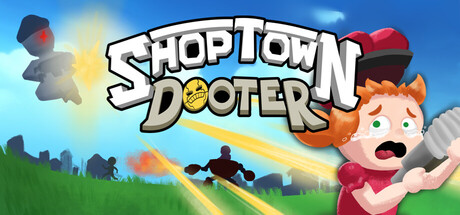

Shop Town Dooter is the kind of party game that understands an important truth: if everyone plays nice, the match is over too quickly. This chaotic top-down shooter is designed around short, explosive rounds, constantly shifting arena twists, and a loose moral code where bribing, cheating, and even bringing a mech to a gunfight are simply part of the meta.
It’s immediately readable—move, shoot, grab gear, survive—but it doesn’t stop there. Under the surface is a surprisingly positional shooter where weapons shape the map, items double as instant tools or cover upgrades, and smart mid-round shopping can swing a losing fight into a highlight-reel comeback.
What Kind of Game Is It?
At its core, Shop Town Dooter is a party-focused arena shooter with a top-down perspective. Matches take place in arenas that can change the rules from round to round, creating mini “modes” on the fly. One moment you’re playing something close to a standard skirmish; the next, the arena throws a curveball that forces everyone to adapt instantly.
Because the game is built for groups, it leans into spectacle and momentum: quick decisions, risky plays, and the constant temptation to spend big for a power spike—even if it’s financially irresponsible and socially unforgivable.
Randomized Arenas: The Real Boss Fight
The game’s biggest personality comes from its merciless arenas. Rounds can be interrupted or recontextualized by surprise conditions—think of them as party-rule modifiers that turn a familiar fight into something you have to relearn in seconds.
Examples the game teases include:
- Chicken round (expect chaos and scrambling)
- Bazooka frenzy (self-explanatory, and probably friendship-ending)
- Weapon Buffet (a rapid shift in the gear economy and map control)
The result is that no single strategy stays dominant for long. Winning consistently is less about perfect aim and more about reading the room, reading the arena, and committing to a plan before your friends do.
The Wartender and the Combat Economy
Between rounds, you’ll be buying weapons and tools from one of the game’s best concepts: the Wartender.
“Hi, I am selling weapons and Mechs. Prices are cheaper during the day.”
The twist is that you don’t just shop safely between rounds. You can also buy gear during the fight—and it’s half the price if you do. That single rule creates a delicious risk/reward loop:
- Play it safe, buy between rounds, and stay consistent.
- Or shop mid-fight, gamble your positioning, and potentially swing the entire round for a discount.
You can also upgrade to GOLDEN weapons—because sometimes you don’t just want to win, you want to win with style.
Weapons and Items: Built for Area Control
Shop Town Dooter doesn’t treat weapons as simple damage numbers. Most guns are designed to influence movement and space—meaning you’re always making positional choices, not just aim checks.
- All items can be used either instantly or as a cover upgrade, letting you react to danger or reshape the battlefield.
- Weapons emphasize control: suppressive fire from machine guns, trap setups from mine launchers, and charged energy snipes that can shoot through walls.
In practice, this makes fights feel like a messy blend of brawling and improvisational tactics: you’re not just trying to hit opponents—you’re trying to herd them into bad options.
Yes, You Can Cheat (The Dooter Pit)
If the game’s tagline energy is “no refunds,” the signature mechanic is the Dooter pit. Toss a weapon in, and you can start the next match with that same weapon. It’s risky, it’s bold, and it’s exactly the kind of rule that turns a normal party shooter into a story generator.
The best part is the psychology: opponents won’t necessarily know you’ve set yourself up—until the next round begins and you’re already armed like you planned the whole thing.
Mechs: The Ultimate Party Crasher
When subtlety fails, Shop Town Dooter offers escalation: mechs. They’re expensive, they’re dramatic, and they exist for one reason—turning a close match into a panic.
They won’t guarantee a win (and the game is happy to remind you that there are no refunds), but they do guarantee a reaction, and that’s often the point in a party game: forcing everyone else to respond to your nonsense right now.
How It Feels on Mac
On Mac, Shop Town Dooter’s appeal is straightforward: it’s lightweight, easy to run on a wide range of machines (including Apple Silicon), and built for quick sessions that don’t demand a huge time investment. If you’re looking to add a local-friendly competitive game to your Mac party rotation, this one is clearly aiming at that slot: fast rounds, readable action, and mechanics that reward both skill and shameless opportunism.
Mac System Requirements
Minimum
- OS: MacOS Sierra - 10.12.6
- Processor: 2.7 GHz Intel Core i5 or any M series processor
- Memory: 4 GB RAM
- Graphics: Nvidia GeForce GT 640M
- Storage: 3 GB available space
- Sound Card: DirectX Compatible Sound Card
Recommended
- No recommended specifications provided.
Who Is It For?
- Couch-competition crews who want a game that creates stories (and grudges) every night.
- Players who like reactive combat, where arenas and items constantly reshape what “smart” means.
- Anyone tired of overly serious shooters and ready for a ruleset that’s happy to let you be a menace.
If your ideal party game is equal parts skill, chaos, and social sabotage, Shop Town Dooter understands the assignment.


Comments
Sign in to join the conversation.
Log in to commentNo comments yet. Be the first to join the conversation.