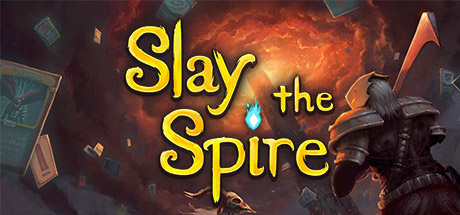

Slay the Spire on Mac: why it still sets the standard
Slay the Spire is the rare game that feels instantly readable—play a card, see what happens—while hiding an almost endless depth of strategy underneath. It blends a deckbuilding card battler with a roguelike run structure: every climb starts from scratch, every floor asks you to adapt, and every reward forces a trade-off between short-term survival and long-term scaling.
If you enjoy games where a single choice can echo for an hour—taking one card, skipping another, shopping now vs. saving gold, choosing a dangerous elite for a relic—this is the blueprint. And at $6.24 (75% off), it’s one of the easiest Mac recommendations you can make.
Core loop: build, survive, adapt
Each run is a climb through a multi-act tower packed with branching paths. You’ll fight enemies in turn-based battles by playing cards from your hand, managing energy, and shaping your deck over time. After combats you’ll typically choose one card reward (or skip), occasionally find a relic, and sometimes enter events that can boost you, curse you, or completely pivot your strategy.
- Dynamic deck building: You’re constantly editing your deck—adding synergy pieces, removing weak starters, upgrading key cards at rest sites, and deciding when to keep the deck lean vs. when to add power.
- An ever-changing map: The Spire’s layout changes every run, with different encounters, events, and bosses. Pathing matters: safe routes stabilize you; risky routes can snowball your power.
- Relics as run-definers: Relics are passive items that can radically alter what “good” looks like in a run, enabling new lines (extra energy, card draw engines, status manipulation, scaling damage/defense, and more).
Characters and variety
The game ships with four characters, each with distinct card pools and play patterns, making the same tower feel completely different depending on who you bring:
- Ironclad: Durable brawler with straightforward damage lines and sustain options that reward smart pacing.
- Silent: A flexible toolkit focused on precision—poison, shivs, debuffs, and defensive tempo.
- Defect: A systems-heavy character built around orbs and scaling engines, perfect for players who like “build the machine” strategies.
- Watcher: High-risk, high-reward stance switching that can explode bosses or punish sloppy sequencing.
Across all characters you’re working with 350+ cards and 200+ relics, plus dozens of encounters and events. The result is a game where your plan can emerge slowly—sometimes you’re forcing an archetype, and other times the Spire hands you a relic and you suddenly realize your entire run has a new identity.
Combat that rewards planning (and improvisation)
Slay the Spire’s fights are turn-based and information-rich: enemies telegraph their intent, and your job is to sequence cards to match the moment. Some turns are about blocking efficiently, others about racing damage, and boss fights often become multi-turn puzzles where you must scale or you’ll eventually be outpaced.
What makes it sing is how often the “correct” move depends on your future as much as your present. Taking chip damage now might be fine if it preserves a key card for an elite; spending gold on removal might be better than a flashy relic if it stabilizes your draws; upgrading the right card can turn a middling deck into a consistent engine.
Modes and replayability
Beyond the standard climb, Slay the Spire includes modes that keep the community grinding runs years later:
- Daily Climbs: A shared seeded challenge where everyone plays the same run conditions and competes on score.
- Custom Mode: Mix and match modifiers for everything from chaos runs to ultra-hard constraint challenges.
Even without chasing leaderboards, the replayability comes from the sheer density of meaningful decisions. Two runs with the same character can diverge within minutes depending on early card offerings, event outcomes, and relic drops.
Mac performance and requirements
Slay the Spire is lightweight by modern standards and runs well on a wide range of Mac hardware. Here are the listed minimum requirements:
- OS: OSX 10.14+
- Processor: 2.0 Ghz
- Memory: 2 GB RAM
- Graphics: 1GB Video Memory, capable of OpenGL 3.0+ support (2.1 with ARB extensions acceptable)
- Storage: 1 GB available space
Value check: $6.24 at 75% off
At full price, Slay the Spire already earns its reputation as a “forever game.” At $6.24, it’s a no-brainer if you enjoy card strategy, roguelikes, turn-based tactics, or any game where mastery comes from learning patterns and making smarter choices—not from grinding stats.
Who should play it?
- Play it if: you like tight, turn-based decision-making; building synergistic combos; and replayable runs where every choice matters.
- Skip it if: you want real-time action, a narrative-driven campaign, or a game that lets you brute-force wins without adapting.
Verdict: Slay the Spire remains one of the best strategy games on Mac—easy to learn, hard to master, and endlessly replayable.





Comments
Sign in to join the conversation.
Log in to commentNo comments yet. Be the first to join the conversation.