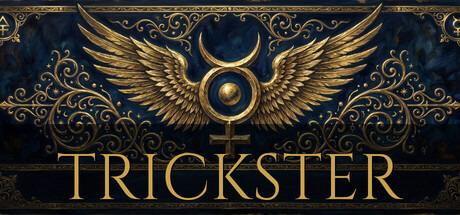

Trickster: The Fool’s Wager is the kind of card game that doesn’t begin when the deck is shuffled—it begins when everyone at the table speaks. Before a single draw, players make promises out loud about what they think will happen. The rest of the hand (and the rest of the night) becomes a tense audit of those declarations: who misread the table, who overreached, and who lied—either to the group or to themselves.
Premise: everyone makes a promise
The atmosphere is immediately intimate and theatrical: candles, a worn tarot deck, and faces you can’t quite read. The central mechanic is simple to grasp but hard to master—players state what they believe will happen, then play proceeds under the weight of those statements. That framing turns every choice into social leverage, because you’re not only managing cards; you’re managing expectations.
Confidence is the real resource
The game’s emotional economy is built on confidence. Spend it too freely and you’ll be stuck paying it back for the rest of the evening; hoard it and you’ll watch someone bolder take the pot. The most “safe” promise is often the hardest to keep, because conservative predictions can paint you into a corner—while ambitious claims can become momentum, intimidation, or bait.
In practice, that means the experience lands somewhere between a bluffing party game and a serious mind-game card battler: the table talk matters, the timing matters, and so does your ability to read how far other players are willing to go to protect their own narrative.
The card you’ll learn to fear
Tarot gives the game its identity, but it also gives it teeth. There is a particular card in the deck that answers to no suit, bows to nothing, and can end a hand with a flick of the wrist. Crucially, it can sit just as comfortably in someone else’s hand as in yours—so even when you feel safe, the game encourages you to remember that certainty is a performance, not a fact.
Ways to play on Mac: online, LAN, or solo
Trickster is designed for the reality of modern play: friends spread across time zones, a room full of players on one network, or a late-night solo session when you want the tension of the table without needing to schedule it. Solo play isn’t positioned as a tutorial afterthought either—the text makes it clear that the machines have been practicing, suggesting bots that are meant to challenge your reads rather than simply fill seats.
- Player count: 2–6 players
- Modes: Online, LAN, or solo
- Languages: English, Ukrainian, German, Italian, French
- Handheld: Plays comfortably on Steam Deck
Presentation: painterly tarot and a table that keeps score
Visually, the game leans into a low-lit, painterly tarot aesthetic—more intimate parlor than bright casino. The deck faces matter because they create mood, but also because the game “remembers”: the table keeps count of every promise you’ve broken. That sense of persistence gives the social layer stakes; you’re not just trying to win a hand, you’re trying to maintain credibility across an evening where everyone is tracking who can be trusted.
Who it’s for
This is a strong fit if you like card games where the real action happens between players: bluffing, posturing, calculated risks, and the subtle pressure of being on record. If your group enjoys games like social deduction, poker-adjacent mind games, or anything where spoken commitments change how people play, Trickster: The Fool’s Wager should land well.
Mac system requirements
Minimum:
- OS: macOS 11 Big Sur
- Processor: Apple Silicon or Intel dual-core
- Memory: 4 GB RAM
- Graphics: Metal-capable GPU
- Storage: 1 GB available space
Bottom line
Trickster: The Fool’s Wager is less about perfect play and more about the cost of conviction. With tarot-driven style, flexible multiplayer options on Mac, and a core loop built around spoken promises and the consequences that follow, it offers a sharply social kind of tension: you don’t just play your hand—you defend your story.




Comments
Sign in to join the conversation.
Log in to commentNo comments yet. Be the first to join the conversation.