
Apple’s newest MacBook Pro is a display story first — and that matters for games, creators, and the platform
Apple has unveiled an all-new MacBook Pro featuring what it calls the PROLED XDR Display, built on tandem OLED technology. While Apple’s announcement is positioned around “pro workflows,” the core upgrades map directly onto the parts of the Mac ecosystem that matter to Mac gaming readers too: display quality and consistency, Apple Silicon performance scaling, battery life, and the continued evolution of macOS and Apple Intelligence as a platform layer.
The new MacBook Pro comes in 14- and 16-inch models and is available to pre-order now, with availability beginning Friday, November 6, according to Apple.
PROLED XDR: tandem OLED, 120Hz VRR, and extreme HDR brightness
The headline is the new PROLED XDR panel. Apple says the display delivers up to 2000 nits peak brightness (for HDR and SDR), a 10,000,000:1 contrast ratio, a 120Hz variable refresh rate, and a wider color gamut covering P3 and Adobe RGB.
For gaming and game-development adjacent work, the practical takeaways aren’t marketing adjectives — they’re predictability and headroom:
First, a high-contrast OLED-based panel with very high peak brightness can make HDR grading, lighting evaluation, and UI readability testing more straightforward across a wider range of conditions. Second, 120Hz with variable refresh is a platform-level feature that can improve perceived smoothness and responsiveness when frame pacing is stable, and can reduce tearing when it’s not. Apple isn’t positioning this as a “gaming display,” but display consistency is still a major part of how Mac titles are judged, recorded, and compared.
Touch arrives on MacBook Pro (and Dynamic Island comes to Mac)
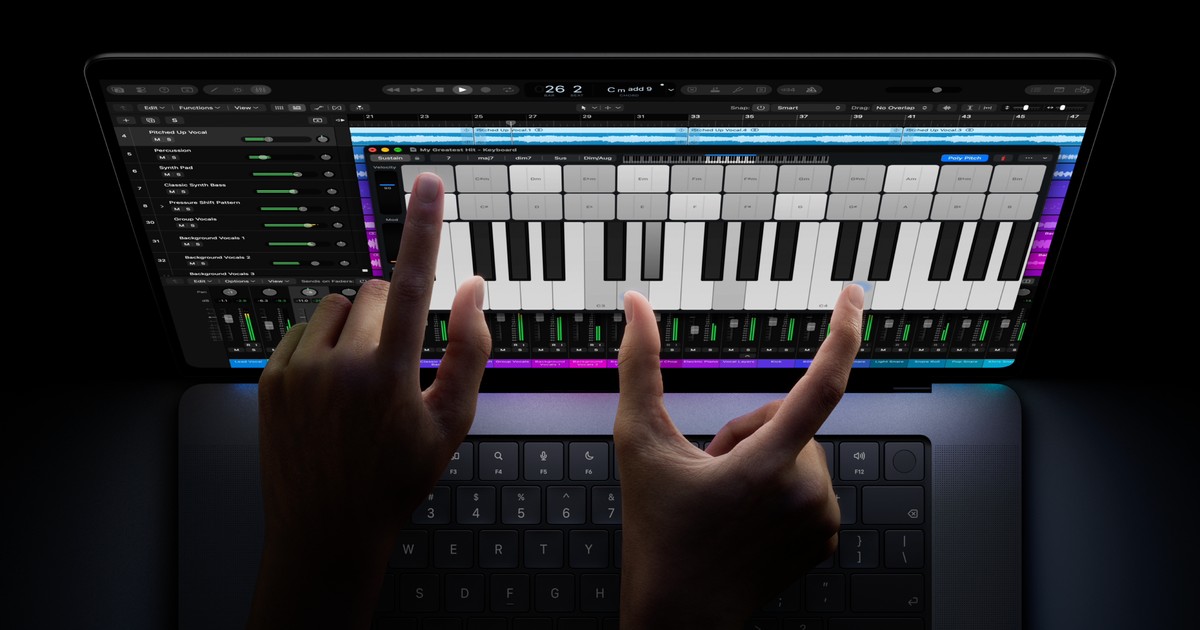
Apple is also introducing Touch capabilities on Mac for the first time with this MacBook Pro generation. For MacGaming.com readers, the key question is less “will games suddenly become touch-first?” and more “does this create a new input expectation developers will need to account for?”
Apple’s announcement frames Touch around pro interaction — manipulating 3D models and on-screen instruments — but the knock-on effects could extend to toolchains too: level editing, debug UI overlays, content review, and even accessibility pathways for certain genres. Whether developers adopt it broadly will depend on APIs, discoverability, and how well input modes coexist with keyboard/mouse/controller norms on macOS.
Apple also says Dynamic Island is coming to Mac as a home for Spotlight, Live Activities, and Siri AI. That’s not a gaming feature on its own, but it’s another example of Apple aligning interaction patterns across devices — something developers track closely because it often foreshadows where Apple wants attention, notifications, and system UI to live.
M5 Pro and M5 Max: what platform watchers should look for
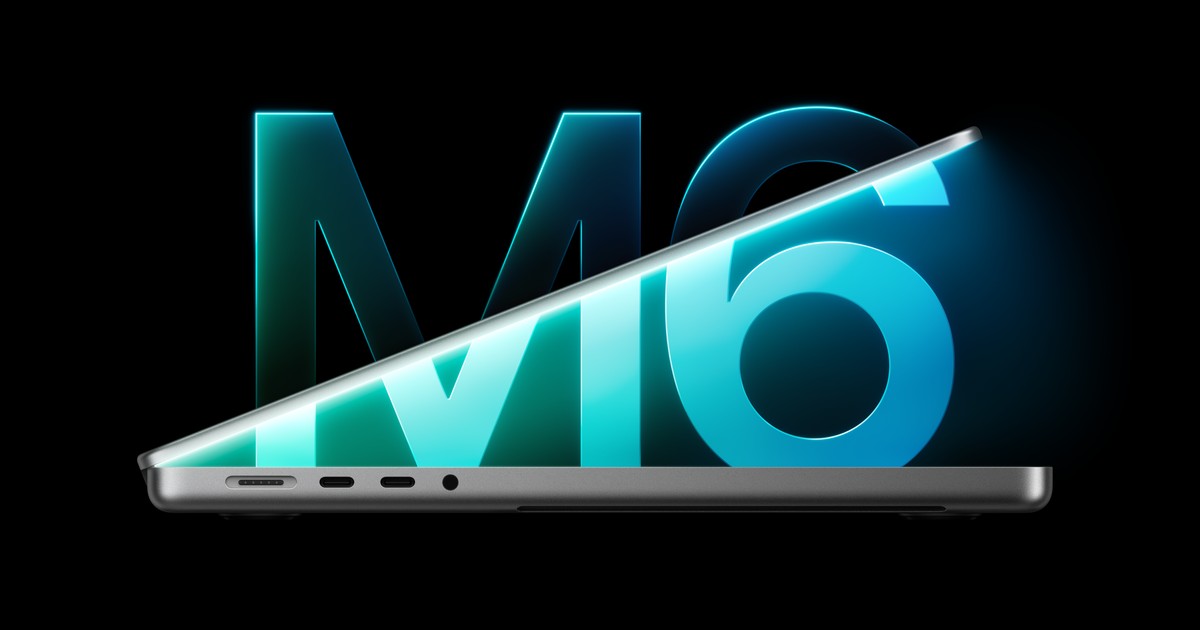
Under the hood, Apple is moving MacBook Pro to M5 Pro and M5 Max, which it calls its most powerful chips yet for a pro laptop. Apple also touts up to 128GB unified memory and up to 16TB storage.
For Mac gaming and the broader ecosystem, chip announcements matter in a few specific ways:
Unified memory ceilings influence how ambitious ports can be with texture resolution targets, asset streaming behavior, and CPU/GPU contention under heavier simulation loads. Storage capacity isn’t performance by itself, but it changes what’s viable for developers and power users who keep multiple large builds, symbol files, capture pipelines, and test libraries locally.
As always, real gaming implications will depend on GPU scaling, thermal behavior under sustained load, driver and Metal feature support, and how devs choose to target and optimize for the new baseline. Apple hasn’t made explicit gaming performance claims in the portion of the release we’ve seen, so we’re treating this primarily as platform news.
Battery life, audio, ports, and the rest of the “pro laptop” checklist
Apple is claiming up to 24 hours of battery life, in a thinner and lighter design, plus an enhanced six-speaker system with 50 percent deeper bass, a 12MP Center Stage camera, studio-quality mics, and Thunderbolt 5.
For Mac gamers, battery and portability aren’t just lifestyle bullet points — they shape how often a MacBook is used as a primary machine versus a “travel Mac.” And Thunderbolt 5 is the kind of platform I/O update that can matter for high-speed external storage, capture devices, docks, and multi-display setups, all of which feed into streaming, testing, and content creation workflows around games.
macOS 27 and Apple Intelligence: ecosystem gravity continues to shift
Apple positions this MacBook Pro alongside macOS 27 and Apple Intelligence with Siri AI. Even when not directly game-facing, OS-level capabilities influence developer priorities: build tooling, automation, QA workflows, and how users expect system search, assistants, and notifications to behave.
The big picture: Apple is continuing to tie hardware, silicon, and software into one release narrative — which can be great for coherence, but also means developers and platform watchers need to track multiple moving pieces (new display behavior, new input modality, new chip targets, and new OS assumptions) at once.
Source and where to read more
This coverage is based on Apple’s press release published on Apple Newsroom on October 28, 2026.
For the full announcement and Apple’s complete details, you can read the original post here: https://www.apple.com/newsroom/2026/10/apple-unveils-groundbreaking-macbook-pro-with-proled-xdr-display/


Comments
Sign in to join the conversation.
Log in to commentNo comments yet. Be the first to join the conversation.