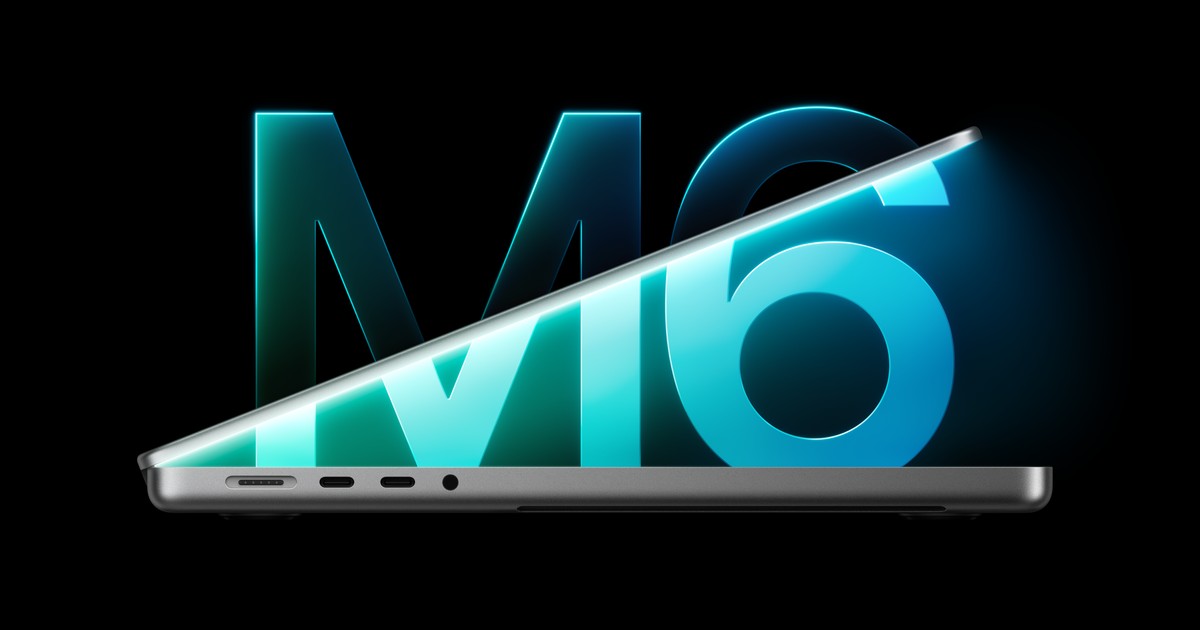

Apple’s new 14-inch MacBook Pro with M6 lands as a platform story
Apple has announced the new 14-inch MacBook Pro with M6, pitching it as a performance-and-AI-forward refresh with faster connectivity and long battery life. While this is not a gaming-specific reveal, MacGaming.com readers care about two things this kind of update affects immediately: (1) the long-term shape of Apple Silicon as a target for engines and ports, and (2) the day-to-day realities of developing, testing, and playing games on macOS.
According to Apple, M6 brings an advanced 12-core CPU and a 12-core GPU, with claims of up to 30% faster graphics and up to 25% faster AI workloads compared with M5, plus much larger gains for users coming from M1-era machines. Apple also highlights additional Neural Accelerators in the GPU and a Dual 16-core Neural Engine, positioning the laptop as a stronger on-device AI machine alongside macOS 27.
Source: Apple Newsroom (press release), published October 27, 2026.
What Mac gamers should take away
1) More GPU headroom is welcome, but it’s not the whole story. A claimed graphics uplift is good news in the abstract, but what matters for real-world gaming is how the GPU improvements map to Metal performance, shader compilation behavior, and sustained clocks under long sessions. Apple’s messaging is broad ("faster graphics"), so treat this as a promising platform bump rather than a guarantee of specific frame-rate wins in any given title.
2) AI hardware investment is really about the ecosystem. Apple continues to frame M6 around on-device AI: Siri AI, Apple Intelligence features across apps and macOS, and the ability to run LLMs locally while preserving privacy. For gaming, the near-term impact is indirect: developers increasingly rely on AI-accelerated tooling (asset workflows, code assistance, test automation, localization), and a stronger baseline for on-device inference can influence what kinds of features and tools feel practical on Mac laptops. That said, Apple has not announced game-specific AI features here, and it’s too early to translate these AI claims into gameplay outcomes.
3) Wi‑Fi 7 + Bluetooth 6 is a quality-of-life upgrade. Competitive online play and cloud services benefit from better wireless, and newer Bluetooth can help with controller/headset ecosystems. Networking improvements don’t fix matchmaking or server issues, but they can reduce the Mac side of the “why is my connection spiking?” equation—particularly in congested environments like dorms and offices that Apple explicitly calls out as target use cases.
4) Battery life matters for the “Mac as primary gaming machine” crowd. Apple claims up to 24 hours of battery life. That headline number won’t reflect demanding 3D gaming, but it does reinforce Apple Silicon’s value proposition: strong efficiency at lighter loads and less anxiety when moving between work and play. For many Mac owners, the “gaming session” happens between classes, travel, and actual work—so efficiency improvements often matter as much as peak performance.
What developers and engine users should pay attention to
Metal and Apple Silicon as the baseline target. Each new M-series generation expands the installed base of capable Apple Silicon machines, which is what porting decisions often hinge on. The more uniform the baseline and the more predictable the performance tiers, the easier it is for studios to set min/recommended targets for macOS builds—especially when combined with platform-level improvements in macOS 27.
Local AI workflows and iteration speed. Apple is leaning on “run LLMs locally” messaging. For game dev, local inference is most relevant for tooling and iteration (search, summarization, build help, test generation) rather than shipping gameplay features. If Apple’s AI acceleration is as accessible as its marketing implies, it could reduce reliance on cloud tools for some teams—particularly smaller shops and students using MacBook Pro as their main workstation.
Storage and large project handling. Apple also emphasizes “superfast storage” for large files and exports. That’s not a GPU spec, but it impacts everyday dev pain points: importing massive Unreal/Unity projects, generating asset bundles, and iterating on builds. It’s an under-discussed part of why certain Macs feel “snappy” even when raw GPU numbers don’t tell the full story.
Specs and features Apple is highlighting
Apple’s announcement calls out the following headline items for the 14-inch MacBook Pro with M6: a 12-core CPU, a 12-core GPU, expanded AI acceleration via GPU Neural Accelerators and a Dual 16-core Neural Engine, Wi‑Fi 7 and Bluetooth 6, and up to 24 hours of battery life. Apple also reiterates the broader 14-inch MacBook Pro feature set, including Liquid Retina XDR with a nano-texture option, a 12MP Center Stage camera, a six-speaker sound system, and a wide array of ports.
Availability
Apple says the new 14-inch MacBook Pro with M6 will be available in space black and silver, with pre-orders beginning October 28 and general availability starting Friday, November 6.
Our take: a better Mac baseline is still the main story
From a Mac gaming perspective, the M6 MacBook Pro announcement is less about one laptop and more about Apple continuing to raise the baseline capability of the Mac ecosystem. Faster GPU performance, modern wireless, and more on-device AI compute all improve the “platform gravity” that matters to engine vendors and studios considering macOS support—without Apple needing to announce a single game.
For the full details, you can read Apple’s original announcement on Apple Newsroom here: Apple introduces the new 14-inch MacBook Pro with M6.


Comments
Sign in to join the conversation.
Log in to commentNo comments yet. Be the first to join the conversation.