

Apple Intelligence gets a next-generation refresh
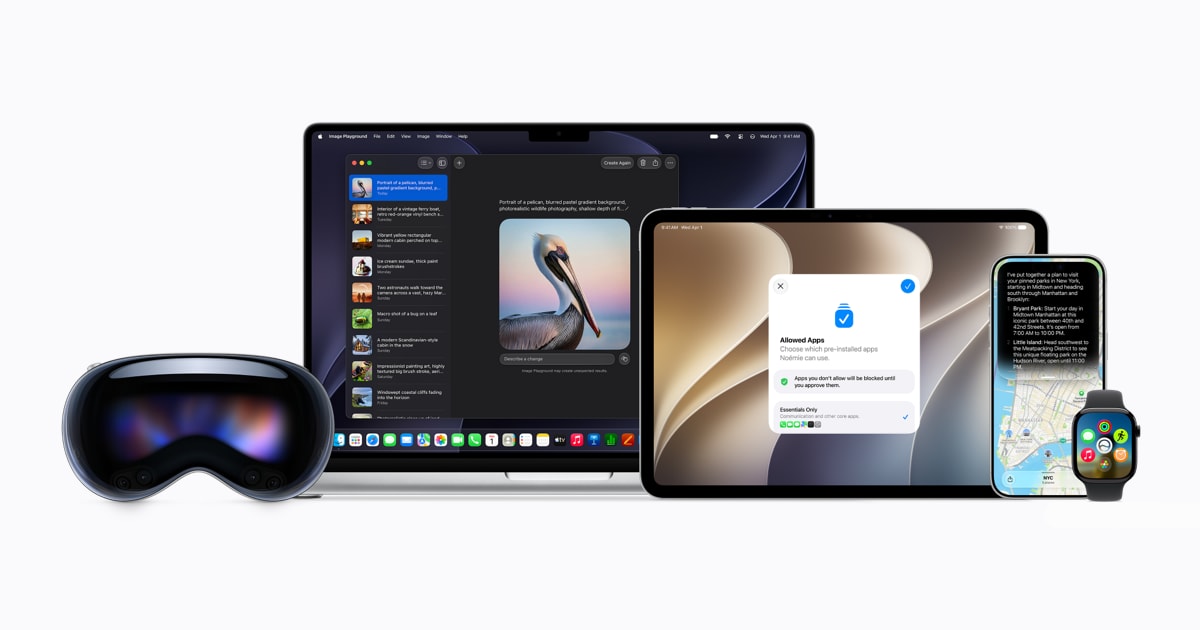
Apple has announced the next generation of Apple Intelligence, describing a new architecture that integrates the company’s latest Foundation Models more deeply across its platforms while emphasizing privacy. The headline for gamers isn’t a new graphics API or a surprise AAA port — this is Apple positioning AI as a system-level capability across iPhone, iPad, and Mac (plus Apple Watch, AirPods, and Apple Vision Pro) that can influence workflows, content creation, and day-to-day usability throughout the ecosystem.
From a MacGaming.com lens, this is best understood as infrastructure news: features aimed at Photos, Safari, Passwords, and new image-generation tools may not be “for games,” but they can still impact the experience of playing, streaming, modding, capturing clips, building communities, and developing games on Apple Silicon.
Apple says these features are available for developer testing now, and will roll out to users this fall.
Why Mac and Apple Silicon users should care (even if you just want to play games)
Apple’s pitch is that Apple Intelligence will make everyday apps “more personal and helpful,” with deep integration across the system rather than being a standalone chatbot. On Mac, that matters because macOS is increasingly the hub for gaming-adjacent tasks: managing libraries, downloading assets, running communication apps, creating thumbnails and videos, organizing screenshots, browsing guides, and handling accounts and passwords.
Even if none of these additions directly boost frame rates, platform-level features can reduce friction and time spent on the non-gaming parts of gaming — the stuff you do before and after you hit “Play.” For Apple Silicon owners in particular, it also reinforces Apple’s strategy of using on-device capabilities (and privacy framing) as a differentiator for its integrated hardware/software stack.
Developer testing now, user rollout in the fall
Apple says the next generation of Apple Intelligence features are available for developer testing starting today, with general availability for users planned for this fall. For Mac ecosystem watchers, the developer timeline is the key signal: this is when third-party apps begin adapting UI, workflows, and integrations around the new system behaviors.
If you use your Mac for game development (even part-time), that matters because toolchains and pipelines often hinge on macOS productivity utilities — from writing patch notes to building store assets to coordinating builds and QA. Any system-level change that alters how users create, search, edit, and organize content tends to ripple into the developer experience, even when it’s not marketed as “dev tooling.”
Photos updates: AI-assisted edits, composition changes, and watermarking
One of the most concrete areas Apple highlighted is Photos, where Apple Intelligence will provide more powerful editing while “respecting the original moment as it was captured.” Apple also says images edited with Apple Intelligence will automatically include a hidden SynthID watermark identifying that they were edited with AI.
For gaming communities, Photos features aren’t a direct substitute for dedicated capture tools, but they do intersect with how players share: screenshots, promotional images for mods, social posts, and thumbnails. The addition of a hidden AI watermark is also notable because it suggests Apple is thinking about authenticity and provenance — a topic that’s increasingly relevant for creators and community managers trying to separate real captures from generated or heavily altered images.
Apple also described “Spatial Reframing,” a feature that lets users adjust the composition of an image after it’s taken by shifting perspective through spatial models informed by Apple Vision Pro learnings. While aimed at photography, the broader point is that Apple is continuing to invest in spatial and image understanding across the stack — relevant context as Vision Pro and spatial computing remain part of Apple’s long-term ecosystem story.
Image Playground and system-level creativity tools
Apple mentioned an “all-new Image Playground” that creates photorealistic imagery, alongside other creative and editing capabilities across the system. For Mac users, this is less about games generating art in real time and more about the practical reality that creators and developers routinely need quick visual assets: mockups, placeholder art, store listing graphics, and social media visuals.
Whether this meaningfully changes workflows will depend on how accessible the tools are in macOS, how well they integrate into common pipelines, and what usage constraints exist (performance, availability by device, and how Apple gates features by hardware generation).
Siri AI: Apple’s “entirely new version of Siri”
Apple also says the next generation of Apple Intelligence helps power “Siri AI,” which it calls an entirely new version of Siri with a dedicated app and integrated tools for writing and “Visual Intelligence” across platforms. Apple’s framing is that Siri AI becomes more personal, more conversational, can search across a user’s content (messages, emails, photos, and more), answer questions broadly, and take actions inside apps.
For Mac power users, this could be most relevant as a system navigation and automation layer — the kind of thing that might streamline routine tasks around file organization, communication, or information lookup during a gaming session. It’s worth noting Apple’s own timeline: Siri AI features are available for developer testing now, but Apple says they will arrive as a beta to users later this year, implying a staged rollout.
Security and browsing: small changes that can matter
Apple also highlighted intelligent browsing tools in Safari and the ability to upgrade security protections with Passwords. While these are not gaming-specific, they touch common pain points: account security, avoiding phishing, and managing multiple storefront and service logins. If Apple Intelligence meaningfully improves these flows without adding friction, it could be a quality-of-life improvement for the broader Mac user base — including players juggling Steam, Epic, GOG, Ubisoft Connect, Battle.net, Discord, Twitch, and more.
What this is not: a promise of AI-driven games on Mac
Nothing in Apple’s announcement is a direct promise of new game features, better game compatibility, or any specific AI framework targeted at game engines. Mac gamers should treat this as ecosystem positioning: Apple is investing in system-level AI, and developers across categories will decide what to build on top of it.
The real gaming relevance will show up later in how third-party tools adopt these capabilities (capture/edit workflows, community management utilities, productivity apps used by studios) and whether Apple’s platform direction continues to make macOS a more compelling place to build and ship games on Apple Silicon.
Source and where to read more
Source: Apple Newsroom (Press Release), published June 8, 2026.
For the full announcement and additional details straight from Apple, visit the original Apple Newsroom post:
https://www.apple.com/newsroom/2026/06/apple-intelligence-brings-powerful-ai-capabilities-into-everyday-experiences/




Comments
Sign in to join the conversation.
Log in to commentNo comments yet. Be the first to join the conversation.