
Apple’s latest creative showcase isn’t about games — but the workflow story will sound familiar to Mac developers
Apple has unveiled its 2026 class of Designers of Tomorrow, a second-year collaboration with Design Miami curated by Rodman Primack. The program’s theme this year is “presence,” with the exhibition opening at Hôtel de Maisons in Paris. On its face, this is an industrial/product design story — but for Mac and Apple Silicon readers (and especially small studios), the interesting angle is the recurring one Apple keeps reinforcing: modern creative work is increasingly shaped by the tools and platforms that let you move from idea to prototype to final output without switching ecosystems.
According to Apple, the showcase focuses on “the power of objects to shape our physical environments and transform the human experiences that are possible within them,” featuring work from Salem S. Charabi, Isabel Rower, Yoonjeong Lee, and Parafernalia (Genki Matsumura and Sebastián Zorrilla). The participants were selected by a jury of global design voices, including Apple’s Molly Anderson, with an emphasis on storytelling, material innovation, and craft.
Why MacGaming.com is covering it
MacGaming.com doesn’t need to pretend this is a stealth gaming announcement — it isn’t. But it is a clean snapshot of Apple’s broader ecosystem strategy: keep the Mac (and Apple Silicon) positioned as the practical center of creative pipelines, whether the end product is a chair, a short film, a UI system, or a game.
For game developers, artists, and technical designers working on macOS today, the “capture, refine, share” framing matters because it overlaps directly with real production tasks: sketching concepts, building reference libraries, prototyping 3D assets, iterating on interaction, and collaborating across devices. Apple’s point in the Newsroom piece is that its hardware and software tools are showing up across disciplines — and that’s the same cross-disciplinary foundation indie game teams run on.
Theme: ‘presence’ — and what that signals in Apple’s creative messaging
Primack describes the theme as a response to “just how busy our lives have become,” with the selected designers demonstrating how objects can influence attention and experience. While Apple is talking about physical design, the message maps neatly onto interactive media too: the best games (and the best UX) create presence by controlling focus, reducing friction, and making interactions feel intentional.
That’s not a promise about future Mac game features or a hint of new APIs — Apple doesn’t make those claims here. But it is consistent with a platform narrative where Apple wants creative professionals to think in terms of end-to-end experience design, and to view Apple devices as compatible, interchangeable tools within a single workflow.
Featured designer highlight: Salem S. Charabi
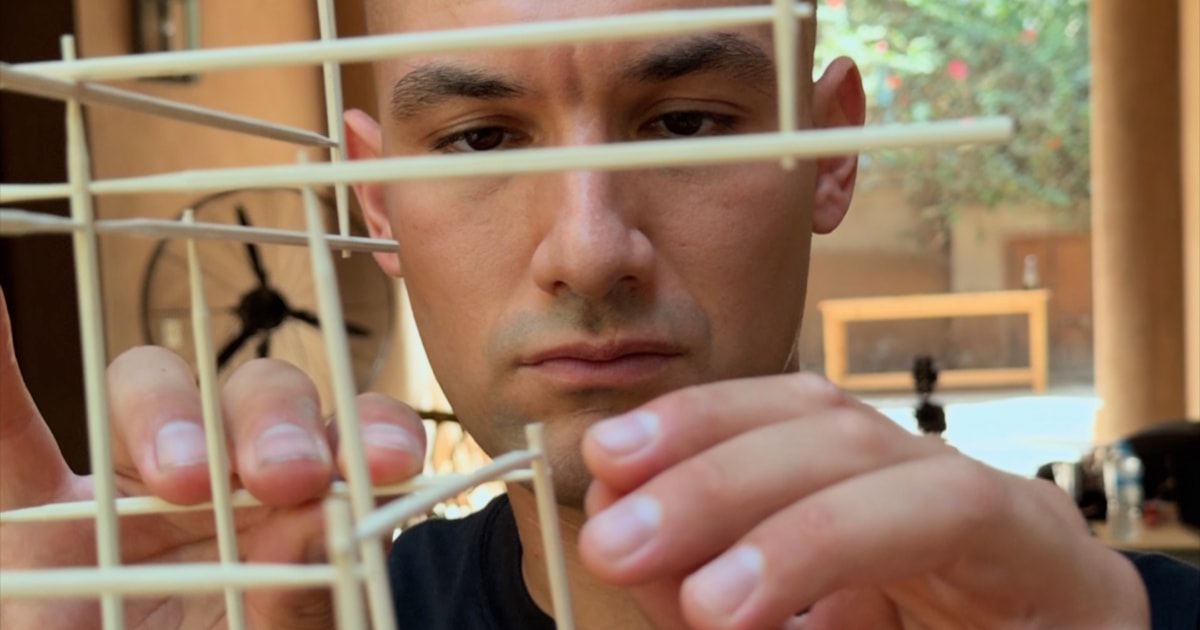
Apple’s article calls out Egyptian Danish architect Salem S. Charabi for blending “old-world practices” with “the latest digital tools.” His Designers of Tomorrow project is titled The Eminence of Light, with Charabi describing light as something humans are instinctively drawn to, and a lantern as an object that reflects our capacity to “light up the world.”
For developers and digital artists, the takeaway isn’t the lantern itself — it’s the recurring pattern Apple emphasizes: traditional craft paired with digital iteration. That’s essentially the modern game art pipeline in miniature: hand sensibility plus digital tools, rapidly iterated, refined, and delivered.
What this means for the Apple ecosystem (even if you only care about games)
Apple’s creative showcases like this are part marketing, part community-building, and part platform positioning. If you’re tracking Mac gaming’s trajectory, the relevance is indirect but real: Apple’s long-term success in games depends on developers believing macOS is a first-class creative environment, not just a build target. The more Apple can credibly claim that Mac is where people ideate and produce, the easier it is to keep developers anchored to the platform — whether they’re making furniture prototypes or shipping a game update.
Source: Apple Newsroom (Update posted October 20, 2026).
For the full context, including the complete list of participants and Apple’s remarks on the theme and selection jury, read the original post on Apple Newsroom: Apple unveils the 2026 Designers of Tomorrow.


Comments
Sign in to join the conversation.
Log in to commentNo comments yet. Be the first to join the conversation.