
Apple launches a new Health AI research study (and Mac developers should pay attention)
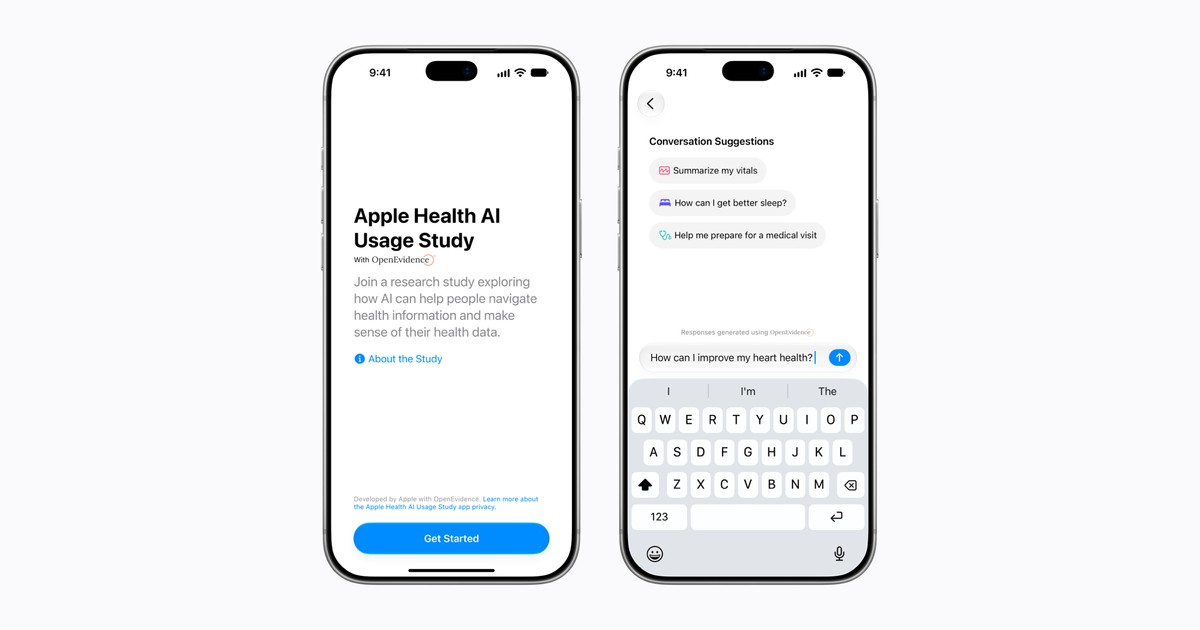
Apple has announced the Apple Health AI Usage Study in the United States, a virtual research study paired with an app intended to better understand how people interact with conversational health AI tools. The stated goals: evaluate what drives user trust, measure comprehension and response quality, and see whether AI interactions translate into real-world health actions.
This isn’t a gaming headline, but it lands squarely in the broader Apple platform story MacGaming.com readers track closely: how Apple validates AI experiences, what it learns about user trust and safety, and how that eventually shapes APIs, policies, and product design across iPhone, iPad, Apple Watch — and yes, Mac.
Why this matters to the Mac/Apple Silicon ecosystem
Apple’s AI posture has consistently emphasized privacy, responsibility, and practical usefulness. Launching a dedicated study — rather than simply shipping another “AI feature” and calling it a day — suggests Apple is still in evidence-gathering mode about what good AI UX looks like when the stakes are high.
For Mac and Apple Silicon developers, that matters because the rules that emerge from health-grade AI usage (trust, disclosure, citation, and clarity) often become the blueprint for how Apple expects AI-driven experiences to behave more broadly. Even if your app is a game, you still live inside the same App Store review culture and the same platform-level expectations about transparency and user harm.
What Apple is actually studying
According to Apple, the study focuses on the things that determine whether people trust and understand AI health answers, including how clearly the AI communicates and whether interactions lead to everyday actions. Participants will be able to ask everyday health questions, explore more complex medical topics explained in approachable language, and view linked clinical citations that ground each response in peer-reviewed sources.
Apple also notes a key limitation in today’s consumer LLM experiences: responses can be incomplete or unclear. The study is positioned as a way to learn how to present health information with greater clarity — an angle that should feel familiar to anyone watching Apple’s product philosophy around “it just works,” only applied to AI’s messier edge cases.
OpenEvidence partnership, citations, and the “trust layer” problem
The study is conducted in collaboration with OpenEvidence, described as a clinical AI platform used by healthcare professionals that generates answers using established medical sources (including major medical journals). Apple frames the experience as “medically grounded AI technology” combined with an Apple-designed research flow.
From a platform perspective, the noteworthy piece isn’t the partner brand — it’s Apple’s emphasis on citations and grounding. If Apple is serious about scaling AI into everyday workflows across devices, the ecosystem will likely see more focus on “trust layers”: provenance, citations, clear uncertainty, and guardrails that reduce the odds of confidently wrong output.
HealthKit data sharing: relevance vs. privacy trade-offs
Participants can optionally share certain HealthKit data types — Apple mentions items like resting heart rate, activity, sleep, and lab results — to explore how personal data integration affects relevance and understanding.
This matters to Apple Silicon watchers because personalization is where AI features become genuinely useful, and it’s also where privacy and data minimization become hardest. Apple running this as a study hints that it’s still calibrating the right UX and permission model for “AI + personal data” scenarios — choices that can influence future frameworks and best practices, not just health apps.
So what’s the angle for gamers and game-adjacent apps?
No, this announcement doesn’t change Metal performance, fix anti-cheat compatibility, or bring a new AAA port to macOS. But it does reinforce something that affects every category on Apple platforms: Apple wants AI experiences to be explainable, grounded, and measured — particularly when they can influence user decisions.
For Mac game studios, tool developers, and companion-app makers experimenting with AI (guides, coaching, accessibility helpers, community moderation, support bots), the implied message is simple: the bar is rising for clarity and responsible output. Apple is publicly investing in the research language and methodology that can later justify stricter requirements — or more standardized platform support — for AI-driven features.
Source: Apple Newsroom (published 2026-11-16).
For the full announcement and additional details straight from Apple, read the original post on Apple Newsroom: Apple launches research study to explore the use of AI for health.





Comments
Sign in to join the conversation.
Log in to commentNo comments yet. Be the first to join the conversation.