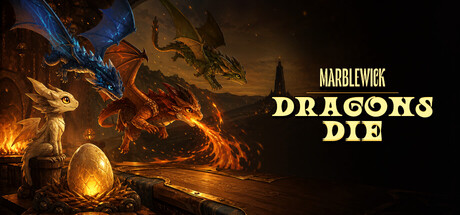

DRAGONS DIE. THEIR NAMES DON'T.
In Dragons Die, the world didn’t end in fire—it ended in silence. “The Hush” rolled in, the skies went quiet, and every dragon fell. The survivors are Peggs: small, half-grown keepers who hid the eggs and waited. For a long time, nothing hatched.
Then yours did.
That’s the emotional hook that defines Dragons Die as more than just another run-based roguelite. This is a game about leading a flight of dragons into hostile, procedurally-shaped reaches, making hard tactical calls in the moment, and then returning home to reckon with what you lost—name by name, chair by chair.
What kind of game is Dragons Die?
Dragons Die is a permadeath tactical roguelite with real-time squad combat. You hatch a roster of named dragons, fly out on expeditions, fight what came after the silence, and try to bring your flight home before the hearth goes cold.
The twist is in what “progress” means. Power isn’t only measured in stats or unlocks—it’s measured in memory. The game treats death as a core mechanic, not a punishment screen.
The core loop (and why it works)
- Hatch dragons across twelve classes, from bone-armored brutes like the Anvilhead to specialized threats like the chain-breath Stormfang.
- Fly out into procedurally-shaped regions, choosing supplies, formations, and “wing directives” that define how your squad behaves under pressure.
- Fight in real-time tactical squad combat, using element-coded breath weapons, bond bonuses between dragons, and cinematic crit slow-mo.
- Lose some. Permadeath isn’t optional—it's the contract. Dragons who fall aren’t reset; they’re remembered.
- Come home before the hearth goes cold, carving names, carrying bones, and preserving songs for what comes next.
- Build the legacy across runs with persistent meta-progression, multiple save slots, and a clutch book that records every dragon you’ve ever hatched.
On Mac, that loop hits a sweet spot: runs are bite-sized enough to fit laptop play sessions, but the inter-run memorialization gives the game a slow-burn, novelistic feel.
Combat: real-time tactics with elemental identity
The combat pitch is “tactical,” but it’s not a grid-based turn-fest. Instead, Dragons Die leans into real-time squad decision-making: your formation choices and wing directives matter, and your dragons’ breath weapons are element-coded, encouraging you to build a flight with complementary roles rather than four copies of the same bruiser.
It’s the kind of design where small choices stack up: who leads, who supports, who takes the risk to secure an objective, and when you decide the run is no longer worth the cost.
The Long Table: the best “meta-progression” is grief
Most roguelites track your history with a stat screen. Dragons Die gives you a room full of ghosts.
The Long Table is a persistent memorial that stays full across runs. When a dragon dies, their name carves itself into the wood. Each empty chair is a story. Hover a name and you’ll see how they went and what they said. This isn’t just flavor—this is the spine of the game’s identity.
It reframes the entire genre’s usual rhythm. Death is still loss, but it becomes text—a record you carry forward. And because every dragon is named and seated, you stop thinking in disposable builds and start thinking in legacies.
Why it belongs on MacGaming.com
Mac players often gravitate toward games that run cleanly, respect shorter play windows, and offer depth without requiring a massive hardware commitment. Dragons Die checks those boxes with a lightweight install footprint, run-based structure, and a strong narrative wrapper that makes every session feel consequential.
If you like roguelites but wish they carried emotional continuity—if you want a game that treats the “RIP” screen as a chapter break instead of a reset button—this is one to watch.
Mac system requirements
Minimum
- OS: macOS 10.13 (High Sierra) or later
- Processor: any Intel or Apple
- Memory: 2 GB RAM
- Graphics: Metal or OpenGL 2.1
- Storage: 150 MB available space
Recommended
- Recommended specs: Not specified
Final thoughts
Dragons Die is built on an unusually confident promise: you will lose dragons, and you will keep going—not because the game ignores death, but because it remembers it. Between named hatchlings, real-time tactical combat, and a memorial system that persists across every run, it’s a roguelite where the most important resource isn’t gold or upgrades.
It’s the names you carved into the table.

Comments
Sign in to join the conversation.
Log in to commentNo comments yet. Be the first to join the conversation.