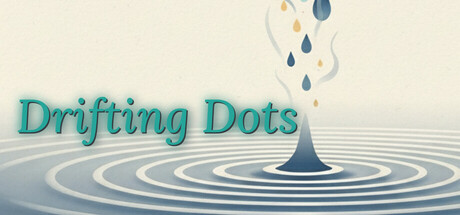

Find Your Flow in a Minimalist Physics Toy
Drifting Dots takes the simple, satisfying premise of a Galton board—droplets falling through a field of pins—and turns it into a focused, build-driven experience that feels equal parts toy, strategy game, and meditation aid. You guide an ever-growing stream of droplets and let the simulation do the rest, as tiny impacts stack into a calming chorus of “plinks” and a constantly evolving visual rhythm.
It’s the kind of game that can sit comfortably on a second monitor, but it can also demand your full attention when you’re hunting for the cleanest “flow” and the biggest Essence totals.
How Runs Work: 15 Minutes to Shape the Cascade
At its core, each session is a compact, replayable challenge: you have roughly 15 minutes to maximize your Essence by sculpting how droplets spawn, split, merge, and travel through your cascade. The rule set is approachable, but the optimization quickly becomes the main event.
Your primary decisions come in the form of Attunements—upgrades and modifiers that can radically change what “good” looks like from one run to the next. A few examples of what you’ll be thinking about:
- Drop Rate: Push volume for more collisions and more scoring opportunities, at the cost of visual/strategic chaos.
- Confluence: Encourage interactions between droplets—stacking synergies that reward planning and positioning.
- Heart of the Cascade: Build around empowered channels that create “super-charged” routes and standout scoring engines.
The best runs in Drifting Dots tend to feel like you’re composing a system: you’re not simply upgrading numbers, you’re tuning a machine until it produces a steady, mesmerizing waterfall of value.
Meta-Progression: Insight, Mantras, and New Ways to Play
Even if a run doesn’t break your personal best, it still feeds into longer-term growth. After each attempt, your performance is converted into permanent Insight. That Insight is spent in the Stream of Memory, where you unlock a broad tree of Mantras that expand the rules of future runs.
Mantras can introduce new droplet types (with higher value and different behaviors), add additional layers to the cascade itself, and open up build paths that simply aren’t available at the start. Over time, the game shifts from “learn the basics” to “discover the broken synergy,” without losing the clean, minimalist presentation.
Three Modes, Three Rhythms
Drifting Dots isn’t locked into a single pace. Instead, it offers three modes that all use the same core ideas but emphasize different kinds of decision-making:
- Pulse Mode: A wave-based structure with 45 quick rounds (about 20 seconds each). The between-round upgrade cadence makes it feel punchier and more tactical.
- Flow Mode: A continuous, meditative format where you can choose from an ever-changing list of Attunements whenever you’re ready. Ideal if you want to “ride the river” and adjust on instinct.
- Focus Mode: The most strategic option. You can pause to make a single, high-impact choice that defines pacing and sets your run’s identity early.
There’s also an unlockable Endless Mode for players who want to push their build beyond the normal constraints and see just how far their cascade can scale.
Audio-Visual Vibe: Clean, Calming, and Surprisingly Musical
The aesthetic is intentionally minimalist—clear shapes, calm motion, and a readable playfield that invites you to watch patterns emerge. The sound design is a big part of the appeal: the countless micro-collisions create a generative texture that can feel like a tiny percussion instrument you’re indirectly playing.
If you enjoy games that blur the line between “game” and “interactive system” (while still giving you concrete goals), Drifting Dots fits that niche beautifully.
Who It’s For (and Who It Isn’t)
- Play it if: you like short runs, buildcrafting, emergent physics, and relaxing “zen” games that still reward smart planning.
- Skip it if: you want narrative, action-heavy input, or highly directed objectives—this is more about shaping systems than reacting to threats.
Mac System Requirements
Minimum
Minimum:
- OS: macOS 10.15 (Catalina)
- Processor: Dual-core 2.0 GHz or better
- Memory: 4 GB RAM
- Graphics: Any OpenGL 3.3 / DirectX 11 compatible card
- Storage: 500 MB available space
- Additional Notes: Requires a 64-bit processor and operating system.
Recommended
Recommended:
- OS: macOS 12 (Monterey)
- Processor: Quad-core 2.5 GHz or better
- Memory: 8 GB RAM
- Graphics: A dedicated GPU or modern integrated graphics
- Storage: 1 GB available space
Bottom Line
Drifting Dots is a compact, replayable cascade builder that turns simple physics into a satisfying optimization puzzle. With three distinct modes, meaningful meta-progression through Mantras, and a soothing audio-visual presentation, it’s an excellent fit for Mac players who want something calming—yet quietly deep.




Comments
Sign in to join the conversation.
Log in to commentNo comments yet. Be the first to join the conversation.