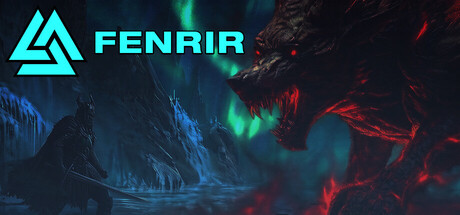

Ragnarök Doesn’t Need a Prophesied Hero—It Needs You
The Nine Worlds are burning. Fenrir has broken free, and his poison is spreading through Yggdrasil itself. The World Tree is dying, the gods have fallen or gone silent, and the usual mythic safety net—a chosen hero—doesn’t exist here.
FENRIR drops you into that collapse with a simple promise: you are the last chance to reforge Gleipnir, the bond that once held the wolf. The setup is classic Norse doom, but the game’s real hook is how it turns that urgency into moment-to-moment pressure in combat and long-term obsession in loot.
Hybrid Combat: Your Warrior Swings, But You Win the Fight
At first glance, FENRIR reads like an auto-combat RPG: your character fights automatically. In practice, it’s closer to a timing-driven duel system layered on top of relentless loot progression.
Success comes from what you do between the automatic hits:
- Build and spend Rage: every strike fuels Rage, and choosing when to unleash special attacks becomes the difference between momentum and disaster.
- Interrupts and reaction windows: enemy attacks aren’t just damage checks—interrupting at the right moment and dodging inside tight windows turns fights into tests of execution.
- Six elements and status effects: elements build up through repeated hits and can be released as punishing status effects, rewarding players who plan rotations and manage resources rather than simply stacking stats.
The result is a combat loop that’s approachable (you’re never wrestling with complex manual combos) but still demanding, because the game expects you to read threats, conserve resources, and act decisively.
Buildcraft That Actually Changes How You Play
FENRIR leans hard into the “loot RPG” identity, and it’s not just about bigger numbers. Your character can be shaped into dramatically different archetypes:
- An indestructible colossus that outlasts bosses through durability and sustain.
- A nimble blademaster that lives on clean dodges and precise timing.
- An elemental warrior that turns buildup into explosive status bursts.
The systems supporting that flexibility are dense in the best way:
- Free attribute distribution that lets you commit to a plan—or pivot when loot suggests a better one.
- A 68-node skill tree designed to encourage experimentation rather than locking you into one obvious route.
- Hundreds of items scaling across item levels 1 to 999, ensuring the chase doesn’t fizzle out after the first strong set.
- Jewels, runes, and set items that add layers of synergy and “one more run” motivation.
- Soul Transfer, a standout quality-of-life feature that helps your favorite item stay relevant instead of becoming instant vendor trash the moment you level up.
If you love the feeling of refining a build—then stress-testing it against content designed to punish sloppy play—this is the core of FENRIR.
Ten Regions Across the Nine Worlds
The campaign pushes through ten regions, each with its own enemies, exclusive item pools, and story beats. Structure matters here: rather than feeling like a single endless hallway of combat, progression is punctuated by distinct challenges:
- Guardian bosses that act as skill and build checks.
- Key bosses that test whether you’ve mastered interrupts, dodges, and resource timing.
- A finale meant to bring everything you’ve learned into one high-pressure exam.
Questing Without the Chore List Fatigue
FENRIR’s worldbuilding is delivered through a structured questline: 42 main quests guide you from the first signs of disaster in Midgard to the truth behind Fenrir’s escape.
Beyond that, you’ll find side quests and daily/weekly tasks intended to keep the loop active without turning the game into a second job. For Mac players who prefer self-contained RPG grinds over live-service obligation, it’s an encouraging direction.
Endgame: Valhalla and 999 Floors of “Prove It”
Finishing the main path doesn’t close the book. FENRIR’s endgame is built around escalation:
- Valhalla sends you through 999 levels of increasing difficulty.
- Five world tiers scale enemies tougher while unlocking rarer drops.
It’s a straightforward promise with a dangerously effective outcome: there’s always a harder wall to climb, and always a better item somewhere above you.
Business Model: Buy Once, Play Forever
FENRIR is a one-time purchase—no subscription, no pay-to-win, and no third-party ads. For a loot-driven RPG, that matters. You’re grinding for gear because you want to, not because a timer or monetization system is leaning on you.
Mac System Requirements
Minimum
Minimum:
- OS: macOS 10.15 Catalina
- Processor: Intel Core i3 / Apple M1
- Memory: 2 GB RAM
- Graphics: Intel Iris Plus / Apple M1 GPU
- Storage: 1 GB available space
Recommended
Recommended:
- OS: macOS 12 Monterey
- Processor: Intel Core i5 / Apple M1 Pro
- Memory: 4 GB RAM
- Graphics: AMD Radeon Pro 555X / Apple M1 Pro GPU
- Storage: 1 GB available space
Why FENRIR Belongs on Your Mac RPG Radar
FENRIR hits a compelling middle ground: the satisfaction of automated pacing paired with the constant tension of timing-based survival. If you like loot RPGs but want combat that still demands attention—interrupts, dodges, resource management, and elemental planning—this is one to watch (and one that looks particularly welcoming on Apple Silicon given the modest requirements).
In a world where the gods are gone and the tree is dying, the game’s message is clear: you don’t need prophecy. You need a build that works—and the skill to execute it.


Comments
Sign in to join the conversation.
Log in to commentNo comments yet. Be the first to join the conversation.