
Overview
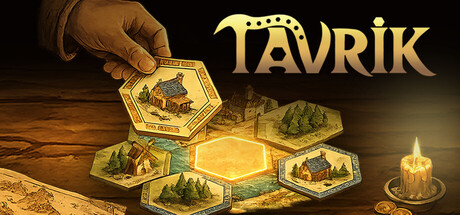
Tavrik is a hex-grid roguelite deckbuilder with a simple hook that quickly becomes obsessive: you don’t merely build a deck—you build the route. The exit is visible from the start, but the landscape between you and safety is procedural, hostile, and expensive to cross. Your job is to spend cards and energy to sculpt a viable path before your energy hits zero.
That constant pressure defines Tavrik’s tone. It’s not about “winning the fight” in a traditional sense. It’s about making the terrain negotiable, then deciding how greedy you can afford to be once escape is within reach.
Cards That Change the World
Most deckbuilders ask you to optimize damage, defense, and scaling. Tavrik’s most important numbers often read like logistics: movement cost, energy, vision, threat, durability, and gold. The standout idea is that many of your active cards alter the map directly.
- Build the road: place roads and bridges to cut travel costs and bypass blocked terrain.
- Change the land: clear forests, carve through mountains, and rework chokepoints that would otherwise drain your run dry.
- Place help where it matters: buildings and characters can be positioned to support the route you’re creating rather than the route the game handed you.
It’s a satisfying reversal of the usual roguelite loop. Instead of asking, “How do I survive what’s ahead?” Tavrik often asks, “How do I make what’s ahead different?”
Energy Is Your Real Health Bar
Every step on the hex grid costs energy. When it hits zero, the run ends—no dramatic last stand required. This makes basic movement a meaningful decision, and it also turns small efficiencies (a well-placed bridge, a road that shaves a point off multiple tiles, a timely terrain clear) into the kind of advantage you can feel immediately.
The visible exit is a clever psychological trick: you always know where “done” is, so every detour is a deliberate risk. Tavrik gets a lot of tension out of asking you to choose between the clean line to safety and the messier line that might pay for itself later.
Active Cards vs. Passive Cards (and a Deck That Wears Down)
Tavrik separates how you shape the world from how you shape the run:
- Active cards are your tools for route creation—changing tiles, placing structures, and manipulating the map.
- Passive cards shape your engine—synergies and bonuses that support playstyles focused on movement, energy, gold, vision, threat control, or durability.
One twist that keeps decision-making sharp: cards wear down with use. That means the deck you carefully assemble doesn’t stay pristine. It evolves, degrades, and demands adaptation as you go—less like perfect combo execution and more like managing a traveling toolkit.
Markets become inflection points. You can buy specific cards, or choose a pack type, open it, and keep one from the random selection—adding a small push-your-luck layer to your build decisions.
A few passives are Legendary: extremely rare, run-defining effects that encourage longer, riskier journeys if you want to chase the absurd stuff.
Biomes, Landmarks, and How the Map Fights Back
Tavrik’s medieval journey crosses multiple regions—green lowlands, swamps, frozen wilds, deserts, and volcanic ground—each introducing new ways for the terrain to punish lazy routing. The variety helps keep “just walk to the exit” from becoming an autopilot solution.
Along the way you’ll discover landmarks with run-changing effects. Some are straightforward boosts, while the rarest landmarks invite you to gamble—accepting a risk now for a potentially major payoff later. In a game where energy is life, that bargain is never trivial.
Bosses as Hostile Maps, Not Monster Fights
Instead of traditional boss battles, Tavrik leans into environmental antagonists: bosses are hostile maps with special rules. Rain turns ground to mud, lightning can ignite forests, earthquakes can wreck structures, and wolves can hunt along your planned route.
The important part is that danger often arrives with warnings. Forecasts telegraph what’s coming, which shifts the challenge away from surprise and toward preparedness. It’s fair—then brutal—because you usually can’t claim you weren’t told.
Travelers (Classes) and the Tone of a Run
At the start of each run you choose one of four travelers, each nudging you toward a different strategic identity:
- Pathfinder: favors safer roads and efficient movement.
- Guardian: leans toward threat control and survival stability.
- Merchant: prioritizes profit and market power.
- Master Planner: rewards careful timing and deliberate setup.
And yes, you can bring a friendly cat. It may not optimize your route. It may, however, sit directly on it.
Cash Out or Push Your Luck
Reaching the exit doesn’t force an immediate ending. Tavrik gives you a clean temptation:
- Cash out: leave and secure what you’ve earned.
- Push your luck: stay for more gold while threat rises and disasters become harsher.
This is where the game’s best stories tend to happen. When you’re “safe” but choose one more hex anyway, Tavrik becomes a pressure cooker of self-inflicted consequences.
How It Plays on Mac
Tavrik’s requirements are refreshingly modest for modern Macs, and the listed spec targets macOS 11+ with either Apple Silicon or a capable Intel CPU. Storage needs are small, and 8 GB of RAM is enough per the developer’s requirements. If you’re gaming on an M1 Mac or better, Tavrik should be an easy fit on paper.
Mac System Requirements
Minimum
- OS: OS 11 or later
- Processor: Apple M1 or Intel Core i7-9750H or more
- Memory: 8 GB RAM
- Graphics: Radeon Pro 5300M 4GB
- Storage: 2 GB available space
- Additional Notes: Requires a 64-bit processor and operating system
Recommended
- OS: OS 11 or later
- Processor: Apple M1 or Intel Core i7-9750H or more
- Memory: 8 GB RAM
- Graphics: Radeon Pro 5300M 4GB
- Storage: 2 GB available space
- Additional Notes: Requires a 64-bit processor and operating system
Who Tavrik Is For
If you like deckbuilders for their synergy puzzles but wish you had more spatial control than “choose the next node,” Tavrik’s road-building angle is immediately compelling. It’s also a strong fit for strategy players who enjoy route optimization, resource pressure, and runs that feel like navigating a hostile world rather than solving a single combat math problem.
Tavrik’s thesis is clean: short journeys, deep runs, and the constant temptation of one more hex. The game’s best moments come from the decisions you can’t undo—especially the ones you made because you were sure you could afford them.




Comments
Sign in to join the conversation.
Log in to commentNo comments yet. Be the first to join the conversation.