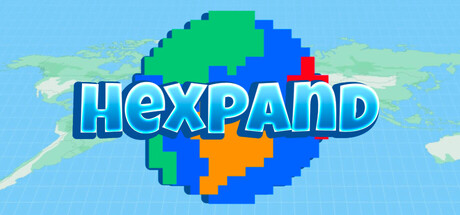

Hexpand is a fast, hex-based conquest strategy game built around a great hook: the whole world is the map. You begin with a single hex somewhere on Earth—surrounded by real coastlines, real continents, and real choke points—and you expand from there as the match ticks forward. It’s minimalist to look at, but surprisingly sharp in how it pushes you into conflict, diplomacy, and opportunism.
The whole world is the map
Unlike abstract boards, Hexpand uses recognizable geography as a core mechanic. Oceans aren’t just visual flavor—they’re hard constraints until you invest in mobility. Peninsulas become natural funnels for defense or invasion. Island nations can be a puzzle to crack, especially when opponents can reinforce them or leapfrog to other targets.
This makes each start location feel meaningfully different. A safe corner can buy you time, but it can also starve you of nearby cities. A central start can snowball quickly, but paints a target on you early.
How a match plays
At the heart of Hexpand is an elegant loop: your territory expands automatically over time, your holdings generate income, and you choose where to spend that income to accelerate (or sabotage) the balance of power.
- Territory spreads tick-by-tick — your footprint grows over time, creating constant pressure on borders.
- Capture cities to scale your economy — cities, capitals, and megacities permanently boost income for the rest of the match, so early city grabs can define the midgame.
- Use planes for long-range jumps — planes let you cross oceans, bypass fronts, and appear where no one expects you. They’re also the tool that turns stalemates into sudden collapses.
- Make alliances — you can propose a short truce (five minutes) with other players to stabilize a border, coordinate, or simply buy time.
- Break alliances instantly — betrayal is not only possible, it’s mechanically easy: drop a plane on an ally’s capital and the deal is over. The game practically dares you to do it.
The result is a match cadence that often starts civil—scouting, cautious borders, mutual non-aggression—then flips the moment someone realizes a plane strike or city steal will swing the economy. Hexpand’s best moments come from these abrupt turns: a quiet neighbor becomes an invader, a “trusted” ally turns opportunist, and the map changes color fast.
Six modes, one core idea: take more than the other players
Hexpand supports multiple ways to turn the same systems into different kinds of pressure:
- Conquest — classic elimination: wipe everyone else off the map.
- Blitz — faster ticks and faster collapses; mistakes compound immediately.
- Timer — five minutes to grab as many hexes as possible. Pure sprint strategy.
- City Rush — emphasizes capitals and income snowballing over raw land.
- Frontier — win by holding 90% of a region; encourages constant forward motion.
- Faction — team-based play, where coordination is the plan (and chaos is the reality).
What’s nice here is that the modes don’t feel like gimmicks—they highlight different incentives. If you enjoy economic momentum, City Rush pushes you toward risky city grabs. If you want short, sharp sessions, Timer delivers a tight “one more round” loop.
Solo challenges, daily quests, and customization
Even if you’re not in the mood for multiplayer diplomacy (or multiplayer backstabs), Hexpand includes five hand-built solo scenarios with leaderboards—designed for speedruns, big-number territory goals, and targeted conquest puzzles.
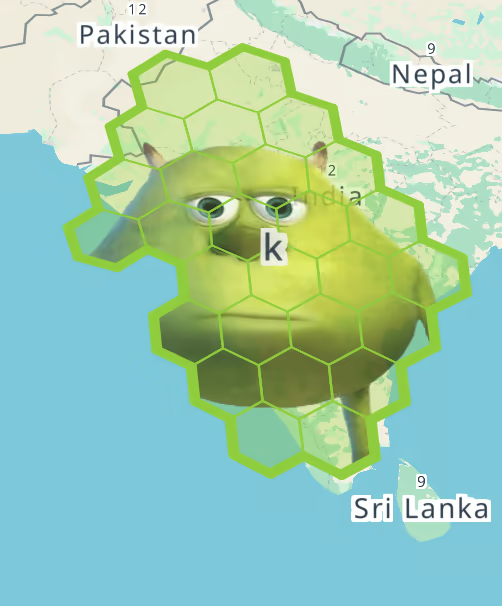
There are also daily quests that rotate objectives and reward consistency via streak bonuses. On top of that, customization leans into identity and humor: pick a country flag, apply hex patterns (including meme-style looks), and even upload your own image for a personalized map presence. Steam achievements round it out for completionists.
Quick to start, easy to fit into a day
Hexpand’s structure is built for modern play habits: a built-in tutorial, no account requirement, and matches that typically run 5–20 minutes. It’s the kind of strategy game you can boot up between tasks, but it still delivers the satisfying arc of expansion, escalation, and endgame collapse.
Mac system requirements
Minimum
- OS: macOS 10.15 Catalina
- Processor: Apple M1 or Intel Core i5
- Memory: 2048 MB RAM
- Network: Broadband Internet connection
- Storage: 150 MB available space
Recommended
- No recommended specs listed.
Verdict for Mac gamers
If you want a strategy game that’s fast to learn, hard to fully master, and constantly generating stories—especially stories about “temporary” alliances—Hexpand fits the bill. Its real-world geography gives the hex-board formula teeth, and planes ensure no one is ever truly safe. On Mac, the lightweight requirements and short match times make it an easy add to your rotation when you want something competitive without committing your entire evening.




Comments
Sign in to join the conversation.
Log in to commentNo comments yet. Be the first to join the conversation.