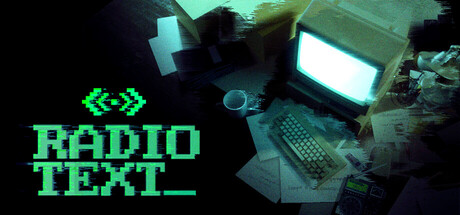

In Radiotext, the hook is immediate and perfectly unsettling: in a quiet alley beside a busy street, a stranger hands you a USB stick. If you want to know what’s on it, you plug it in—and suddenly you’re staring at a piece of software that feels like it was never meant to be found.
Billed as a 90s-built communication tool that uses radio waves rather than modern internet infrastructure, Radiotext invites you into a long-lost network where you don’t belong—at least not yet. You’re a newcomer, a stranger on the frequency, and the only way forward is to talk, listen, and learn the culture of the users still lingering inside.
What kind of game is Radiotext?
Radiotext is a terminal-driven narrative adventure with a strong emphasis on conversation, discovery, and choice. You’ll navigate an old-school interface, engage with a cast of network users, and slowly piece together what happened to this hidden communications ecosystem.
It leans into the texture of retro computing: typed interaction, minimalist layouts, and the sense that the UI itself is part of the fiction. The mood is equal parts techno-mystery and ghost story—because as you’re warned early on, not everyone on the network is simply “online.”
Explore forgotten channels, meet what’s left behind
Radiotext’s core loop revolves around establishing connections across forgotten channels and interacting with the people (and things) you find there. Some users are welcoming. Others are damaged. Some may not even be alive. The writing aims for that specific brand of internet folklore: intimate, cryptic, and occasionally threatening in a way that feels uncomfortably personal.
As you dive deeper into the wideband, you’ll encounter:
- Static whispers and strange signals that suggest there’s meaning in the noise
- Frequencies to decipher as you try to make sense of what the network is hiding
- Mysteries embedded in everyday chatter, where small details snowball into bigger revelations
Choices, consequences, and the paranoia of a closed network
Radiotext isn’t just about picking dialogue options—it’s about the tension of speaking in a place where trust is scarce. Characters may test you, recruit you, or try to turn you against others. You’ll be asked who you side with, and the game makes it clear that answers ripple outward. Someone lies. Someone tells too much. And there may be a mole inside.
One of the most compelling promises here is that choices can interconnect across conversations. A decision that seems harmless in one exchange may come back later as a blessing—or a curse—when speaking to someone else. If you enjoy narrative games where you’re constantly second-guessing what you should reveal, Radiotext is built for that mindset.
Interface as atmosphere: retro terminal, modern polish
Radiotext’s presentation is designed to sell the illusion that you’re operating a real piece of old software: a terminal aesthetic combined with a typing mechanic and authentic sound design. It’s not just nostalgia—it’s mood-setting. The UI can also be customized, letting you change colors and adjust node placement, which is both a quality-of-life feature and a way to roleplay your personal “setup” inside the network.
Key features
- Immersive retro interface with typing-driven interaction and authentic sound effects
- Unforgettable cast featuring 12+ characters with intertwined stories
- Branching and interconnecting narrative paths where consequences carry between conversations
- Customizable UI including color changes and node placement
- Hidden choices that aren’t always presented plainly—alternate words and paths can exist
- 3–4 hour runtime designed for a complete experience without a huge time commitment
- Replayability supported by alternate paths and different ways to experience the story
Mac performance and system requirements
Radiotext is listed as requiring an Apple Silicon Mac, which makes it a native fit for modern Macs but rules out older Intel-based systems.
Minimum Mac Requirements
- Processor: Apple M1
- OS: Apple Silicon
- Memory: 4 MB RAM
- Storage: 2 GB available space
Recommended Mac Requirements
- Processor: Apple M2
- OS: macOS 13 Ventura or later
- Memory: 8 MB RAM
- Storage: 2 GB available space
Note: The listed RAM values are unusually low for modern Mac game requirements; treat them as provided by the developer/publisher listing.
Who is Radiotext for?
If you like narrative-driven games that live and die by their tone, mystery, and conversation design, Radiotext is worth tuning into. It’s especially appealing for players who enjoy:
- Terminal/OS-style storytelling
- Internet horror and “lost network” fiction
- Short, replayable narrative experiences with branching paths
Plug in the USB, lock onto the frequency, and start typing—because in Radiotext, the story isn’t just told to you. It’s transmitted.




Comments
Sign in to join the conversation.
Log in to commentNo comments yet. Be the first to join the conversation.