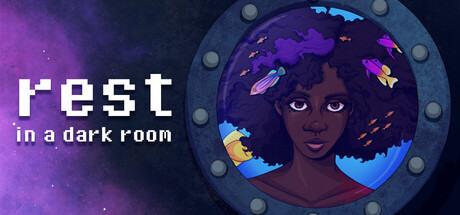

rest: in a dark room on Mac: Isolation, Identity, and the Cost of “Enlightenment”
YOU ARE CHARLOTTE, AND CHARLOTTE IS NO ONE.
rest: in a dark room is a story-forward visual novel that leans hard into introspection and discomfort, using sensory deprivation as both a literal device and a metaphor for emotional isolation. It’s the kind of game that doesn’t ask you to optimize builds or master mechanics—it asks you to sit with Charlotte’s thoughts, follow her reasoning, and decide how she reacts when reality refuses to stay simple.
Premise: Chasing Consciousness in the Dark
In 1954, scientist John C. Lilly pioneered the sensory deprivation tank, stripping away external stimuli until the mind becomes the only environment left. rest: in a dark room pulls inspiration from that history, then jumps decades forward to Charlotte: seventeen, alone, and convinced that human connection is a dead end.
Charlotte believes sensory deprivation is her path to happiness—and maybe even to cracking the code of consciousness itself. But when an ambitious, overbearing stranger pulls her back from certain death, the story pivots into something messier: stranger, more complicated, and increasingly weird in ways that fit the game’s psychological tone.
What You’ll Do: Choices With Social Gravity
At its core, rest: in a dark room is about guiding Charlotte through conversations, encounters, and moments of vulnerability. The game emphasizes that Charlotte’s fate hinges on “subtle nuances” in how she interacts with other teenage girls—meaning the choices aren’t always telegraphed as obviously “good” or “bad.”
Your decisions can be careful, defensive, reckless, or searching. Over time, those small behavioral signals accumulate into one of the game’s 8 unique endings. If you enjoy narrative games where tone and subtext matter as much as the literal text, this is built to reward paying attention.
Presentation: Illustration-Driven and Music-Backed
- Vibrant illustrations that carry mood and character as much as the writing does.
- Original music that reinforces the game’s introspective, uneasy atmosphere.
- 8 unique endings designed for replay and re-interpretation.
Because the experience is so tone-dependent, the art and soundtrack aren’t just “nice extras”—they’re a big part of why the story lands (or unsettles) the way it does.
Who It’s For (and Who Should Think Twice)
Play it if: you like psychological visual novels, character-driven narratives, and branching endings that stem from social behavior rather than puzzle-solving.
Consider skipping (or researching first) if: you’re looking for action, traditional “gameplay loops,” or a lighthearted story. This one is pointedly internal, and it’s willing to get uncomfortable.
Mac System Requirements
Minimum
- OS: 10.10+
- Processor: 2.0 Ghz 64-bit Intel-compatible (Apple silicon supported through Rosetta 2)
- Memory: 4 GB RAM
- Graphics: OpenGL 3.0
Recommended
- No recommended specs were provided.
Bottom Line
rest: in a dark room is a Mac-friendly visual novel built around a strong hook—sensory deprivation as a doorway to self—and a protagonist who’s difficult in believable ways. With striking illustration work, original music, and eight endings shaped by nuanced choices, it’s best approached like a psychological short story you can steer: slow, intimate, and deliberately unsettling.

Comments
Sign in to join the conversation.
Log in to commentNo comments yet. Be the first to join the conversation.