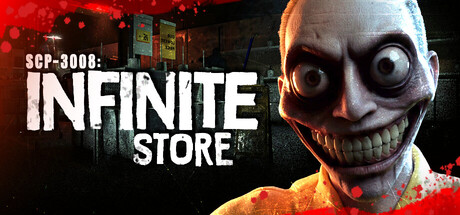

Overview
SCP-3008: Infinite Store takes the unsettling premise of a “normal” big-box furniture store and bends it into a repeating, deceptive labyrinth. The lights are bright, the rooms are staged, and the aisles feel routine—until you realize the layout loops. Rooms reappear in the same order, but not always in the same condition. Your job isn’t to fight; it’s to notice.
On Mac, this plays like a focused, modern twist on the “spot-the-difference” formula—except the stakes are psychological, the space is endless, and the game never tells you what it changed.
The Hook: The Store Looks Familiar (That’s the Problem)
The setting is built from showrooms, corridors, and aisles that repeat into an infinite retail maze. At first, repetition feels comforting—predictable even. Then the game starts asking a sharper question: do you actually remember what you just saw, or are you only assuming it’s the same?
Rooms return, but subtle (or not-so-subtle) anomalies can creep in: environmental shifts, audio oddities, and occasional entity-based changes that challenge your confidence more than your reaction time. Sometimes something is wrong. Sometimes nothing is wrong at all. Learning the difference is the core tension.
Observation Is the Game
The rules are simple, but the experience is not:
- If you notice an anomaly, you should turn back.
- If everything appears normal, you should move forward.
- Choose incorrectly, and the loop resets.
There’s no combat, no hint system, and no helpful confirmation like “Correct!” or “You missed the moving chair.” The Store only responds through consequence: progress or reset. That design choice keeps you in a constant state of second-guessing—exactly where a liminal horror setting wants you.
Your Objective: Escape by Shopping
Here’s the twist that makes Infinite Store feel more like a game than a pure haunted-house walk: you aren’t just trying to leave—you’re trying to check out. As you move through the loop, you must collect items from a shopping list scattered naturally throughout the rooms.
Miss an item, and the Store won’t let you leave. Fail a judgment call and trigger a reset, and the game reshuffles both your route and your list. That layering turns quiet observation into pressure: the longer you stay alive in a run, the more you have to lose if you misread a room.
The End of the Loop (Maybe)
Reach the cash-out room with everything you need and the Store may allow you to leave. Or it may not. The uncertainty fits the game’s tone: even success can feel provisional, like the building is waiting for you to slip.
Every playthrough begins again in the first room. Nothing is permanent except what you remember—which is exactly what the game tests.
Key Features
- Observation-Driven Progression
Advance by noticing what feels wrong—or realizing nothing is. - Endless Marketplace Loop
A furniture superstore layout built from themed rooms and corridors that repeat, reset, and deceive. - Unique Anomalies
Environmental, audio, and entity-based changes designed to test perception, not reflexes. - No Combat, No Guidance
No weapons. No UI warnings. Only your judgment.
How It Feels on Mac
Infinite Store is the kind of horror that benefits from a good pair of headphones and a distraction-free session. Because there’s no combat to “break” tension, the atmosphere does most of the heavy lifting—your mind fills in gaps while you scan for inconsistencies. The best moments are when you’re staring at a perfectly normal showroom and asking yourself whether the anomaly is the room… or your memory of it.
If you enjoy slow-burn, liminal horror, or puzzle experiences built on attention to detail, this is an easy one to recommend—especially if you like games that trust players to learn through failure.
Mac System Requirements (Minimum)
- OS: macOS
- Processor: Apple M1 or Intel Core M
- Memory: 8 GB RAM
- Graphics: Direct X compatible
- Storage: 3 GB available space
Tips for New Shoppers
- Slow down and re-check sightlines. Small changes are easier to spot when you look at a room from the same angle each time.
- Trust patterns, not vibes. The Store thrives on uncertainty; build a mental checklist (lighting, props, signage, sound cues) and run it every room.
- Prioritize the list. A perfect run means nothing if you missed an item that blocks your exit.
Bottom line: SCP-3008: Infinite Store is horror by way of attention. It’s a looping retail nightmare where the scariest monster is your own confidence—and on Mac it’s a compelling, minimalist premise executed with sharp restraint.





Comments
Sign in to join the conversation.
Log in to commentNo comments yet. Be the first to join the conversation.