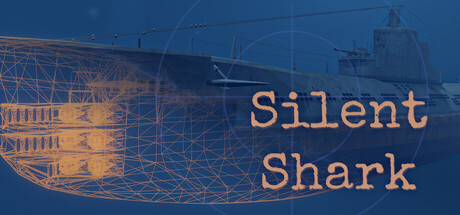

Silent Shark is a WWII submarine simulator that puts the “sim” back in sub sim—less about twitch reactions and more about disciplined plotting, estimation, and making decisions with imperfect information. Set in the Pacific Theater, it’s a game about commanding a boat the way crews actually fought: by listening, observing, calculating, and preparing an attack long before you ever open torpedo tube doors.
What kind of submarine game is Silent Shark?
At its core, Silent Shark is a tactical chart-driven simulator. Instead of leaning on constant 3D situational awareness, it asks you to build a mental model of the battle using period-inspired tools: mark contacts on the map, measure bearings and angles, estimate range, and refine a firing solution over time. If you love the “map mode” side of classic sub sims—interception geometry, target motion analysis, and patient setup—this is the whole game built around that philosophy.
The loop: find, track, intercept, strike, escape
Silent Shark’s best moments come from the full attack cycle:
- Detect and classify: Use the hydrophone to track ships and convoys by sound, learning to distinguish merchants from escorts by pitch and character.
- Estimate motion: Plot bearings over time, mark timestamped points, and work out course and speed from incomplete readings.
- Approach with intent: Choose the right angle, manage depth and speed, and account for visibility, sea state, and time of day.
- Build the firing solution: Identify targets through the periscope, estimate range with the stadimeter, and feed the Torpedo Data Computer with the best numbers you can produce.
- Survive the response: If escorts get a fix, you’ll need to know when to go hard and fast—and when to go slow and silent.
The key is that success is usually decided before you fire. A rushed shot is often a missed shot, and a sloppy approach can turn the ocean into a depth-charge problem very quickly.
Instruments, not shortcuts
Silent Shark is proud of its deliberate controls and historical flavor. Rather than presenting information as clean UI overlays, it leans on realistic replicas and manual procedures:
- Map tools like a compass, ruler, angles, and timestamped plotting points to shape an interception course.
- Periscope with 1.5x and 6x zoom, offering a stylized 3D view of contacts within visibility range.
- Hydrophone tracking that encourages careful listening and interpretation, not just “tagging” targets.
- Stadimeter rangefinding: identify the ship to determine mast height, then calculate distance by measuring mast angle.
- TDC with Position Keeper: enter angle-on-bow, target speed, bearing, and distance to produce hits that feel earned.
- Torpedo firing box controls including tube flooding, gyro angle, spread, and salvo management.
Weather, sea state, and the ocean as a system
This isn’t a static shooting gallery. Visibility and stealth are strongly influenced by sea state, weather, and time of day, and Silent Shark also models dynamic thermal layers that change by region and time—measured via bathythermographic readings. It’s the sort of detail that matters when you’re trying to disappear after an attack, especially when destroyers start making their own predictions about your position using a sonar model and their own hydrophone work.
Campaign play in the Pacific
For players who want more than standalone scenarios, Silent Shark includes a Pacific Theater patrol campaign with assigned patrol zones and longer-range planning. The campaign structure emphasizes the rhythm of wartime patrols—getting intel, moving to zones, hunting traffic, and living with the consequences of your decisions.
- Radio intelligence updates help provide situational awareness and hints without turning the experience into pure waypoint chasing.
- Historical events can affect your strategic situation, including early-war base losses.
- Reputation-based progression across six submarines, from Porpoise-class to Balao-class.
- Resource management during extended patrols (fuel, torpedoes, and even fresh air).
- Persistent, historically named enemy ships: sunk ships don’t simply respawn later in the same patrol.
- Evolving opposition as convoy routes, escort strength, and patrol density change over time.
And yes—there’s a cribbage mini-game for downtime, which fits the long, tense stretches between contacts surprisingly well.
Scenarios, tutorials, and editing
Silent Shark includes tutorials, standalone scenarios, and a scenario editor, making it approachable for newcomers to manual targeting while still offering room for experienced skippers to craft challenging engagements.
Audio and atmosphere
Between hydrophone listening and patient plotting, atmosphere matters. Silent Shark features dynamic music inspired by Holst’s Planets, reinforcing the game’s methodical tempo without constantly demanding attention.
Who it’s for
Silent Shark is aimed squarely at players who enjoy naval history, tactical simulations, and the satisfaction of getting results from good process. If you want a game where the interesting part is staying calm, keeping track of what you think is happening, and acting decisively anyway—this is that kind of sim.
Mac performance and platform notes
Silent Shark is Apple Silicon-only on Mac. Intel Macs aren’t supported, so you’ll want an M1 or newer system. Storage needs are modest, and the GPU requirement is simply a Metal-compatible Apple Silicon GPU (i.e., standard for modern Apple Silicon Macs).
Mac system requirements
Minimum
- OS: macOS 12 Monterey or later
- Processor: Apple Silicon (M1 or newer)
- Memory: 4096 MB RAM
- Graphics: Metal-compatible Apple Silicon GPU
- Storage: 1024 MB available space
- Sound Card: macOS-compatible audio device
- Additional Notes: Apple Silicon required. Intel Macs are not supported.
Recommended
- OS: macOS 12 Monterey or later
- Processor: Apple Silicon (M1 or newer)
- Memory: 8192 MB RAM
- Graphics: Metal-compatible Apple Silicon GPU
- Storage: 2048 MB available space
- Sound Card: macOS-compatible audio device
The developer
Silent Shark is developed by John Goering, an indie developer based in Berlin. He’s also known for the SmoothTrack head tracking app and the Mindscope organizing app. Inspired by classics like Silent Service II and later sub sims such as Silent Hunter IV and UBoat, his goal here is clear: take the map-driven, methodical heart of submarine simulation and build an entire game that fully commits to it.
Bottom line: If you’re looking for a Mac-native sub sim that values patience, plotting, and realistic procedures over instant feedback, Silent Shark is one of the most purpose-built tactical submarine games in years.




Comments
Sign in to join the conversation.
Log in to commentNo comments yet. Be the first to join the conversation.