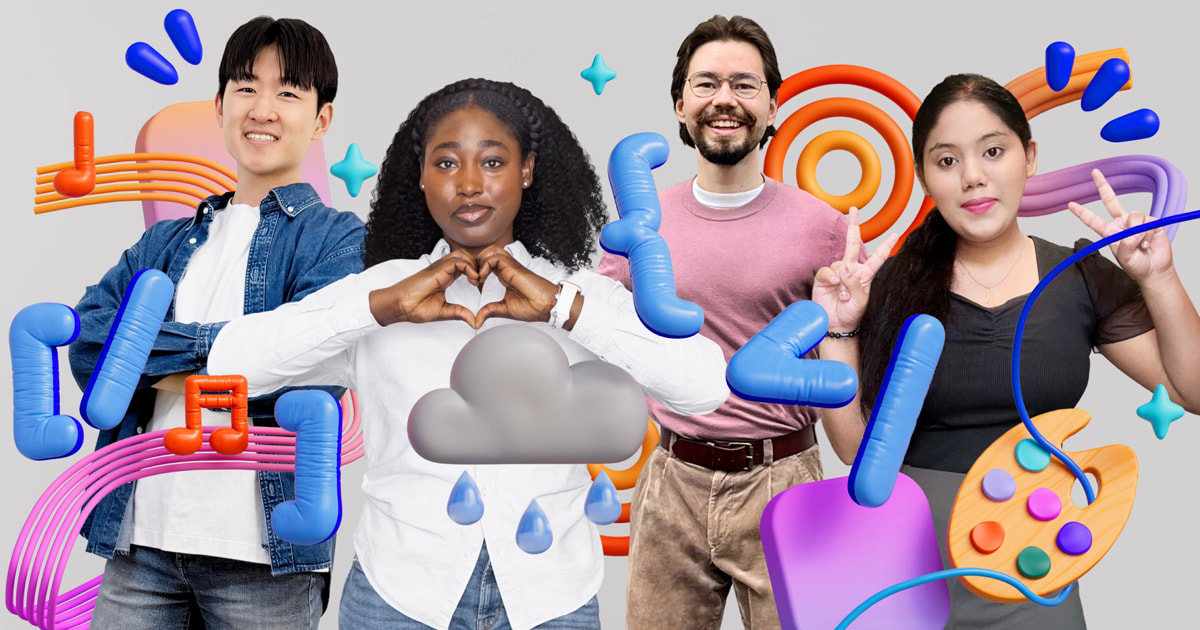

Apple used its Newsroom this week to put a human face on the Swift Student Challenge: four Distinguished Winners whose app playgrounds aim at practical, real-world accessibility problems, often with AI in the loop. This isn’t a game reveal or a graphics-tech drop, but it’s still relevant reading for Mac-focused developers and anyone watching Apple Silicon’s software trajectory — because the same platform building blocks that power these student projects are the ones that shape what lands on macOS (and what performs well on M-series Macs).
Why MacGaming.com is covering this
On the surface, the Swift Student Challenge is a student developer program and a WWDC on-ramp. Underneath, it’s a yearly snapshot of what Apple is encouraging: Swift-first development, Apple-platform-native UI patterns, and increasingly, “AI tools” paired with accessibility outcomes. For the broader Mac ecosystem — including games and game-adjacent apps like launchers, community tools, streaming utilities, and creative companions — the message is consistent: on-device capability and inclusive UX aren’t optional polish, they’re product fundamentals.
Apple’s headline theme: AI meets accessibility
According to Apple, this year’s challenge produced 350 winning submissions representing 37 countries and regions. Apple also notes that 50 Distinguished Winners are invited to Apple Park for a curated three-day WWDC experience, including labs and sessions with Apple engineers. In other words: the pipeline from student projects to “this is how you build on Apple platforms” is deliberate, and the company is investing in it.
Susan Prescott, Apple’s vice president of Worldwide Developer Relations, emphasized the mix of Apple platforms, Swift, and AI tools — and positioned the results as both technically impressive and personally meaningful. That framing matters for Mac developers because it mirrors what Apple tends to reward with visibility: apps that showcase platform APIs while telling a clear story about who benefits.
Four Distinguished Winners Apple highlighted
Apple’s story spotlights four projects, each built around accessibility and real-life needs:
Gayatri Goundadkar’s “Steady Hands” focuses on making drawing more accessible for people with tremors, using Apple Pencil stabilization. Apple’s write-up underscores design choices aimed at older adults, including an interface meant to feel calm and approachable rather than clinical.
Apple also references projects tied to real-time presentation feedback, flood-zone navigation in Accra, and playing viola without the physical instrument — examples that reinforce a broader point: Swift Playground-style prototypes are increasingly expected to demonstrate end-to-end thinking (problem, user, interface, and technology) rather than just clever code.
The platform takeaway for Mac and Apple Silicon watchers
Even without any explicit gaming angle, this is a useful signal for where Apple’s ecosystem continues to push:
First, accessibility is being treated as a core feature area, not an add-on. For Mac developers, that aligns with the reality that macOS apps often live longer than mobile counterparts and serve broader audiences across hardware generations — making accessibility work a long-term multiplier, not a one-off cost.
Second, Apple’s continued pairing of “AI” with “Apple platforms” points toward more on-device, privacy-conscious intelligence patterns. Whether you’re building a game companion app, a mod manager, or an input/streaming utility, Apple Silicon’s strength is efficient compute — and Apple wants developers using that strength in ways that feel native and user-respecting.
Third, Swift remains the front door. Even if your world is C++ engines and middleware, Swift is increasingly the connective tissue for Apple-platform tooling, wrappers, and companion experiences. The Student Challenge is effectively Apple’s yearly reminder that Swift fluency is a career accelerant inside this ecosystem.
Source and where to read more
Source: Apple Newsroom, “AI meets accessibility in this year’s Swift Student Challenge,” published May 7, 2026.
Apple’s full story (including more context on the challenge and the student projects) is available here:
https://www.apple.com/newsroom/2026/05/ai-meets-accessibility-in-this-years-swift-student-challenge/

Comments
Sign in to join the conversation.
Log in to commentNo comments yet. Be the first to join the conversation.