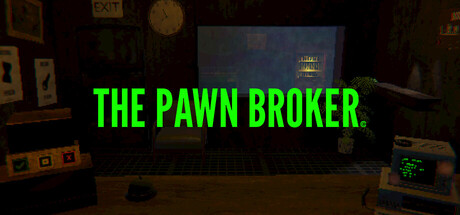

A pawnshop horror where your eyes are your only interface
The Pawn Broker drops you into a stark premise with no room for comfort: you wake up behind the counter of a pawnshop, the door is locked, and a debt is due. The Collector is watching. You have five days to make enough profit to satisfy the terms. Fail, and the game isn’t coy about the outcome: you die.
This is not a power fantasy about running a cozy store. It’s a pressure-cooker built around attention to detail, reading the room, and learning the rules through consequence. The shop is your world, the counter your boundary, and the items sliding across it are both your livelihood and your threat.
Core loop: examine, decide, and live with what you let in
Each day brings a flow of goods. Your job is to observe them closely, analyze what you’re seeing, and decide what to accept or reject. Some items carry subtle markings—symbols and signs that can be easy to miss if you get sloppy. Accept the wrong thing and the rules don’t just punish you outright; they shift.
- Cursed items can change how the shop behaves, introducing new constraints or dangers.
- Stolen goods can trigger a “karma” response—less immediate than a jump scare, but potentially more devastating: inflation, fines, and other consequences that stack quietly over time.
The tension comes from the fact that survival is tied to business performance. You can’t simply refuse everything suspicious; you’re racing a deadline. But the more you cut corners, the more the shop (and The Collector’s unseen rules) start cutting back.
The terminal: your morning brief and your best chance at staying ahead
Your main tool is the shop’s terminal, which delivers daily reports: news about stolen goods in circulation, item categories under scrutiny, and fluctuating values. This information matters. It’s the closest thing you get to a lifeline, and it functions like an in-world replacement for what other games would place in menus or tooltips.
Read it carefully, remember what it says, and adjust your decisions accordingly. Ignore it, and you may find yourself accepting the exact kind of item the day’s news warned you would bring heat—or profit margins collapsing as the economy turns against you.
No HUD, no tutorial, no safety net
The Pawn Broker commits hard to immersion. There’s no UI, no persistent HUD, and no tutorial holding your hand. The design philosophy is simple: everything you need to know is in the room, everything you need to see is in front of you, and everything you fail to notice belongs to The Collector.
For Mac players, this is the kind of game that rewards playing on a larger display (or at least sitting closer than usual). Tiny details and quick reads matter, and the stress of the five-day timer amplifies every second you spend second-guessing yourself.
Why it works on Mac: tight scope, high tension
On paper, “pawnshop simulator with horror consequences” sounds niche. In practice, it’s a sharp setup for players who enjoy deduction, minimal guidance, and games that make you feel responsible for your own downfall. The lack of overt UI also makes the experience feel more like you’re physically trapped at the counter, piecing together an unseen system from everyday objects and grim cause-and-effect.
If you like games about pattern recognition and uneasy atmosphere—where the scariest moments come from realizing you missed something obvious—The Pawn Broker is built for that exact kind of dread.
Mac system requirements
Minimum
- OS: macOS 13 Ventura
- Processor: Apple M1
- Memory: 8 GB RAM
- Graphics: Apple M1
- Storage: 3 GB available space
Recommended
- OS: macOS 26
- Processor: Apple M5
- Memory: 8 GB RAM
- Graphics: Apple M5
- Storage: 3 GB available space
Bottom line
The Pawn Broker is a five-day sprint where profit is survival and attention is armor. It’s minimalist in presentation but heavy in implication: every acceptance is a gamble, every missed detail a future penalty, and every day a step closer to The Collector’s due. Make money, keep your conscience clean, and don’t let the cursed slip through—because the shop remembers.




Comments
Sign in to join the conversation.
Log in to commentNo comments yet. Be the first to join the conversation.