
Apple’s new HomeView is a home hub—here’s why Mac and Apple Silicon users should care
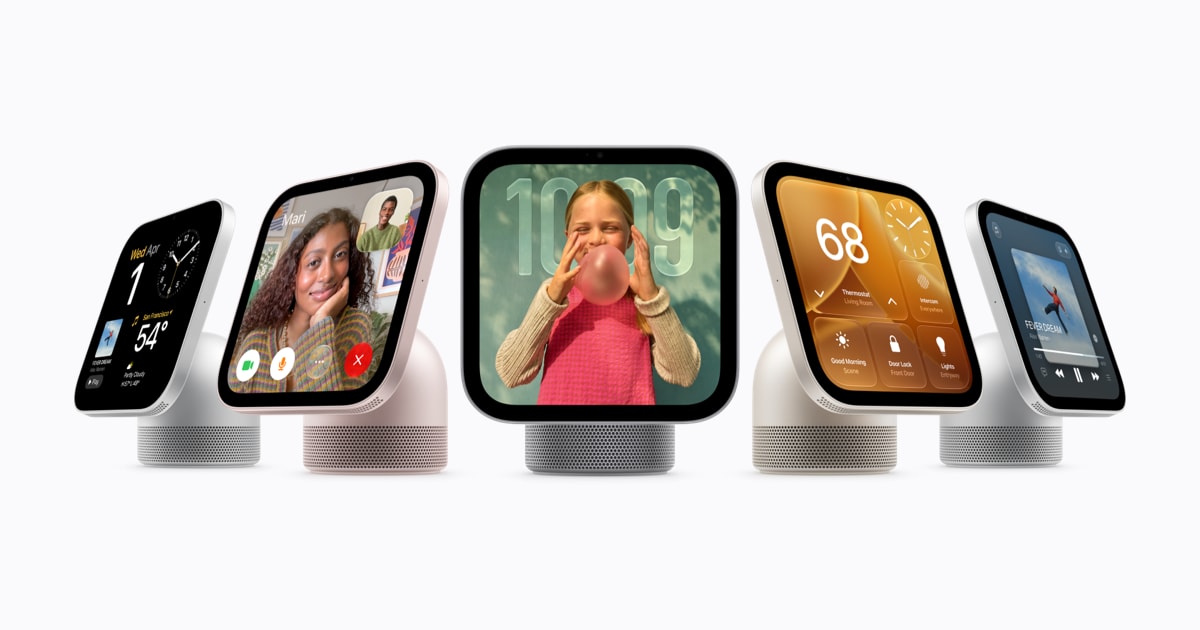
Apple has announced Apple HomeView, a new 7-inch Liquid Retina smart-home and entertainment device positioned as a shared household screen that becomes personal when it recognizes who’s standing in front of it. While this isn’t a gaming product announcement, it’s still meaningful ecosystem news for MacGaming.com readers because Apple continues to expand where Apple Intelligence and the company’s privacy-first identity model show up in daily life—often the same spaces where Macs, Apple TVs, controllers, headsets, and home networks are doing heavy lifting.
HomeView is described as a central point for entertainment, FaceTime, messaging, and home management. Apple says it’s powered by Apple Intelligence and a new Siri AI that’s “more capable and conversational,” with on-screen awareness and richer discovery features. Pre-orders start today, with availability beginning November 13.
Personalization in a shared room: face recognition and “household screen” dynamics
One of the most notable angles for platform watchers is how Apple is framing identity: HomeView can recognize users by their faces and then adapt the experience so each person can access personal content like Messages, FaceTime, Calendar, Reminders, and Find My—while remaining a device intended to sit in common areas like a kitchen, living room, entryway, or hallway.
For households where a Mac gaming setup shares space with family devices, the “shared but personalized” concept is increasingly central to Apple’s ecosystem story. It’s the same design tension Apple faces on Apple TV, iPad shared use, and any ambient computing device: making it convenient without turning a communal display into a privacy hazard. Apple’s messaging here is clear: personalization is a feature, but privacy and security are positioned as foundational requirements.
Siri AI + Apple Intelligence: the ecosystem story that developers should track
Apple says HomeView features Siri AI with broader world knowledge and the ability to deliver more helpful responses. More importantly for Apple-platform readers: when paired with an Apple Intelligence-enabled device, HomeView can draw on a user’s personal context (for example, Calendar, Messages, and “relevant information across their apps”) to respond in a more personalized way.
Even without any gaming-specific announcements, this matters because Apple is effectively describing a multi-device intelligence model: a home device that becomes more useful when it can securely work with nearby personal devices. For developers building for macOS and iOS—especially those thinking about companion experiences, second-screen utilities, or household-friendly apps—this is another signal that Apple wants “contextual” experiences that still respect per-user boundaries in shared spaces.
Entertainment and the living room: adjacent implications for Apple’s gaming ecosystem
Apple pitches HomeView as a place to enjoy entertainment and fill the room with sound, alongside FaceTime and home control. MacGaming.com readers will likely translate that into a practical question: how does this affect the living-room stack where Apple TV often sits today?
Apple doesn’t position HomeView as a replacement for Apple TV, nor does it announce game streaming, controller features, or a new tvOS gaming push here. But a new Apple-branded “home center” could still influence how people control playback, manage HomeKit scenes that affect a gaming space (lighting, audio routing, do-not-disturb modes), and handle household identity—especially if Apple continues to unify Siri AI behaviors across devices.
Privacy and security: the key promise in a camera-facing household device
Because HomeView recognizes faces and supports personal content access in shared rooms, its privacy stance is a major part of the story. Apple explicitly says HomeView is built with privacy and security at its core. For Mac and Apple Silicon users—many of whom prioritize local processing, permissioning, and account separation—this is the line to watch as the product ships and reviewers confirm how authentication, data access, and multi-user boundaries are implemented in practice.
Availability
Apple says HomeView is available for pre-order starting today, with availability beginning November 13. The device can be placed on a tabletop or wall-mounted, targeting both “center of the home” and pass-through spaces like hallways.
Source
This news comes from an Apple Newsroom press release published on October 13, 2026.
For Apple’s full announcement and product positioning details, read the original post here: https://www.apple.com/newsroom/2026/10/meet-apple-homeview-a-new-way-to-enjoy-entertainment-and-manage-the-home/

Comments
Sign in to join the conversation.
Log in to commentNo comments yet. Be the first to join the conversation.