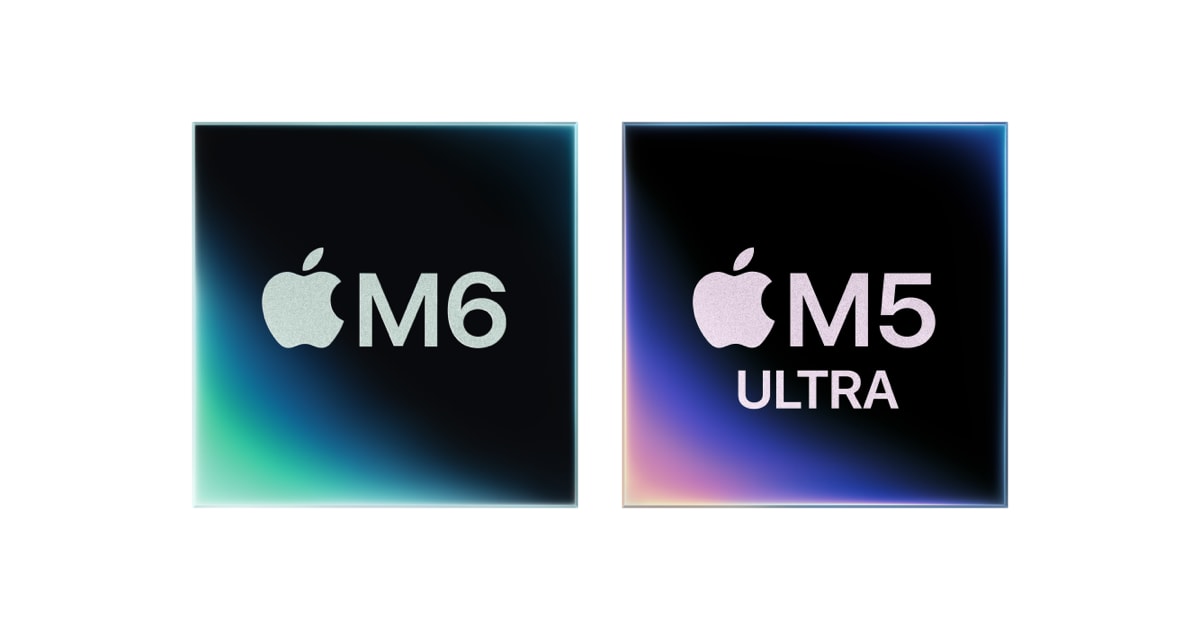

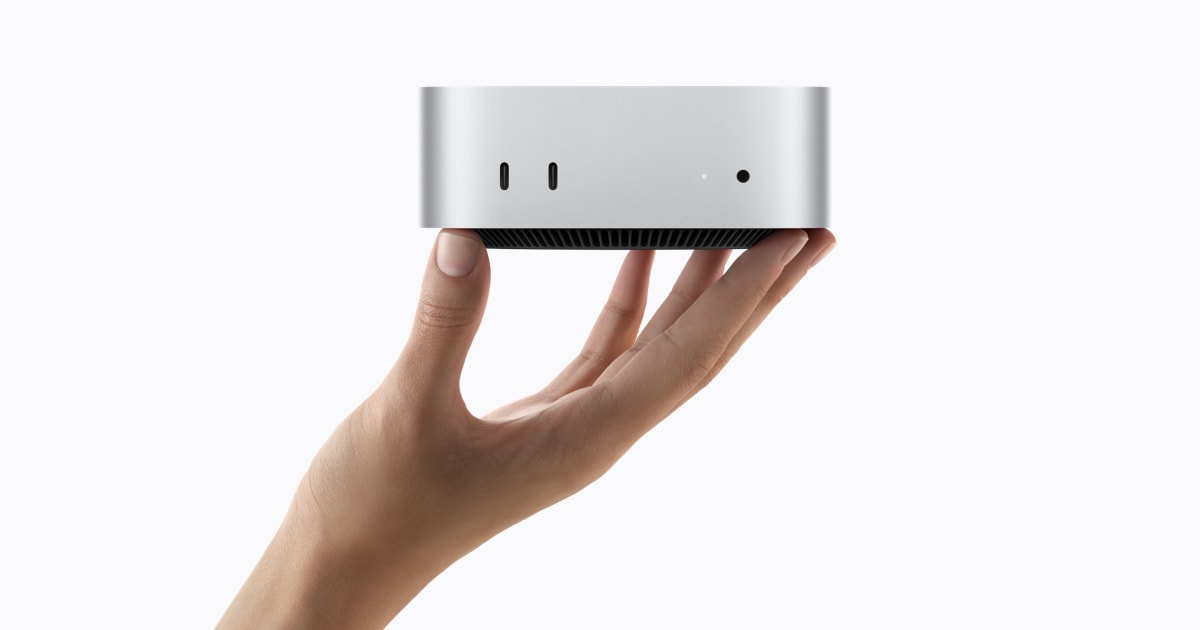
Apple has announced two new Apple Silicon chips aimed squarely at performance and on-device AI: M6, arriving in the new Mac mini, and M5 Ultra, powering the new Mac Studio. While Apple’s Newsroom briefing is positioned around broad compute and AI workflows, the details matter to Mac gaming and dev audiences because they map directly to the platform’s CPU/GPU headroom, unified memory bandwidth, and the kind of machine profiles studios target when optimizing for macOS.
M6: 2nm, bigger CPU/GPU blocks, and a dual Neural Engine
According to Apple, M6 is its first 2-nanometer chip and is built around a larger 12-core CPU and 12-core GPU, along with a Dual 16-core Neural Engine. Apple also claims up to 170GB/s of unified memory bandwidth.
For Mac players, the immediate takeaway isn’t a specific FPS promise (Apple didn’t provide game benchmarks in the material), but rather that M6 continues the trend of raising baseline performance in smaller Macs. When the entry and midrange machines get stronger, it expands the “typical Mac” target for developers. That can influence everything from default quality presets to whether features like more advanced simulation, higher-resolution assets, or heavier CPU-side gameplay systems can be enabled by default.
For developers, the 2nm transition and the emphasis on a faster Neural Engine are also a platform signal: Apple continues to treat on-device ML as a first-class workload. Even if your game doesn’t ship ML features, tools increasingly do—think animation pipelines, upscaling experiments, capture cleanup, automated QA triage, or content tagging—where local inference speed can reduce iteration time.
M5 Ultra: quad-die architecture and extreme unified memory bandwidth
M5 Ultra is framed as Apple’s most powerful M-series chip yet, built using what Apple calls next-generation UltraFusion to form a quad-die architecture for the first time in an M-series SoC. Apple says M5 Ultra scales up to a 36-core CPU and an 80-core GPU, with 1.2TB/s of unified memory bandwidth—also noted as 50% more than M3 Ultra.
This is the part of the announcement that matters most to high-end Mac game development and performance testing. The Ultra-class Macs are where studios and technical artists tend to land when they need maximum headroom for compiling, baking, profiling, capture, and running multiple heavy apps at once. Unified memory bandwidth and GPU scale can also impact workloads like shader compilation stress tests, large-world streaming experiments, and high-resolution performance capture—areas that don’t always show up in marketing slides but absolutely show up in day-to-day production.
Why Apple’s AI compute emphasis matters to the Mac ecosystem
Apple’s framing heavily leans into AI compute, highlighting the Dual 16-core Neural Engine on M6 and GPU “Neural Accelerators” as part of the broader story. From a MacGaming.com perspective, the key is to treat this as ecosystem direction rather than a direct gaming feature announcement. Apple is clearly pushing the Mac toward more on-device AI capability across its lineup, which may shape future developer expectations for tooling, runtime features, and performance targets on Apple Silicon.
That said, nothing in the Newsroom material guarantees near-term changes to macOS game availability, porting effort, or engine support. But stronger baseline chips in Mac mini and more extreme top-end configurations in Mac Studio can make macOS a more attractive performance platform for building and validating games—especially when studios want to cover both mainstream and high-end Mac profiles.
What we’re watching next
With the silicon story laid out, the next questions for Mac gaming are practical: how these chips perform in real-world sustained loads, how the new GPU configurations behave under long sessions, and whether developers begin to assume higher minimum capability on modern macOS targets as M6 Macs become common. As always, the most meaningful gaming impact tends to show up later—when engines, ports, and patches begin targeting the new baseline.
Source: Apple Newsroom (press release, published 2026-08-25).
For Apple’s full announcement and the complete set of claims and specifications, read the original post on Apple Newsroom here:
https://www.apple.com/newsroom/2026/08/apple-introduces-m6-and-m5-ultra-for-a-big-leap-in-performance-and-ai-compute/




Comments
Sign in to join the conversation.
Log in to commentNo comments yet. Be the first to join the conversation.