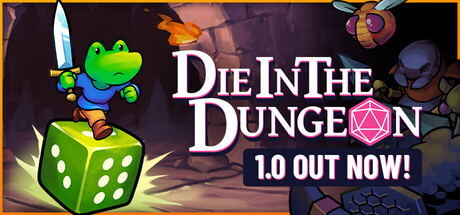

Overview
Die in the Dungeon is a turn-based, dice-building roguelite with a simple but instantly compelling twist: your dice function as your deck. Instead of drawing cards, you build a pool of dice, customize what each face can do, and then roll into tactical turns where positioning and synergies matter as much as raw numbers.
The result feels like a hybrid of classic deckbuilding decision-making and a board-like spatial puzzle—one where you’re constantly balancing risk, reliability, and combo potential as the dungeon shifts from run to run.
How the Dice-Deck Combat Works
Each combat encounter plays out in turns. Your dice provide your actions: attacks, defense, utility effects, and specialized mechanics. Rolling introduces uncertainty, but the game’s core design aims to make outcomes feel steerable through build choices rather than random fate.
- Dice as your deck: You collect and refine dice over the course of a run, shaping a consistent game plan the same way you would in a card battler.
- Face customization: You can set dice faces and add properties that define a die’s job—damage dealer, shield engine, combo enabler, reroll tool, and more.
- Strategy over luck: While rolls vary, you’re encouraged to build for consistency via synergies, rerolls, mitigation tools, and smart face distributions.
Four Frog Warriors, Four Playstyles
You’ll pick from four adorable-but-deadly frog warriors, each with a distinct identity and their own starting dice set. That starting kit matters: it nudges you toward certain archetypes from the very first room and makes early routing decisions (shops, fights, rewards) feel meaningfully different from character to character.
Across the roster, expect playstyles that emphasize tools like:
- Poisoning enemies over time
- Reroll manipulation to smooth out variance and fish for key faces
- Parries and defensive timing to turn enemy pressure into advantage
Placement and Board Synergies: The Spatial Puzzle
Die in the Dungeon doesn’t stop at “roll and resolve.” Many dice buff and interact depending on where they’re placed. That means each turn becomes a mini optimization problem: arrange your rolled dice to maximize synergies, trigger adjacency effects, and set up devastating sequences.
This placement layer is where the game often finds its identity—turns can feel less like you’re hoping for a good roll and more like you’re solving a tactical puzzle with the tools you engineered.
Run Progression: Relics, Dice, and Potions
As you push deeper, your build is shaped by a steady stream of unlocks and power spikes:
- 142 relics to discover, each potentially altering how your dice behave or how you approach encounters
- 31 unique dice to unlock and experiment with, supporting different archetypes and combo packages
- 36 potions usable in battle, offering clutch turns, emergency stabilization, or explosive finishers
In a roguelite structure, these systems do the heavy lifting: you’re not just getting “bigger numbers,” you’re assembling a toolkit that can pivot as the dungeon demands—especially when a surprising relic or a newly unlocked die suggests an entirely different plan mid-run.
Why It’s a Great Fit for Mac Players
Turn-based roguelites are a natural match for Mac gaming: they’re typically lightweight, easy to play in shorter sessions, and don’t require twitch inputs or ultra-high frame rates to feel good. Die in the Dungeon leans into that strength—its tension comes from planning, sequencing, and adaptation.
Mac System Requirements
Minimum
- OS: Mac OSX 10.7 and above
- Processor: 1,3GHz
- Memory: 1 GB RAM
- Graphics: 1GB Video Memory
- Storage: 500 MB available space
Recommended
No recommended Mac specs were provided.
Verdict
Die in the Dungeon stands out by turning deckbuilding into something tactile and modular: you’re not just collecting “cards,” you’re engineering dice—customizing faces, stacking properties, and then using placement-based synergies to convert rolls into reliable plans. If you enjoy roguelites that reward smart construction, adaptable tactics, and satisfying combo payoffs, this is an easy one to keep on your Mac rotation.





Comments
Sign in to join the conversation.
Log in to commentNo comments yet. Be the first to join the conversation.