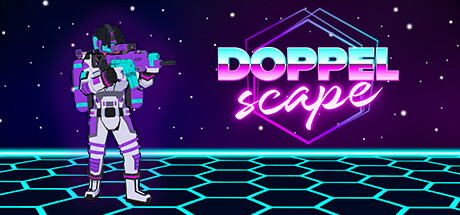

Doppelscape on Mac: Tactical Deckbuilding With a Three-Hero Twist
Doppelscape is a roguelite that deliberately sits at the intersection of two beloved strategy flavors: the evolving, run-by-run deck construction of Slay the Spire and the positional, puzzle-like combat of Into the Breach. The result is a game where drafting the right card is only half the battle—the other half is where you stand on a hex grid, who you can shove into danger, and how your three-character squad functions as a single machine.
Core Premise: Escape, Iterate, Optimize
Like many modern roguelites, Doppelscape is structured around repeated attempts to push further, learn enemy patterns, and refine your approach. Each run revolves around building power as you go—collecting cards, assembling synergies, and equipping game-changing items—while keeping your squad alive long enough for your plan to come online.
Three-Character Team Strategy (and Why It Changes Everything)
The standout hook is that you aren’t building a deck for a hero—you’re managing a team of three characters, each with their own cards, mechanics, and tactical identity. That opens up a broader design space than single-character deckbuilders:
- Cross-character synergy: Instead of chasing one linear combo, you can build layered interactions—one character sets up positioning, another applies buffs/debuffs, and a third cashes in with a finisher.
- Role balance: Glass-cannon damage, control tools, survivability, and support can be distributed across the squad, letting you cover weaknesses without diluting a single deck’s purpose.
- Turn planning becomes “team planning”: You’ll often evaluate lines based on sequence—who moves first, who manipulates enemies, and who spends the key card once the board is shaped correctly.
Hex-Based Tactics: Positioning Is a Resource
Doppelscape’s battles are fought on a hex grid, and the battlefield behaves like a puzzle you can solve with movement and manipulation. Cards and abilities often care about relative position, direction, and area-of-effect coverage, making spatial awareness feel as important as hand management.
Expect to make decisions like:
- Push, pull, shove, and teleport: Manipulate enemies into kill zones, cluster them for sweeping AoE attacks, or peel threats away from vulnerable teammates.
- Range and spacing discipline: Stay within buff auras, step out of danger lanes, and plan around who needs line-of-effect for their best cards.
- Terrain and location bonuses: Defensive positions and map-based advantages reward smart movement—not just raw damage output.
This emphasis on positioning means that even “average” hands can become excellent if you shape the board correctly, while powerful cards can underperform if you’re out of place.
Dynamic Deckbuilding: Hundreds of Cards, Real Tradeoffs
Between fights, Doppelscape leans into the pleasure (and pressure) of roguelite drafting. You’ll choose from hundreds of cards across a run, hunting for interactions that make your squad more than the sum of its parts.
Importantly, the game encourages the classic deckbuilder tension: you want to assemble big synergies, but you must also survive the present. That means evaluating picks not only for their endgame potential, but for how reliably they help in the next few encounters—especially when your team’s strategy isn’t fully assembled yet.
Relics and Equipment Slots: Build-Defining Loadouts
On top of cards, Doppelscape features a relic/equipment system designed to meaningfully reshape your decisions. Items can drastically alter gameplay, and they aren’t just a passive pile: they must be equipped into specific slots, such as head, chest, or even software. That constraint adds a welcome layer of planning—sometimes the best relic isn’t the one with the strongest effect, but the one that fits your current loadout and supports your deck’s direction.
Who Is Doppelscape For?
- If you love deckbuilders but want more battlefield texture than “front row/back row,” the hex tactics layer adds constant micro-decisions.
- If you love tactics games but want the unpredictability and creativity of drafting, the deckbuilding provides run variety and emergent builds.
- If you enjoy team composition and party-based planning, the three-character structure makes synergy feel broader and more expressive than single-hero designs.
Mac System Requirements
Minimum
- OS: Sierra
- Processor: i5
- Memory: 4 GB RAM
- Storage: 2 GB available space
Recommended
Recommended specs were not provided.
Bottom Line
Doppelscape’s pitch is clear and compelling: take the addictive drafting loop of a top-tier deckbuilder and bolt it to a positional tactics system where movement, spacing, and forced repositioning are central tools. With three distinct characters to coordinate, it invites the kind of planning that rewards both careful theorycrafting and on-the-fly improvisation—exactly what you want from a strategy roguelite on Mac.



Comments
Sign in to join the conversation.
Log in to commentNo comments yet. Be the first to join the conversation.