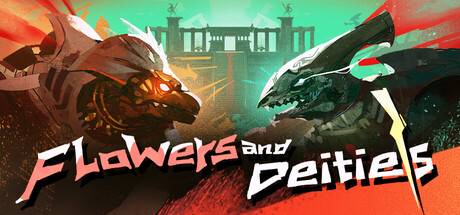

Flowers and Deities is a strategy deckbuilder roguelite that drops you into a lush rainforest world where divine beings aren’t distant overseers—they’re hungry, hands-on tyrants. Your job isn’t simply to win battles; it’s to survive a gauntlet of escalating arenas, learn what the gods reward (and punish), and return stronger after every defeat. The hook is immediate and deliciously grim: blood is a shared resource, generated by every unit that dies—yours or the enemy’s—and then spent to unleash spells, summon reinforcements, and swing fights that looked unwinnable a turn ago.
Roguelite Structure: Die, Adapt, Descend Again
The game leans into the modern roguelite loop: you enter an arena run with a defined starting identity, fight across multiple stages, and when you fall (because you will), you come back armed with knowledge and better decision-making. What makes Flowers and Deities stand out in the genre isn’t only the deckbuilding—it’s the way the arena economy forces you to constantly weigh attrition versus explosiveness. Losing units is costly… but it also fills the blood pool that powers your biggest plays.
Origins and Faiths: Your Run Starts With a Personality
At the start you choose from 4 origins and faiths, and this choice does more than set a cosmetic tone. It defines your early kit and nudges you into a strategic posture right away—whether that’s building toward a particular style of army composition, spell cadence, or resource conversion. In a game where each battle can reward new pieces and where mid-run pivots are encouraged, having a strong opening identity helps your first few fights feel purposeful rather than random.
Army-Building With Teeth: Recruit What You Kill
Combat isn’t just about clearing the board; it’s about expanding your legion. Across 15+ races and 125+ unique unit types, you’ll clash with everything from noble legions and barbarian tribes to underworld horrors and alien visitors. The key twist is that defeated foes can be conscripted into your ranks, turning your enemies into a recruitment pool and giving each arena its own meta-game: what you fight now may become the backbone of your strategy later.
Blood as a Resource: Power Bought With Casualties
The central system—blood—is what gives the game its identity. Every unit lost fills the blood pool, and blood is then spent on high-impact actions: spells, summons, and tide-turning abilities that can completely alter the tempo of a fight. That creates a constant tension:
- Protect your army to maintain board presence and avoid spiraling.
- Accept casualties to unlock decisive bursts of power.
- Consider sacrifice when the arena is running dry and you need one last push.
This is where Flowers and Deities earns its “bloodthirsty gods” premise mechanically. The game encourages you to treat combat like a ritual—one where victory can be paid for in bodies.
Build Variety: Items, Blessings, Status Effects, and Archetypes
If you’re the kind of Mac gamer who likes tinkering, the build space here is unapologetically large. The game advertises 12 tactical archetypes, plus an arsenal of run-shaping modifiers: 300+ magical items, 100+ divine blessings, and 50+ status effects. Just as importantly, the equipment and slot system is designed to be flexible, letting you experiment without feeling locked in.
In practice, that means you can:
- Counter enemy weaknesses mid-run instead of hoping your starting plan survives contact with the arena.
- Assemble synergy packages where items and blessings multiply each other’s value.
- Pivot archetypes when a new unit type or blessing opens a better path than the one you started with.
Arenas and Escalation: Six Grand Stages of Trouble
Runs unfold across 6 grand arenas, with enemy factions that scale in threat and complexity. This structure is ideal for a deckbuilder roguelite because it naturally teaches you what your build can handle. Early arenas invite experimentation; later arenas demand coherence. By the time you’re facing legendary beasts, underworld monstrosities, or truly strange visitors, you’ll either have a plan—or you’ll have a blood pool and a prayer.
Playing on Mac: Performance and Expectations
On the Mac side, the requirements suggest a lightweight footprint—1 GB storage and broadly accessible hardware targets. The developer notes it runs on most modern Macs, and support includes both Intel and Apple Silicon in the CPU callouts. If you’re on an M-series Mac, the recommended spec aligns with what you’d expect for smooth play in modern indie strategy titles: more RAM headroom, newer macOS, and stronger integrated graphics.
Mac System Requirements
Minimum
OS: macOS 10.15 Catalina
Processor: Intel Core i5 or Apple M1
Memory: 8 GB RAM
Graphics: Intel Iris Plus Graphics or equivalent
Network: Broadband Internet connection
Storage: 1 GB available space
Sound Card: Any
Additional Notes: Runs on most modern Macs.
Recommended
OS: macOS 11 Big Sur or newer
Processor: Apple M1 or Intel Core i7
Memory: 16 GB RAM
Graphics: Apple M1 GPU or dedicated graphics
Network: Broadband Internet connection
Storage: 1 GB available space
Sound Card: Any
Why It Belongs on a Mac Gamer’s Radar
Flowers and Deities blends three pleasures that pair especially well with Mac play sessions: tactical combat you can think through at your own pace, roguelite repetition that stays fresh through variety, and a buildcraft sandbox packed with knobs to turn. The blood economy is the standout—turning every battle into a question of how much you’re willing to lose to win. If you enjoy deckbuilders where the best turns feel like you “broke” the rules, this is an arena worth bleeding in.



Comments
Sign in to join the conversation.
Log in to commentNo comments yet. Be the first to join the conversation.