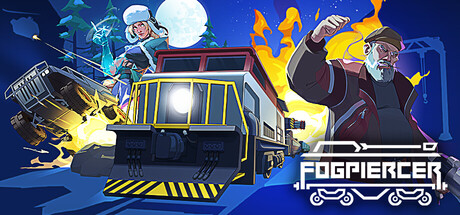

Fogpiercer on Mac: Build the Train, Build the Deck, Break the Convoy
In Fogpiercer, a lethal fog is swallowing the world and your best shot at outrunning extinction is a heavily-armed train and a plan that’s smarter than the bandits chasing you. This is a turn-based tactical roguelite where your train configuration—locomotive, carriages, and driver—doesn’t just change your stats; it shapes your starting deck and the combat options you’ll be building around for an entire run.
The hook is immediate: you’re routinely outnumbered and surrounded, but the game is designed around the idea that a well-timed sequence of cards, pushes, hacks, rams, and environmental hazards can flip overwhelming odds into a multi-vehicle pileup.
Core Gameplay: Turn-Based Tactics With Deckbuilding DNA
Each fight plays out as a tactical battle where positioning, telegraphed enemy intentions, and a limited pool of action points force you to think like a puzzle-solver. Damage matters, but so does where damage happens and what it causes next.
Fogpiercer leans hard into:
- Chain reactions: destroy a lead vehicle and watch it tumble back into the pack.
- Battlefield manipulation: push enemies into cliffs, hazards, or into each other.
- Order-of-operations tactics: setting up a line of cars, then triggering a payoff card that turns the formation into wreckage.
It’s not just “play damage cards until the numbers hit zero.” The game repeatedly rewards planning a turn like a domino run—set the pieces, then tip the first one.
Your Train Is Your Class: Locomotives, Carriages, Drivers
Before you even reach the first battlefield, Fogpiercer asks you to make meaningful loadout choices. Different locomotives, carriages, and drivers add different cards to your initial deck, which changes the tactical identity of the entire run.
As you progress, you’ll gather resources to upgrade existing components or buy new carriages that expand your toolkit. Want a run defined by raw suppression? Lean into rapid-fire options like a minigun-style approach. Prefer positional control? Tools like artillery and push effects can literally knock enemies out of the fight—or into each other.
Card Count and Combat Variety: 170+ Ways to Cause Problems
Fogpiercer features 170+ cards spanning damage, support, status effects, and utility. The size of the pool matters because the game’s best moments come from discovering combinations that feel borderline unfair—until the next encounter forces you to adapt.
Examples of the kinds of tactical play the game encourages include:
- Forced movement setups that place an enemy directly onto a lethal line (or into your path).
- Artillery and collision logic: shots that don’t just hurt, but reposition targets into catastrophic outcomes.
- Hacking and deception: using decoys or control effects to turn enemy intent against them.
- Defensive lines: shielding up and choosing the right moment to ram through.
The result is combat that often feels like engineering: you’re not only trying to win, you’re trying to win efficiently—spending minimal action points for maximum convoy collapse.
Route Planning and Regions: A Roguelite Map With Real Consequences
Between battles, Fogpiercer shifts into strategic travel: you choose paths across regions as you race toward the fog’s edge. Regions can come with modifiers and special rewards, and the branching nodes within a region let you balance risk versus payoff.
Expect a mix of:
- Battle nodes with different layouts and hazards.
- Waystations for upgrades, repairs, and tuning your build.
- Chop shops/depots where you can buy/sell carriages and adjust your deck direction.
- Random encounters that can offer rare opportunities.
- Boss battles at the end of regions, featuring special characters with distinct abilities and backstories.
Battlefields themselves vary too—some give you allies, some constrain your movement, and others place you near cliffs or hazards that you can weaponize if you can force enemies into the danger zone.
Metaprogression: More Toys Between Runs
Fogpiercer includes metaprogression that unlocks additional carriages, drivers, and locomotives over time. That means a failed run still feeds into future experimentation, either by opening entirely new train/deck combinations or by letting you invest deeper into favorites to expand their available cards.
It’s a structure built for iteration: learn enemy behaviors, discover a synergy, unlock a component that complements it, and come back to try again with a more focused plan.
Who Is Fogpiercer For?
- Tactics fans who like turn-based positioning and telegraphed enemy turns.
- Deckbuilding roguelite players who enjoy build discovery and combo crafting.
- Systems-first strategists who want environmental kills, forced movement, and chain reactions to matter as much as raw DPS.
Mac System Requirements
Minimum
- OS: macOS 12 (Monterey) or later
- Processor: Intel Core i5-4670 (quad-core) / AMD FX-8300 (quad-core)
- Memory: 4 GB RAM
- Graphics: NVIDIA GeForce GTX 960 (4 GB) / AMD Radeon RX 570 (4 GB)
- Storage: 2 GB available space
Recommended
- OS: macOS 12 (Monterey) or later
- Processor: Intel Core i5-7700K (quad-core) / AMD Ryzen 5 1500X (quad-core)
- Memory: 8 GB RAM
- Graphics: NVIDIA GeForce GTX 1060 (6 GB) / AMD Radeon RX 5500 XT (8 GB)
- Storage: 2 GB available space
Bottom Line
Fogpiercer is at its best when you’re doing more than attacking—you’re orchestrating. If the idea of a train-as-a-deck, tactical positioning, and explosive chain reactions sounds like your kind of strategy sandbox, this is one to keep on your radar for Mac.



Comments
Sign in to join the conversation.
Log in to commentNo comments yet. Be the first to join the conversation.