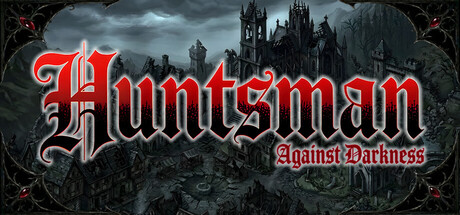

Huntsman Against Darkness drops you into a kingdom that has already lost. The cathedral is silent, the village is ash, and the corruption outside the walls doesn’t just kill—it reshapes everything it touches. You play as the last Huntsman: cursed, armed, and stubborn enough to push back the dark one arena at a time.
Arena survival with a roguelite heartbeat
At its core, Huntsman Against Darkness is about surviving escalating waves of enemies in high-pressure battle arenas. Runs are fast and dense: the longer you last, the more chaotic the battlefield becomes. Rather than precision aiming, combat leans into auto-aim and puts the burden on what matters most in a horde game—movement, positioning, and build choices.
Each run becomes a balancing act:
- Manage space as enemy density ramps up
- Choose upgrades that fit your immediate survival needs
- Take smart risks to secure better rewards before you’re overwhelmed
Death isn’t the end: rebuild the village, unlock permanent power
What makes Huntsman Against Darkness more than another “survive the horde” brawler is its village restoration layer. Resources you collect during runs feed into a long-term progression system where you gradually restore a fallen medieval settlement. The village isn’t just a hub—it’s your persistent upgrade tree, unlocking new mechanics and expanding what you can do on future attempts.
Rebuilding key structures opens up permanent advantages, such as:
- Blacksmith — weapon upgrades and combat improvements
- Apothecary — potions, poison effects, and survival tools
- Tavern — pre-run buffs and passive bonuses
- Additional buildings — more systems that broaden your strategic options
The result is a loop that’s easy to sink into: fight, collect, upgrade, rebuild, then return stronger—and with more ways to shape the next run.
Build variety and on-the-fly adaptation
Progression doesn’t only happen between runs. During a run you’ll level up and pick upgrades that can dramatically alter your approach. The game encourages experimentation and supports multiple build directions, including:
- Raw damage output
- Critical-focused setups
- Area damage and screen-clearing effects
- Survivability and defensive scaling
- Mobility and repositioning tools
- Crowd control
- Elemental or corruption-based effects
Because runs escalate quickly, good builds aren’t just “strong”—they’re coherent. The best choices reinforce each other and solve specific survival problems: getting cornered, dealing with armored elites, or enduring boss patterns while the arena is still swarming.
Corrupted foes and boss-driven progression
The darkness in Huntsman Against Darkness isn’t a backdrop; it’s an active force that mutates the enemy roster. You’ll face everything from swarm-heavy threats to towering nightmares designed to test your spacing and damage uptime.
Notable enemies and bosses include:
- Feral — fast attackers that overwhelm in numbers
- Void Stalker — armored elites infused with unstable void energy
- Wrath Brute — mini-boss pressure with explosive ranged attacks
- Shadow Colossus — a massive construct formed from concentrated darkness
- Infernal Guardian — a punishing gatekeeper focused on survival checks
- The Corruptor — the winged source commanding the endless horde
Bosses are a major punctuation mark in the run structure, pushing you to prove your build under direct pressure rather than just outlasting mob density.
Dark medieval atmosphere that leans supernatural
Visually, Huntsman Against Darkness embraces a stylized gothic tone—ruined architecture, cursed lands, and apocalyptic medieval mood. Combat effects emphasize the supernatural: corrupted creatures burst into dark energy and light particles rather than blood, reinforcing the idea that you’re fighting something fundamentally wrong with the world.
How it feels on Mac: quick sessions, long-term momentum
The game’s structure fits Mac play particularly well: runs are designed to be quick but meaningful, with persistent progression that keeps you moving forward even after a failed attempt. If you enjoy roguelites where each session nudges a broader meta-goal (here, rebuilding a village and unlocking new systems), this one is built around that satisfaction loop.
Mac system requirements
Minimum
- Processor: Apple M1 or Intel Core M
- Memory: 8 GB RAM
- Storage: 500 MB available space
Recommended
- Recommended specs: Not listed
Who it’s for
- Players who like horde survival but want a stronger meta-progression hook
- Roguelite fans who enjoy build crafting and run-to-run experimentation
- Anyone who prefers movement-first combat over aim-heavy shooting
- Dark fantasy lovers looking for a bleak world with a clear “reclaim and rebuild” arc
The darkness never stops evolving. The only way to keep up is to keep running the arenas, keep rebuilding, and keep turning every loss into more tools for the next fight.





Comments
Sign in to join the conversation.
Log in to commentNo comments yet. Be the first to join the conversation.