
A city that outlived its people
“Do Androids Dream of Electric Sheep?” — Philip K. Dick
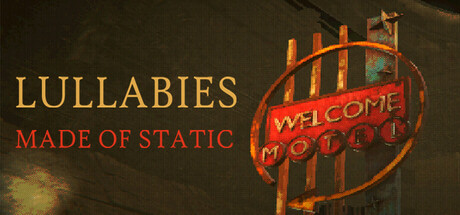
The premise of Lullabies Made of Static is simple and haunting: the world is gone, and you wake up in what remains. Not a picturesque wasteland, but an immense post-apocalyptic megalopolis built from industrial brutalism—monolithic towers, decaying factories, silent highways, and concrete corridors that seem to go on forever.
There’s no crowd to observe and no faction to join. Instead, the game leans into absence: the low hum of machinery, the echo of your movement through cavernous structures, and the uneasy feeling that the city is abandoned yet still functioning—like an engine that never learned how to stop.
What you do: explore, climb, and listen
This is a slow, mood-forward first-person exploration experience built around texture, space, and discovery rather than combat or traditional quest structure. Your primary goal is to search the city for forgotten cassettes, each one containing distorted fragments of human emotion—voices, memories, and impressions left behind like artifacts.
The tapes aren’t just collectibles. They function as the game’s emotional compass: small, fragile hints of what people once loved, feared, and endured. As you recover more, the experience becomes less about “solving” the city and more about absorbing it—and reflecting on why these remnants still matter.
Key influences and the vibe you should expect
If you’ve spent time with uncanny, surreal exploration games, the inspirations will feel familiar in the best way. The game draws from the urban isolation of BABBDI, the mysterious journeying and scale of Lorn’s Lure, and the kind of industrial unease associated with Mike Klubnika’s work. The result is a world that’s simultaneously meditative and oppressive—calm enough to wander, tense enough to make every empty room feel significant.
Visuals: retro PC grime with modern lighting
Lullabies Made of Static uses a look that echoes 90s-era PC visuals—grainy, dreamlike, and slightly unreal—then pairs that aesthetic with modern lighting and post-processing to deepen the atmosphere. Concrete surfaces swallow light, industrial spaces glow with distant ambient sources, and the city’s geometry becomes part of the storytelling.
It’s less about realism and more about sensation: the feeling of being small inside a massive, empty system.
Level design: lonely scale, vertical routes, and organic discovery
Exploration here isn’t a guided tour—it’s organic. Expect a sense of vast, lonely scale as you move through echoing plazas, abandoned factories, and monumental structures that seem built for crowds that will never return.
One of the most compelling elements is the verticality. Paths twist through rooftops, scaffolding, rusted infrastructure, and layered corridors. Rather than a single obvious route, the city encourages you to drift, climb, backtrack, and notice subtle openings that lead somewhere new.
Environmental storytelling plays a supporting role throughout. The spaces you find—and the places those cassettes are left behind—quietly suggest what the city was, and what it became.
Soundtrack: the emotional engine of the ruins
Audio is central to the experience. The game features a custom, immersive soundtrack designed to carry its emotional weight—an atmospheric mix of ambient noise, alternative tones, and haunting melodic elements that extend the world beyond what you can see.
It’s also positioned as a transmedia component: the soundtrack exists outside the game on external platforms, letting you revisit the mood even when you’re away from the city.
As a solo-developed project, the game’s identity feels tightly authored—part exploration game, part cinematic mood piece, with surreal, Lynchian undertones that reward patience and attention.
Mac system requirements
- OS: Mac OS X 10.8+
- Processor: Universal (32 or 64)
- Memory: 3 GB RAM
- Graphics: Intel HD Graphics 530
- Storage: 3 GB available space
Who this is for
Lullabies Made of Static is for Mac players who want a world to inhabit rather than a checklist to clear. If you enjoy slow exploration, oppressive-yet-beautiful spaces, and storytelling delivered through place, sound, and found media, this is the kind of quiet apocalypse that sticks with you.
Come for the brutalist labyrinth and the industrial hush—stay for the cassettes, and the unsettling thought that what you’re collecting isn’t just history, but something that might be waking up inside you.





Comments
Sign in to join the conversation.
Log in to commentNo comments yet. Be the first to join the conversation.