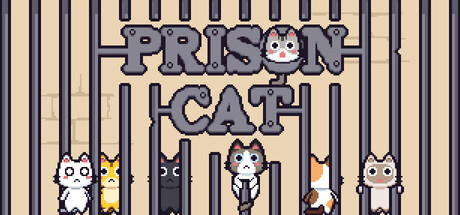

Prison CAT drops you into an absurdly charming (and oddly stressful) scenario: you’re a cat inmate, you only get fed once per day, and someone in the prison is poisoning the food. Meanwhile, another prisoner may be quietly assembling an escape plan. Your job is simple in theory—survive and win—but the path there is a knot of half-information, unreliable allies, and the creeping realization that the cat you trusted might be the one steering you toward a bad plate.
At its core, Prison CAT is a social deduction game built around a clever daily ritual: the cafeteria line. Players enter one by one and must choose a plate without truly knowing what happened before they arrived. Did the previous cat swap dishes? Did they leave poison behind? Did someone set you up with a “safe” option that’s actually a trap? The sequential structure makes every choice feel personal—because it is.
How the Cafeteria System Creates Real Tension
The game’s signature idea is the Sequential Feeding System. Instead of everyone making choices simultaneously, Prison CAT forces decisions in order, turning the cafeteria into a stage where every action has consequences for whoever comes next.
- Information is asymmetric: later players may infer patterns from prior outcomes, while earlier players act with less context.
- Bluffing has teeth: telling someone “that plate is safe” becomes a meaningful risk, not throwaway banter.
- Suspicion is procedural: because choices happen in sequence, it’s easier to build narratives—sometimes accurate, sometimes dangerously wrong.
10+ Roles, Multiple Win Conditions, and Constant Mind Games
Prison CAT leans into variety with 10+ unique cat roles, each pushing players toward different ways of gathering information, misleading others, or pursuing alternate victory routes. A few examples mentioned by the developer highlight the range:
- Chef Cat: can detect poison—an apparent “trusted investigator,” unless they’re manipulating what they reveal (or staying quiet to avoid becoming a target).
- Nocturnal Cat: can intercept notes, disrupting alliances and turning private strategy into public chaos.
- Escapee Cat: plays a different game entirely, trying to gather tools and win through escape rather than pure survival or voting outcomes.
This role-driven structure keeps rounds from feeling solved. Even when your group gets comfortable, a new role interaction can flip the logic of what “safe play” looks like.
Secret Notes: Alliances, Threats, and Misinformation After Dark
When night falls, Prison CAT introduces a Secret Note System that does a great job of simulating backroom deals. Private messaging can create genuine alliances—until someone realizes notes can be intercepted, and that the “helpful tip” they received might be bait.
In practice, the note system encourages:
- Coordinated plans (e.g., testing plates, sharing deductions, setting traps)
- Social engineering (building trust with selective truths)
- Threat play (intimidation, warnings, and forcing reactions)
Voting and Solitary Confinement: The Group’s Last Line of Defense
Like many deduction games, Prison CAT escalates to discussion and voting. But because the cafeteria sequence leaves breadcrumb trails, your table-talk often revolves around reconstructing the day: who had access, who benefited, who lied, and which “helpful” suggestion led to a disaster.
When the group decides someone is too dangerous, you can vote to lock them away in solitary confinement. That’s the pressure valve of the match—remove a suspected poisoner, stop an escape plot, or (more commonly) exile the wrong cat and realize too late that you just did someone else’s job for them.
Customization: Dress for the Crime You Didn’t Commit
Between betrayals, the game keeps things light with cosmetic customization. You can personalize your inmate cat with different colors, hats, clothes, and accessories—perfect for lobbies, screenshots, and the inevitable moment when your friends insist “the one with the hat definitely did it.”
Mac Performance and Requirements
Prison CAT’s listed Mac requirements are modest, and it should be approachable for a wide range of Mac hardware—especially given the lightweight storage footprint.
Minimum Mac Requirements
- OS: macOS 10.13+
- Processor: Intel Core i5
- Memory: 4 GB RAM
- Graphics: Intel HD Graphics 4000
- Network: Broadband Internet connection
- Storage: 1 GB available space
- Sound Card: Standard macOS Sound Device
Who Prison CAT Is For
- Social deduction fans who want something that feels different from standard “night/day” formats.
- Groups that like psychological play—negotiation, subtle lying, and tracking inconsistencies.
- Party-game players who appreciate rounds fueled by conversation rather than twitch mechanics.
Verdict
Prison CAT’s best trick is how it turns a simple act—choosing food—into a layered, social puzzle. The sequential cafeteria system creates natural drama, the roles introduce long-term uncertainty, and the secret notes keep diplomacy alive even when you think you have the room figured out. If you’re looking for a Mac-friendly multiplayer game built on distrust, deduction, and the fear of a suspiciously untouched plate, Prison CAT understands the assignment.





Comments
Sign in to join the conversation.
Log in to commentNo comments yet. Be the first to join the conversation.