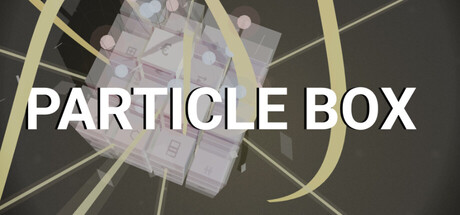

Particle Box drops you into a sterile, corporate-lab fantasy as “intern #6407” and gives you a single mandate: generate electricity using a newly developed Particle Box. The twist is that power doesn’t come from twitch skill or traditional combat—it comes from systems. You’re building a machine out of particle-emitting modules arranged in a 3D grid, learning how each component behaves, and then pushing those behaviors into runaway feedback loops that barely clear your session targets… until they don’t barely clear them anymore.
At its core, Particle Box is an incremental roguelite. Each run asks you to assemble a functioning, profitable setup from whatever the shop is willing to offer. That makes every attempt a small engineering problem: how do you turn today’s limited selection into something that compounds, chains, and scales?
What You Actually Do in Particle Box
Your Particle Box is a configurable 3D grid filled with particle-emitting modules. The game features 35+ unique modules, each with its own effect—emitting particles, amplifying outputs, redirecting interactions, triggering reactions, or enabling synergies that wouldn’t exist with a simpler 2D layout.
Runs revolve around three big loops:
- Build: Place modules in the grid and start producing energy/particles.
- Adapt: Purchase from a shop with a run-specific selection and constraints, forcing you to pivot your plan.
- Scale: Find combinations that snowball—chain reactions, amplification ladders, and “if this then that” cascades that turn modest output into something exponential.
The joy is in watching a seemingly reasonable setup evolve into a bizarre, barely-stable machine. Once you discover a synergy that loops—where one module energizes another, which boosts a third, which feeds back into the first—you start to understand the game’s true goal: create a self-reinforcing system that keeps climbing.
Synergy-First Design (and Why the 3D Grid Matters)
Particle Box isn’t just about collecting “better” modules; it’s about arranging them so their rules intersect in productive ways. The 3D grid adds meaningful spatial problem-solving: adjacency, lines of effect, and layout constraints can turn the same set of modules into either a mediocre build or a run-winning engine.
The developer leans into this with overtly science-flavored module names and interactions. The description even calls out the kind of endgame loop you’ll aim for: getting things like a B-Type Deterministic Amplifier and TS-47 Laser Ring to endlessly energize a Nondeterministic Fission Core. You don’t need to understand the faux-physics to enjoy it, but you do need to think like a systems designer: identify the strongest interaction, then build your grid to support it.
Roguelite Structure: Shop RNG, Session Targets, and Learning to Pivot
As a roguelite, Particle Box is at its best when it forces you to compromise. You may enter a run wanting a clean, elegant chain reaction, only to find the shop offering pieces that push you toward a different archetype entirely.
That tension—between an ideal blueprint and the parts you can actually buy—creates the game’s strategy:
- Short-term survival: Hit your session target with whatever works now.
- Long-term planning: Invest in modules that open scaling paths later in the run.
- Risk management: Chase potential synergies without bricking your build if one key module never appears.
It’s a probability-to-profit puzzle. The “correct” choice is often the one that keeps multiple futures open until the shop (or the run) reveals what it’s really going to allow.
Meta Progression: Unlock More Toys Between Runs
Particle Box expects you to fail early. The game explicitly frames that as part of the process: when a run collapses, you’re not simply restarting—you’re unlocking new modules and expanding the possibility space for future attempts.
This is classic incremental-roguelite pacing: early runs teach fundamentals and constraints; later runs become about combining unlocked options into increasingly dramatic feedback loops. Eventually, the numbers stop being “big” and become “silly,” with the game promising outputs on the order of 10^35+ g-particles once you’ve mastered the right loops.
Who It’s For
- Incremental fans who love watching systems compound into absurdity.
- Roguelite players who prefer adaptation and buildcraft over action.
- Puzzle/automation tinkerers who enjoy experimenting with layouts and interactions.
If you like games where the “combat” is essentially optimization—and the reward is a machine that feels like it’s perpetually on the verge of breaking reality—Particle Box is firmly in that lane.
Mac System Requirements
Minimum
- OS: macOS 10.15 (Catalina) or later
- Processor: Any Intel or Apple Silicon
- Memory: 4 GB RAM
Recommended
No specific recommended Mac requirements were provided.
Bottom Line
Particle Box is a clean, concept-forward incremental roguelite where the thrill comes from engineering synergy under uncertainty. With a big library of modules, a 3D grid that makes placement matter, and meta progression that steadily unlocks deeper strategies, it’s the kind of game that turns “just one more run” into an evening—then turns your modest power plant into a particle-spewing monument to exponential growth.




Comments
Sign in to join the conversation.
Log in to commentNo comments yet. Be the first to join the conversation.