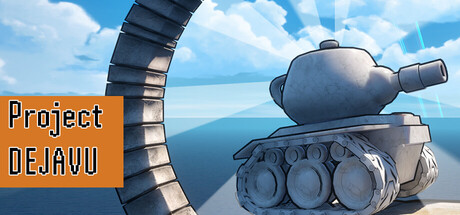

Arcade energy, rebuilt in 3D (and on treads)
Project Dejavu aims straight for that old-school arcade feeling: quick restarts, “just one more try” momentum, and the satisfaction of clean runs. The twist is its vehicle-first identity—you’re not a mascot jumping between platforms, you’re piloting a customizable, cartoony tank through suspended labyrinth stages where a single mistake can mean a long drop into the ocean.
Labyrinth platforming over open water
Each level is designed like a floating maze. Your objective is simple—find the route forward—but execution is where the game lives. Narrow ramps, abrupt turns, and tightly spaced platforms demand careful movement, especially when the environment is designed around the ever-present threat of falling.
The layout style leans into repeating patterns—classic arcade language—then steadily remixes them into more complex sequences. That familiarity is part of the appeal: you quickly learn the “vocabulary” of ramps and platforms, and then the game tests how confidently you can read and execute it under pressure.
Toon tank combat: lighthearted look, real pressure
Your tank’s stylized appearance keeps the tone playful, but the stages aren’t passive obstacle courses. Rival tanks show up to disrupt your line, turning platforming into a constant juggling act between movement, positioning, and dealing with threats.
The game’s description leans into fast reflex play—sometimes precision, sometimes improvisation. In other words: you can try to play perfectly, but there’s also room for messy survival when everything is going sideways.
Clean, readable visuals built for speed
Project Dejavu uses bold color, clear shapes, and uncluttered presentation so the path and hazards are easy to parse mid-run. That readability matters in a game built around quick decisions and momentum—especially on stages where the “floor” is mostly absence.
Arcade-style progression with lots of stages
The structure is designed around repetition-with-variation: nearly 50 stages that build and remix ideas so each new challenge feels connected to what you’ve already learned, without becoming rote. It’s an intentionally arcade-like loop—easy to start, difficult to truly master, and tuned for players who enjoy chasing smoother runs.
Who it’s for
- Arcade nostalgists who miss tight, replayable challenge loops
- Platforming fans who enjoy maze-like routes and precision movement
- Players who like stylized action—colorful presentation with combat pressure layered on top
Mac system requirements
Minimum
- Requires an Apple processor
- OS: macOS 15.6.1
- Processor: Apple Silicon M1
- Memory: 16 GB RAM
- Graphics: Onboard 8 Core GPU
- Storage: 2 GB available space
- Sound Card: Onboard
Recommended
- Requires an Apple processor
- OS: macOS 15.6.1
- Processor: Apple Silicon M4
- Memory: 16 GB RAM
- Graphics: Onboard 10 Core GPU
- Storage: 2 GB available space
- Sound Card: Onboard
Bottom line
Project Dejavu looks like a cheerful toon romp, but it’s built around the same thing that made arcade games unforgettable: learning patterns, staying composed under pressure, and earning progress through execution. If “maze platforming with a constant threat of failure” sounds appealing—and you like your action delivered via a customizable tank—this is one to keep on your Mac radar.




Comments
Sign in to join the conversation.
Log in to commentNo comments yet. Be the first to join the conversation.