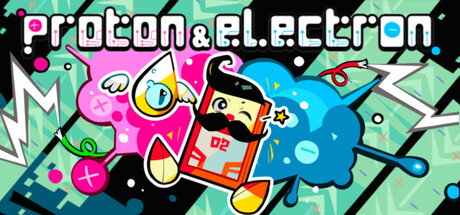

Proton & Electron is an “electric” pixel-style platformer puzzle game that shrinks its adventure down to the atomic level—literally. Set inside a piece of electronic equipment corroded by antimatter, the game follows Dr. Proton as he miniaturizes himself to enter the device and stop the contamination from spreading. Along the way, he teams up with local helpers known as Electron Sprites, exploring a strange micro-electronic world of metal surfaces, circuitry, and malfunctioning components.
The hook is simple and strong: you aren’t just solving abstract switch-and-door puzzles—you’re using the push and pull of electromagnetism as the core language of play. No physics background required; the game’s mechanics aim to feel intuitive and toy-like, turning “polarity” into something you can experiment with and master through action.
Electromagnetism as a Playground
Rather than leaning on complicated formulas, Proton & Electron translates electromagnetism into interactive rules you can exploit. Attraction, repulsion, and changing charge states become tools for traversal and puzzle solving—less “study for a test,” more “make the laws of physics do what you want.”
That focus gives the game a satisfying rhythm: observe the environment, test how your current electrical state affects objects or surfaces, then combine movements and charge interactions to unlock the next path. It’s a great fit for players who enjoy experimentation and “aha!” moments more than twitch-reflex platforming.
Two Characters, Two Perspectives
The standout feature is dual-character cooperation. You’ll control both Dr. Proton and an Electron Sprite, and each one plays differently—meaning puzzles aren’t just about what to do, but who should do it and how their abilities combine.
Dr. Proton plays like a classic side-scrolling platformer character, built around movement and jumping between platforms.
Electron uses a top-down perspective and can defy gravity, gliding across metallic surfaces in ways Proton can’t.
Their electrical states can change through interaction, letting you reconfigure how they influence the environment and each other.
Because their toolsets differ so sharply, the game encourages you to think in pairs: set something up with one character, then capitalize on it with the other. When it’s working well, it feels like operating two halves of one problem-solving machine.
A Micro-Electronic World Packed with Puzzles
The setting is more than a backdrop. The game takes place inside different components of a larger device, turning circuitry and mechanical internals into distinct puzzle spaces. You’ll explore the corroded interior, repair broken parts, and push deeper toward the source of the antimatter corruption.
Expect a substantial amount of problem-solving: the game advertises over 100 puzzles, spread across multiple areas within the machine. That scale makes it feel like a true puzzle adventure rather than a short gimmick—and it should appeal to players who like steady progression and gradually layered mechanics.
Boss Threat: Antimatter Corruption
While the moment-to-moment focus is on puzzles and traversal, the narrative throughline builds toward a confrontation with an antimatter boss. It’s a fun sci-fi framing device that gives the repair-and-explore structure a clear purpose: you’re not just wandering a tiny world, you’re trying to save it before the corruption wins.
Mac System Requirements
Minimum:
- OS: macOS 11.0 or later
- Processor: Apple M1 or Intel Core M
- Memory: 4 GB RAM
- Graphics: Intel Graphics 4400 or better
- Storage: 600 MB available space
Why Mac Players Should Keep an Eye on It
Proton & Electron stands out by committing to its theme: polarity and charge aren’t decorative, they’re the entire foundation of how you move and think. If you enjoy puzzle platformers, dual-character problem solving, and compact pixel-art worlds with lots of handcrafted challenges, this is the kind of game that can keep your brain busy for a long time—one electromagnetic “click” at a time.





Comments
Sign in to join the conversation.
Log in to commentNo comments yet. Be the first to join the conversation.