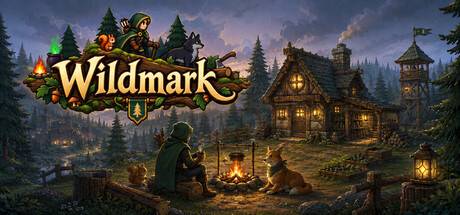

Wildmark brings cozy idle RPG comfort to macOS
Wildmark is a cozy idle RPG centered on a lone woodland Warden and a homestead that slowly returns to life. It’s the kind of game that’s happy to meet you where you are: drop in for a quick harvest, or settle in for a long evening of gentle progression. The hook is simple and surprisingly effective—your Warden keeps working while you’re gone, steadily building resources and momentum for your next visit.
Visually, Wildmark is all about illustrated diorama scenes. Each activity has its own cozy corner of the world: a woodcutter’s glade, a lantern-lit mine, fishing pools, a camp kitchen, a forge, and even an old fighting ring. It feels curated and hand-crafted, with little environmental rhythms that make everyday actions feel calm instead of mechanical.
Core loop: gather, craft, and defend
At its heart, Wildmark revolves around building up skills and turning what you gather into better tools, gear, and long-term progression. The game emphasizes a steady, satisfying loop rather than frantic optimization.
- Gathering skills: Woodcutting, foraging, hunting, fishing, and mining each have their own pace and atmosphere. The Warden does the work—trees fall, ore sparks—so the world feels active rather than abstract.
- Crafting: Fletch bows and arrows, smith weapons and armor at the anvil, cook over the campfire, and brew blessings in a cauldron.
- Defending the wilds: Patrol areas like open meadowlands, dark firs, and a ruined watchtower. Skill growth feeds directly into combat readiness, so peaceful play still supports your ability to handle tougher threats later.
A homestead in the clouds that grows with you
Your home base begins as a bare island in the clouds, and one of Wildmark’s most charming touches is how construction is represented. Each plot starts as an ink sketch; when you build, color floods in. Over time, a hut becomes a cabin, a cabin becomes a lodge, and supporting structures—gardens, smokehouses, apiaries, watchtowers—rise around it.
Importantly for idle fans, buildings aren’t just cosmetic. Each one can generate value while the game is closed, and you can hire apprentices to gather around the clock. It’s a strong fit for Mac players who like a game that respects their time (and doesn’t demand constant attention to keep progress moving).
Seasons, ambience, and the pleasures of simply checking in
Wildmark leans hard into atmosphere. The wilds shift with the seasons—spring showers and blossoms, summer heat and thunderstorms, autumn fog and gales, winter snowfall that settles on the ground. Lighting and sound do a lot of heavy lifting: lanterns glow warmer as skies darken, and the soundscape sells the setting with rain on the roof, wind through pines, cicadas on hot afternoons, and nighttime crickets.
If you’re the sort of player who keeps a cozy game running on a second display or likes to end the night with something low-stress, this is one of Wildmark’s biggest strengths.
Combat pacing: offline progress, but fights are on your terms
Wildmark’s approach to offline progression is refreshingly clear. You get true offline progress for skills, homestead production, and apprentices—your Warden stays busy. However, patrols wait for you, meaning no combat is resolved unattended. It’s a smart compromise: you still get that rewarding “return to results” feeling, but the game won’t chew through battles (or resources) while you’re away.
Once you forge your first blade, you can unlock an endless Arena with waves of increasingly dangerous foes. Success pays out gold and Valor, feeding into a deep tree of permanent upgrades. Beyond that are bigger targets: great beasts like Greywind the Alpha, Warlord Vane, and Ironhide the Titan, serving as aspirational milestones for your build and gear.
Companions, relics, and legacy progression
Wildmark layers in long-term progression systems without turning them into chores:
- Companions: A squirrel, a hound, an otter, a falcon, and more—each tied to a skill and accompanying your Warden.
- Curios & relics: Collect woodland trinkets and attune them for lasting power boosts.
- Pass the Torch: Retire a Warden to earn Embers and buy permanent Legacy upgrades for the next one, encouraging “fresh start” runs without losing overall progress.
Just as notable is what Wildmark doesn’t do: there are no energy meters, no must-answer timers, and no microtransactions. It’s built to be calming, not coercive.
Mac version notes: Apple Silicon-focused and lightweight
Wildmark is positioned well for modern Mac gaming: it’s an Apple Silicon title with modest storage needs, making it an easy install on most M-series systems.
Minimum Mac requirements
- Requires an Apple processor
- OS: macOS 11+
- Processor: Apple Silicon (M1 or later)
- Memory: 4 GB RAM
- Graphics: Apple Silicon integrated GPU (M1 or later)
- Storage: 2 GB available space
Recommended Mac requirements
- Requires an Apple processor
- OS: macOS 12+
- Processor: Apple Silicon (M2 or later)
- Memory: 8 GB RAM
- Graphics: Apple Silicon integrated GPU (M2 or later)
- Storage: 2 GB available space
Steam features and how the game fits into a Mac routine
Wildmark supports Steam Cloud so your Warden can follow you across devices, plus Steam Achievements and a global Arena leaderboard for players who enjoy benchmarks and long-term goals.
But the game’s best feature may be its attitude. Wildmark is designed for a life where you might only have a few minutes between meetings—or where you want something soothing to unwind with after work. You can make real progress either way, and when you come back, the forest has been quietly waiting.
Verdict for Mac gamers
If you’re looking for a cozy, beautifully presented idle RPG with meaningful crafting, satisfying homestead growth, and offline progression that doesn’t play the game for you in combat, Wildmark is an easy recommendation for Apple Silicon Mac owners. It’s calm, deliberate, and charming—an idle game that’s less about compulsion and more about comfort.
Wander in. The forest remembers its Warden.




Comments
Sign in to join the conversation.
Log in to commentNo comments yet. Be the first to join the conversation.