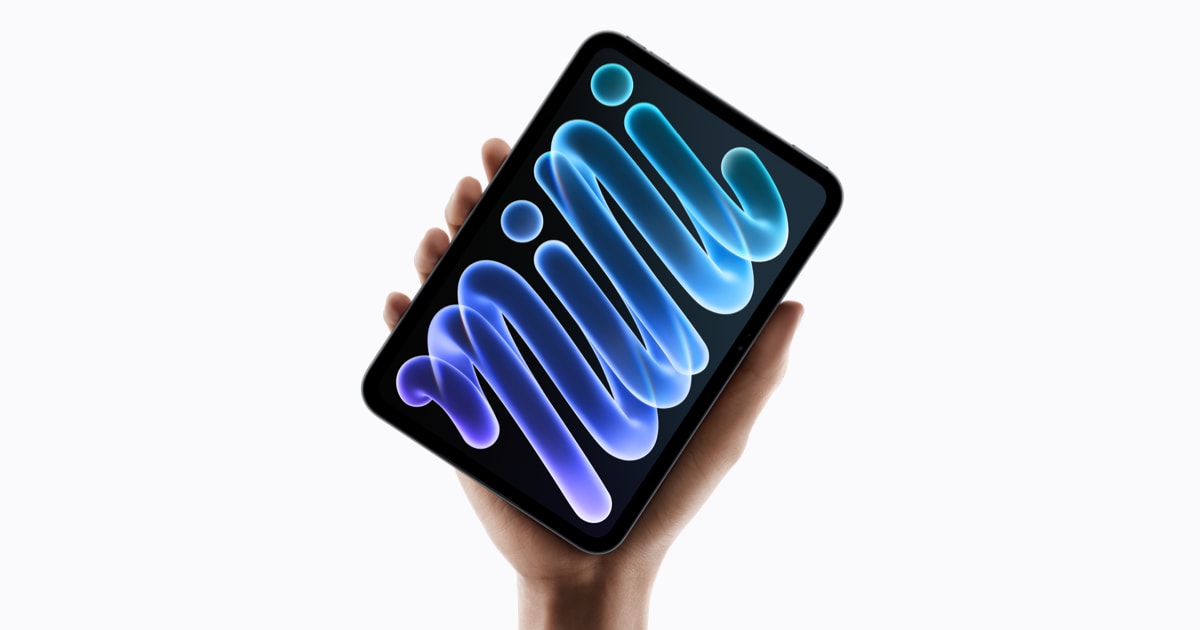

Apple has announced the all-new iPad mini, calling it the device’s biggest update ever. While it’s not a gaming-specific reveal, this is still notable ecosystem news for anyone tracking Apple Silicon performance tiers, iPadOS capabilities, and the trajectory of “small but powerful” Apple hardware that often ends up as a go-to portable screen for streaming, emulation-adjacent retro collections, and native App Store titles.
OLED arrives on iPad mini (and that matters for portable play)
The headline upgrade is a larger 8.5-inch OLED display in a thinner and lighter chassis. Apple says it delivers higher contrast and more than 2x higher peak brightness versus the prior iPad mini, and it’s also available with a nano-texture option.
For gaming and game-adjacent use, OLED typically benefits darker scenes, high-contrast UI, and perceived motion clarity in fast content. It’s also relevant for players using iPad mini as a compact “anywhere” screen for Remote Play-style scenarios or for running native iPad titles with controller support, where display quality often becomes the limiting factor more than raw resolution.
A20 Pro: another data point in Apple’s mobile performance ladder
Apple is moving iPad mini to A20 Pro, and the company is leaning heavily into AI compute: Neural Accelerators in each GPU core plus a dual 16-core Neural Engine. For our audience, the immediate takeaway isn’t that “AI makes games faster,” but that Apple continues to standardize on more capable on-device ML hardware across product tiers.
For developers shipping cross-device titles across iPhone, iPad, and Mac (especially with shared tech stacks and asset pipelines), each generational uplift affects where minimum specs land, how ambitious post-processing can be, and how aggressively teams can scale features across form factors. It also further defines the gap between older iPad mini models and the current “Apple Silicon era” expectations for advanced rendering and modern engine workflows.
iPadOS 27 and Apple Intelligence: platform evolution developers can’t ignore
Apple says the new iPad mini is powered by iPadOS 27 and highlights the “next generation of Apple Intelligence and Siri AI,” including the ability to draw on personal context and understand what’s on screen. From a platform perspective, this continues Apple’s push to make system-level intelligence a core OS capability.
For game and tool developers, what matters is the direction of travel: OS-level features can influence UX expectations (search, discovery, assistance, accessibility) and can shape how players interact with games, guides, community tools, and companion experiences on iPad and across Apple devices. As always, the practical implications will depend on what APIs Apple exposes and how broadly features are available across supported hardware.
Connectivity, charging, and “portable durability” upgrades
Apple also lists faster wireless and cellular connectivity and fast-charge support. These are mundane on paper, but they’re the kind of upgrades that show up in everyday play: quicker downloads/patches, more stable online sessions away from home Wi-Fi, and less time tethered to power.
Most notably for a device that’s frequently tossed into bags, used one-handed, or carried outdoors, iPad mini now has an IP67 rating for water and dust resistance. That doesn’t change what games run, but it does change where the hardware can realistically live, which is a meaningful “quality of ownership” shift for a truly portable iPad.
Camera and audio tweaks that quietly improve social play
Apple moved the 12MP Center Stage front camera to the landscape edge and introduced what it calls an “Acoustic Display” for improved audio. This is less about core gameplay and more about the modern reality of play sessions: Discord-style voice, co-op coordination, and video calls that happen around games and game communities. Small changes like camera placement can also matter for streaming and tabletop-style use where landscape orientation is common.
Release timing
Apple says customers can pre-order iPad mini (and a new Smart Folio) starting Wednesday, October 28, with availability beginning Friday, November 6.
Source and where to read more
This story is based on Apple’s official press release published on Apple Newsroom on October 26, 2026.
For the full announcement and Apple’s complete details, read the original source here:
https://www.apple.com/newsroom/2026/10/apple-gives-ipad-mini-its-biggest-update-ever/




Comments
Sign in to join the conversation.
Log in to commentNo comments yet. Be the first to join the conversation.