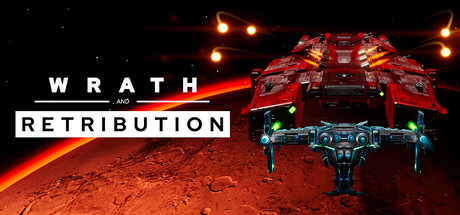

Wrath and Retribution: a solar system in crisis
Wrath and Retribution is an action-forward space combat roguelike built around short, intense missions and a constant sense of pressure. The Solar Transportation Network has fallen into enemy hands, and the invaders—known as the Remnants—are messing with technology they don’t fully understand. The result is a looming catastrophe: access points destabilizing toward a disastrous singularity. You’re the pilot sent in with experimental propulsion tech to push them back across key planetary hubs and keep the whole system from collapsing.
Intense 3D dogfighting with warship-scale threats
The core loop is straightforward: launch, fight, adapt, and try to come back stronger. Combat emphasizes speed and positional control, pushing you to manage momentum, aim under pressure, and stay aware of incoming fire as the battlefield fills with threats. While nimble dogfights are a big part of the appeal, the game also escalates into engagements against powerful warships—the kind of encounters that test your ability to read patterns, commit to attack windows, and disengage before you get pinned down.
Roguelike structure designed for rapid replays
Wrath and Retribution is built around procedurally generated missions that typically last about 5–7 minutes. That compact runtime gives each run a punchy, arcade-like intensity: you can jump in, make meaningful progress (or die trying), then immediately re-queue with a different plan.
Between attempts, you’ll be balancing:
- Temporary modules that shape the current run’s strengths and weaknesses
- Permanent upgrades that provide longer-term progression and a smoother on-ramp as difficulty ramps up
The result is a loop that rewards experimentation. If a setup feels great against swarms but crumbles against heavier targets, the game encourages you to adjust rather than grind a single solution.
Merlin, your onboard AI companion, is more than flavor
A standout feature is Merlin, your ship’s AI companion. Instead of being a passive narrator, Merlin actively supports you by automatically executing abilities and assisting with tactical moments during fights. You can also upgrade Merlin’s skills, which opens up synergy-focused play: your ship build isn’t only weapons and modules, but also how you want your AI to complement your flying style.
This design can make runs feel more “composed” at high speed—Merlin covers certain utility actions so you can keep attention on positioning, threat prioritization, and burst damage opportunities.
Buildcraft: weapons, modules, AI skills, and permanent power
Progression is centered on earning rewards and using them to tune your ship. The game leans into build variety with upgrades across multiple layers:
- Weapons to change how you apply damage and control engagements
- Ship modules that alter mobility, survivability, and utility
- AI abilities (Merlin) for automated actives and passive boosts
- Permanent upgrades that persist across runs, supporting long-term mastery
Examples of the kind of specialization the game promotes include utility-focused tools like friend-or-foe disruption and movement upgrades such as improved dash abilities. The best runs tend to happen when these systems reinforce each other—mobility tools that create time-on-target, AI abilities that extend your safe windows, and weapons that capitalize on the openings you create.
High-stakes hubs and the pressure of permadeath
Instead of feeling like disconnected skirmishes, missions are framed around defending and reclaiming major hubs—think Mars or Jupiter—to stop the Solar Transportation Network from failing. That larger objective adds urgency to every sortie, especially because the game leans into permadeath pressure: repairs and upgrades between missions matter, and a single sloppy commitment can erase a promising run.
That tension is the point. Wrath and Retribution is at its best when you’re forced to decide whether to push for extra rewards or play it safe to preserve your ship’s condition for what comes next.
Who it’s for on Mac
If you like the idea of a roguelike loop but want something driven by hands-on piloting rather than top-down dodging, Wrath and Retribution fits nicely. It’s especially appealing for players who enjoy:
- Short-session runs with meaningful progression
- Skill-based action where positioning and timing are everything
- Build experimentation across weapons, modules, and AI synergies
Mac system requirements
Minimum
- OS: 10.15
- Processor: Apple M1 or Intel Core i5
- Memory: 8 GB RAM
- Storage: 4 GB available space
Recommended
Recommended specifications were not provided.
Bottom line
Wrath and Retribution blends fast 3D space combat with roguelike structure in a way that prioritizes replayable, high-intensity encounters. With Merlin acting as an ability-driven combat partner and a progression system that supports both experimentation and long-term improvement, it’s a strong pick for Mac players who want dogfights with real stakes—and the satisfying sting of a run lost to one bad decision.



Comments
Sign in to join the conversation.
Log in to commentNo comments yet. Be the first to join the conversation.