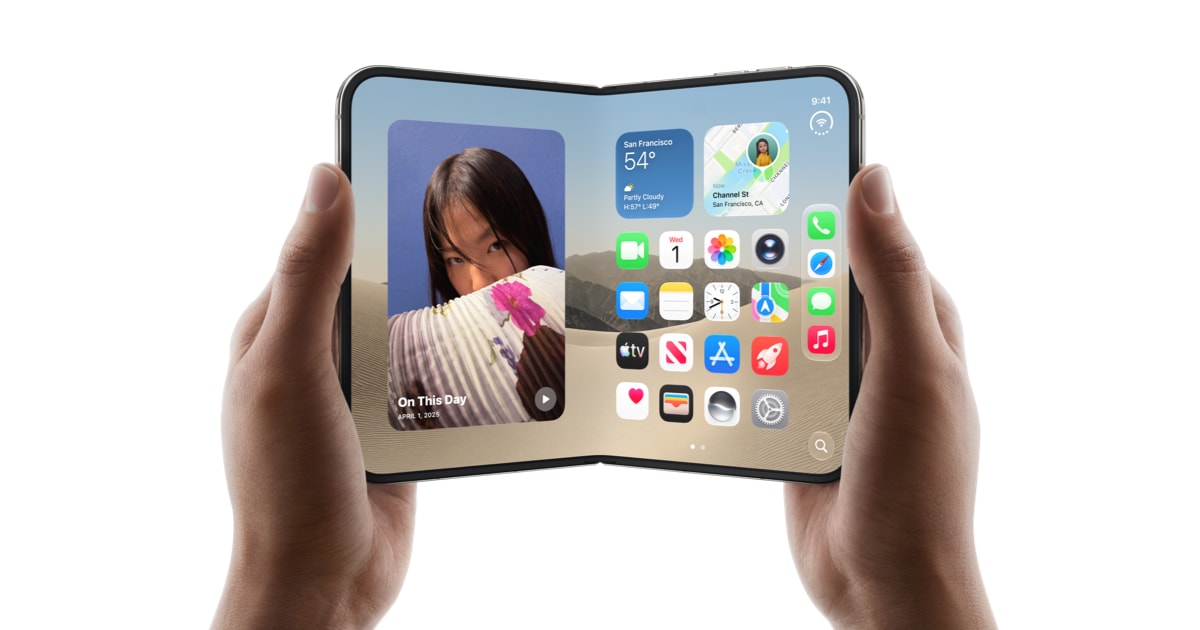

Apple enters the foldable era
Apple has officially announced iPhone Duo, its first foldable iPhone, in a Newsroom press release dated September 9, 2026. The headline feature is straightforward: a book-style fold with a 7.6-inch inner display when open and a 5.4-inch outer display when closed—two screens with the same aspect ratio so content “scales proportionally” between states.
For MacGaming.com readers, iPhone Duo isn’t “Mac gaming news” in the direct sense—but it is platform news. A new iPhone form factor changes how games and game-adjacent tech (controllers, streaming clients, launchers, social overlays, companion apps, cross-save flows, and storefront UX) must behave on iOS, and those lessons tend to ripple into iPadOS and broader Apple development patterns over time.
Why this matters for gaming: screen states, not just screen sizes
Apple is positioning Duo’s dual-display setup as visually continuous: same aspect ratio on both panels, with the outer screen described as delivering “90 percent of the screen area of iPhone 18 Pro” in a smaller footprint. For games, that combination is less about raw inches and more about predictable layout behavior: a consistent aspect ratio can reduce the number of bespoke UI variants developers need to maintain, even as the available pixel area changes dramatically between folded and unfolded modes.
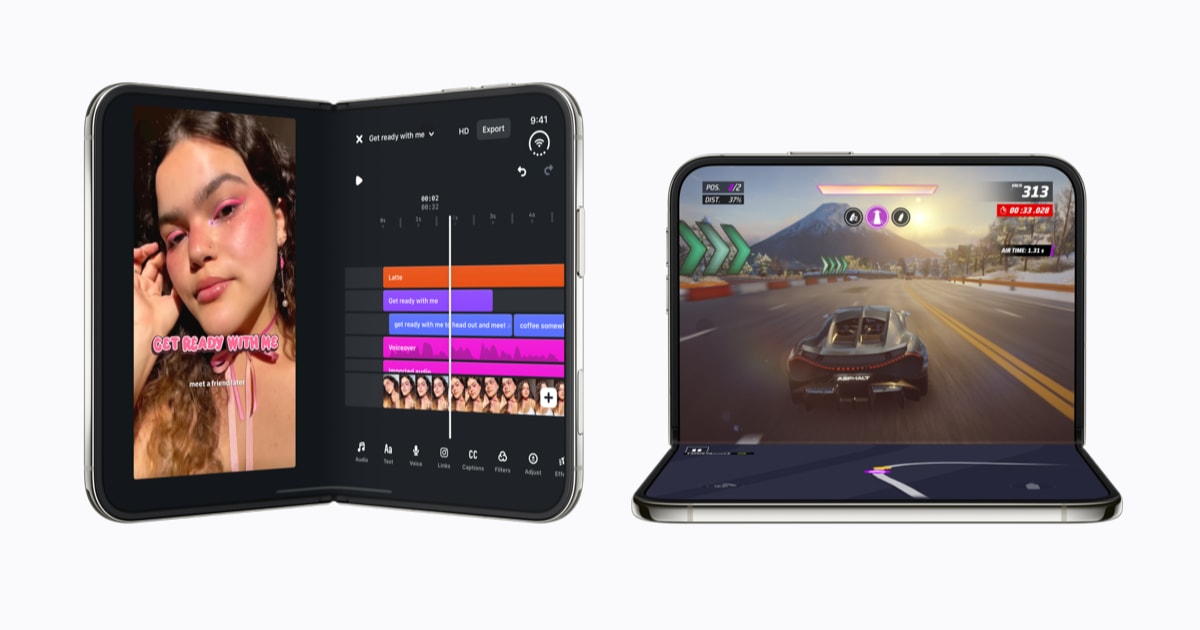
The inner display is framed by Apple as a “large canvas” for viewing content, gaming, and multitasking. If iOS 27’s Duo-specific behaviors encourage more multi-pane interfaces or persistent overlays, that could influence how developers present inventories, maps, chat, party systems, or companion panels—without implying that Apple is adding any specific gaming-only features here.
A20 Pro, thermals, and sustained performance
Apple says iPhone Duo is powered by the new A20 Pro and includes “advanced thermal management” with a custom vapor chamber plus a “dual-battery architecture” aimed at all-day battery life. From a gaming perspective, the specific performance takeaway is sustained load: thermal headroom and battery design often determine whether a device can hold higher frame rates over longer sessions without aggressive downclocking.
Mac and Apple Silicon readers will also note the continuing trend: Apple is treating thermals as a first-order design constraint as performance climbs. While this announcement is iPhone-focused, the same Apple Silicon philosophy—balancing peak throughput with sustained workloads—shows up across the product stack.
iOS 27 reimagined (but familiar): the developer angle
Apple describes iOS 27 on iPhone Duo as “reimagined” to adapt to the new ways users interact with a foldable, while remaining familiar and intuitive. The subtext for developers is state management: fold/unfold transitions, continuity of UI, and ensuring touch targets, HUD elements, and rendering resolution scale cleanly without visual discontinuity.
For studios and engine teams, the practical work will likely center on testing UI across two display sizes, handling dynamic resolution and safe areas, and validating any gameplay assumptions tied to screen real estate. None of that is glamorous—but it’s the kind of platform shift that can reward teams that update early and punish those who treat the new hardware as “just another iPhone size.”
Camera flexibility and Apple Intelligence 2: ecosystem features, not game changers (yet)
Apple also highlights an advanced camera system with fold-enabled shooting modes “not possible on any other iPhone,” alongside Apple Intelligence 2 and Siri AI that use personal context. These are meaningful ecosystem updates, but for gaming readers they’re mostly adjacent: cameras matter for creators and capture workflows, while on-device intelligence could influence discovery, accessibility, or system-level assistance depending on what Apple exposes to developers over time.
As always, what matters is API surface area and platform policy—details Apple typically expands on in developer documentation and sessions rather than in a product press release.
Availability and the immediate market reality
Apple says iPhone Duo will be available in two finishes (star white and night sky), built from polished grade 5 titanium. Pre-orders begin Friday, October 16, with availability starting Friday, October 23.
For developers, that timeline matters because it sets the window for compatibility work, QA passes, and marketing beats. For players, it signals when the first wave of “does it support Duo?” updates will start landing in the App Store.
Source and where to read more
This article is based on Apple’s announcement via Apple Newsroom (Press Release, September 9, 2026).
For Apple’s full rundown of iPhone Duo—its displays, hinge design, A20 Pro details, and iOS 27 positioning—visit the original post on Apple Newsroom:
https://www.apple.com/newsroom/2026/09/apple-unveils-iphone-duo/



Comments
Sign in to join the conversation.
Log in to commentNo comments yet. Be the first to join the conversation.